Hydrogen-rich water (HRW) — water infused with dissolved molecular hydrogen gas (H₂) — has attracted growing scientific attention for its proposed role as a selective antioxidant. Unlike broad-spectrum antioxidants, H₂ is theorized to neutralize specifically the most cytotoxic reactive oxygen species (ROS), such as hydroxyl radical, while leaving beneficial redox signaling intact. This property has led researchers to explore whether H₂ may reduce oxidative damage in contexts where chronic low-grade oxidative stress and inflammation play central roles — including the gastrointestinal tract.
Research into hydrogen water and gut health remains early-stage, with most published findings coming from animal models and small human studies, predominantly from East Asian research institutions. Still, preliminary evidence touches on three interconnected areas: the composition of the gut microbiome, markers of intestinal inflammation in colitis models, and the potential relevance to functional conditions like irritable bowel syndrome (IBS). This article summarizes what that evidence suggests and is candid about its current limitations.
Key Takeaways
- Animal research suggests hydrogen-rich water may partially reduce markers of intestinal inflammation, oxidative stress, and microbiome dysbiosis in colitis models, though human clinical evidence remains limited [1].
- The gut microbiome actively metabolizes molecular hydrogen via sulfate-reducing bacteria — so H₂ water interacts with a dynamic biological system rather than passing through inertly [2].
- Microbiome dysbiosis is well-documented in IBS [3], but direct clinical trials of H₂ water specifically for IBS have not yet appeared in the reviewed literature.
- Proposed mechanisms include selective hydroxyl radical scavenging and possible modulation of inflammatory signaling, but these remain under investigation and are not confirmed by large human trials [4].
- Hydrogen water appears safe at studied doses but is not an FDA-approved treatment; individual responses may vary considerably based on microbiome composition and baseline gut health.
The Gut Microbiome: A Complex Ecosystem Sensitive to Oxidative Stress
The gastrointestinal tract harbors trillions of microorganisms whose collective balance — or dysbiosis — has been linked to a wide range of digestive and systemic conditions. In IBS specifically, multiple studies have documented alterations in microbial diversity and composition compared to healthy individuals, with changes in key bacterial populations proposed as contributors to altered gut motility, visceral sensitivity, and immune signaling [3]. While the causal direction of these associations is still debated, the microbiome’s sensitivity to the gut’s chemical environment — including its oxidative state — is increasingly recognized.
Within this ecosystem, a specialized group of anaerobic organisms known as sulfate-reducing bacteria (SRB) plays a particularly relevant role in luminal H₂ metabolism. These microbes use molecular hydrogen as an electron donor to drive the reduction of sulfate to hydrogen sulfide (H₂S), making them key regulators of hydrogen concentrations in the colon [2]. Dietary sulfur intake also intersects with this pathway, and imbalances in sulfur metabolism have been examined in the context of ulcerative colitis pathogenesis [5]. This means that any orally consumed H₂ does not simply pass through the gut inertly — it enters a dynamic microbial economy.
H₂ Water and Intestinal Inflammation: Evidence from Animal Models
The most direct evidence for hydrogen-rich water’s effects on gut inflammation comes from rodent studies using dextran sulfate sodium (DSS), a chemical agent used to induce colitis in mice as an experimental proxy for human inflammatory bowel disease. One study found that hydrogen-rich water partially attenuated markers of inflammation and oxidative stress in DSS-induced chronic ulcerative colitis, and also partially corrected gut microbiome dysbiosis in affected animals [1]. Critically, the effects were described as partial rather than complete — an honest signal that HRW is not functioning as a curative agent even in controlled animal conditions.
Related preclinical research has explored other interventions in the same colitis model, highlighting that NF-κB signaling — a central pro-inflammatory pathway — and microbiome composition are key targets in intestinal inflammation [6]. Researchers in ulcerative colitis have also emphasized that intestinal barrier integrity, microbiota reconstruction, and immune modulation appear to be interconnected therapeutic goals rather than independent ones [7]. Whether hydrogen water engages any of these specific mechanisms in the human gut in a clinically meaningful way remains to be established through well-controlled clinical trials.
Proposed Mechanisms: How H₂ Might Influence Gut Biology
A 2025 review of oral hydrogen-rich water summarized several proposed biomedical activities and potential mechanisms relevant to the gastrointestinal system [4]. These include selective ROS scavenging — particularly targeting hydroxyl radical, among the most reactive and damaging oxidants in biological tissue — as well as modulation of inflammatory gene expression and possible influence on microbial populations. Importantly, the review characterizes the evidence as emerging and notes that mechanisms observed in animal models may not translate directly to human physiology.
Oxidative stress in the gut epithelium can compromise intestinal barrier integrity, potentially enabling bacterial products to cross into deeper tissue and trigger immune responses. Because molecular H₂ is extremely small, it can diffuse rapidly across cell membranes and is hypothesized to reach intracellular compartments where mitochondria-associated ROS generation occurs. Mitochondrial protection from reactive oxygen species is an active area of biological research [8], and some investigators propose that H₂’s ability to access these compartments may underlie its observed effects in oxidative stress models. However, this specific mechanism within gut tissue has not yet been directly confirmed in human studies.

IBS and the Microbiome: Framing the H₂ Hypothesis
Irritable bowel syndrome is a functional gastrointestinal condition characterized by abdominal pain, bloating, and altered bowel habits in the absence of detectable structural damage. Microbiome dysbiosis has been consistently documented in IBS populations, with shifts in the ratio of key bacterial genera thought to influence gut-brain communication and local immune activation [3]. Mast cell activation in the colonic mucosa has also been identified as a feature of IBS pathophysiology, with mast cell-derived mediators such as prostaglandin E2 implicated in generating symptoms [9]. These mechanistic findings help frame why researchers might hypothesize that interventions targeting oxidative stress and microbial composition could affect IBS — but they do not on their own establish that H₂ water would do so.
No published clinical trial identified within the current evidence base specifically tested hydrogen-rich water as a primary intervention in IBS patients. The link between HRW and IBS relief remains mechanistically plausible but clinically undemonstrated. Researchers studying the microbiome in IBS continue to refine understanding of which microbial changes are causes versus consequences of the condition [3] — a distinction essential to evaluate before any targeted intervention can be confidently assessed.
Sulfate-Reducing Bacteria and Luminal Hydrogen: A Nuanced Interaction
One underappreciated dimension of hydrogen water and gut health is the bidirectional relationship between consumed H₂ and the resident microbial community. Sulfate-reducing bacteria are metabolically adapted to harvest energy by using molecular hydrogen to convert sulfate to hydrogen sulfide [2]. Elevated colonic H₂S has been associated with mucosal toxicity, and dietary factors that amplify sulfur availability — including high-sulfur food intake — may worsen this dynamic in susceptible individuals [5]. The implication is that introducing exogenous H₂ into a gut already colonized by high-activity SRB populations could theoretically modulate H₂S production, though whether that influence is beneficial, neutral, or problematic in specific individuals has not been established.

This interaction adds meaningful nuance to straightforward narratives about H₂ water as universally gut-supportive. The gut is not a passive recipient of molecular hydrogen; it actively metabolizes H₂ through resident microbial machinery. Individual differences in SRB population density and sulfate availability may substantially shape how orally consumed hydrogen water behaves and what downstream effects, if any, manifest. This biological variability is a central reason why conclusions from small, uniform-population studies cannot reliably be generalized.
Safety Profile and Practical Considerations
Molecular hydrogen consumed as hydrogen-rich water or via effervescent tablet is generally regarded as physiologically inert at studied doses. H₂ is naturally produced in the colon as a byproduct of bacterial fermentation, and the body has established clearance pathways — primarily exhalation through the lungs — for handling excess H₂. No serious adverse effects have been reported in published studies of oral HRW administration at typical concentrations, and a 2025 clinical review characterizes its tolerability profile as favorable in the studies examined [4].
Several practical limitations complicate real-world use. Hydrogen water is not classified as a drug by the FDA, and no disease-treatment claims are permitted in the United States. Commercial products vary considerably in actual dissolved H₂ concentration, and H₂ degrades rapidly once a container is opened or exposed to elevated temperature — meaning the effective dose in everyday use often differs from laboratory conditions. These factors make it difficult to directly apply study findings to over-the-counter products. Anyone considering hydrogen water for gastrointestinal symptoms, particularly those with diagnosed inflammatory bowel disease on existing medical therapies, should discuss it with a qualified healthcare provider first.
🛒 Where to Buy Molecular Hydrogen
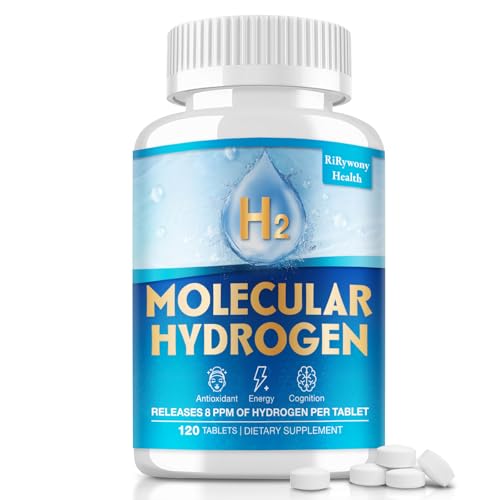
- Drink HRW Rejuvenation Molecular Hydrogen TabletsLab-tested / studied
tablets, 1 tablet per 500ml water — Research-grade effervescent tablet; developed with involvement from the Molecular Hydrogen Foundation; among the highest documented H2 output per tablet; frequently cited in community as the benchmark - Dr. Mercola Molecular Hydrogen Tablets
tablets, 2 tablets daily in water — Mass-market accessible entry point; wide distribution; uses magnesium as hydrogen carrier; good brand recognition for general wellness shoppers - Water & Wellness H2 Elite Molecular Hydrogen Tablets
tablets, 1 tablet per 16 oz water — Travel-friendly compact packaging; practical for daily carry; good entry-level tablet option for those new to H2 - Susosu Water Hydrogen-Infused Sparkling Water Pouches
liquid, 1 pouch (8 oz) — Ready-to-drink sealed aluminum pouches preserve dissolved H2; Japanese-origin brand; no dissolution required; convenient format for on-the-go use
As an Amazon Associate we earn from qualifying purchases. Molecular hydrogen quality comes down to dissolved H2 concentration, not price. Choose a product that states a specific ppm (mg/L) figure backed by third-party testing, and prefer airtight aluminum or sealed glass packaging — a vague high-concentration claim is unverifiable, and H2 escapes quickly from plastic and open containers.
A Note on the Evidence
The evidence base for hydrogen-rich water and gut health consists primarily of animal studies with small sample sizes; robust human clinical trial data are lacking. Commercial HRW products vary widely in actual dissolved H₂ concentration and shelf stability. This article is informational only and does not constitute medical advice — anyone with gastrointestinal conditions, particularly inflammatory bowel disease or IBS, should consult a qualified healthcare provider before using hydrogen water.
Frequently Asked Questions
What is hydrogen-rich water and how is it produced?
Hydrogen-rich water is ordinary water that has been infused with dissolved molecular hydrogen gas (H₂), either under pressure or through dissolution of an effervescent tablet. H₂ is the smallest known molecule and dissolves at low concentrations, typically 0.5–1.6 mg/L in commercially available products. Because dissolved H₂ escapes rapidly once water is opened or warmed, freshness and container integrity significantly affect the actual dose delivered.
How might hydrogen water influence gut inflammation?
A mouse study using a DSS-induced colitis model found that hydrogen-rich water partially attenuated intestinal inflammation and oxidative stress markers while also partially correcting microbiome dysbiosis [1]. The proposed mechanism is selective neutralization of hydroxyl radical in gut tissue, which may reduce downstream inflammatory signaling. These findings are from animal research and have not yet been replicated in adequately powered human clinical trials.
Does H₂ water change the gut microbiome?
In the DSS colitis mouse model, hydrogen-rich water was associated with partial correction of microbiome dysbiosis [1]. Additionally, sulfate-reducing bacteria in the colon naturally consume luminal H₂ [2], meaning consumed hydrogen does interact with resident microbial populations. How these interactions play out across the diversity of human microbiome profiles — including in healthy individuals — is not yet well-characterized.
Has hydrogen water been tested in people with IBS?
The gut microbiome’s role in IBS is well-documented [3], and mast cell activation has been identified as a relevant pathway in IBS symptom generation [9]. However, the current reviewed evidence does not include published human trials specifically testing hydrogen-rich water as an intervention for IBS. Any connection between H₂ water and IBS symptom relief is mechanistically proposed, not clinically demonstrated.
Is hydrogen water safe for daily gut health use?
Molecular hydrogen is a natural byproduct of colonic bacterial fermentation and is continuously produced in the gut. Oral HRW consumption at typical studied concentrations has not produced serious adverse effects in published research, and a 2025 clinical review notes a favorable tolerability profile across the studies it examined [4]. That said, hydrogen water is not a drug and the FDA has not approved it for treating any gastrointestinal condition. People with active IBD should consult their gastroenterologist before adding HRW to their routine.
Why does dietary sulfur matter when thinking about H₂ water and the gut?
Sulfate-reducing bacteria use molecular hydrogen as fuel to produce hydrogen sulfide (H₂S), and the availability of dietary sulfate influences the activity level of this pathway [2]. Elevated H₂S has been associated with colonic mucosal damage, and high-sulfur dietary patterns have been examined in the context of ulcerative colitis pathogenesis [5]. This means that introducing H₂ water into the gut of a person with high SRB abundance could potentially interact with H₂S production in ways that are difficult to predict without knowing an individual’s specific microbial composition.
References
- Song L et al. Hydrogen-rich water partially alleviate inflammation, oxidative stress and intestinal flora dysbiosis in DSS-induced chronic ulcerative colitis mice. Advances in medical sciences (2022). PMID 34784538
- Kushkevych I et al. Recent Advances in Metabolic Pathways of Sulfate Reduction in Intestinal Bacteria. Cells (2020). PMID 32178484
- Pimentel M et al. Microbiome and Its Role in Irritable Bowel Syndrome. Digestive diseases and sciences (2020). PMID 32026278
- Meng F et al. Oral Administration of Hydrogen-rich Water: Biomedical Activities, Potential Mechanisms, and Clinical Applications. Current pharmaceutical design (2025). PMID 39810534
- Teigen LM et al. Dietary Factors in Sulfur Metabolism and Pathogenesis of Ulcerative Colitis. Nutrients (2019). PMID 31027194
- Si X et al. Gut relief formula attenuates dextran sulfate sodium-induced colitis by regulating NF-κB signaling and the intestinal microbiota in mice. Food & function (2021). PMID 34652352
- Li M et al. Curcumin-loaded tetrahedral framework nucleic acids reshape intestinal homeostasis in ulcerative colitis by coordinating barrier repair, microbiota reconstruction, and immune modulation. Materials today. Bio (2026). PMID 42326072
- Seneff S et al. Taurine prevents mitochondrial dysfunction and protects mitochondria from reactive oxygen species and deuterium toxicity. Amino acids (2025). PMID 39789296
- Zhang Y et al. Milk peptides alleviate irritable bowel syndrome by suppressing colonic mast cell activation and prostaglandin E2 production in mice. Food research international (Ottawa, Ont.) (2025). PMID 40356133
These statements have not been evaluated by the Food and Drug Administration. This information is not intended to diagnose, treat, cure, or prevent any disease. Content is for informational purposes only and is not medical advice; consult a qualified healthcare provider before starting any supplement. As an Amazon Associate we earn from qualifying purchases.
