Gum disease is one of the few hydrogen applications where the human data arrived before the hype, and where the studies measured something a dentist would actually recognise: probing pocket depth and clinical attachment level, not a blood marker standing in for an outcome.
It is also a good case study in reading a promising literature honestly, because the same body of research contains a positive human pilot, a positive meta-analysis with substantial caveats, and an animal study whose inflammatory findings ran in the opposite direction to the headline.
Why oxidative stress is the hypothesis
Periodontitis is driven by the interaction between bacterial plaque and the body’s inflammatory response to it, and reactive oxygen species are part of the tissue damage that results. That makes a selective antioxidant a reasonable thing to test as an addition to periodontal treatment, which is how the research has actually approached it.
The human pilot study
A pilot study compared non-surgical periodontal treatment with and without drinking hydrogen-rich water[1]. Thirteen patients with periodontitis, three women and ten men, were divided into a control group of six and a hydrogen water group of seven.
The hydrogen group drank hydrogen-rich water four to five times a day for eight weeks. Between weeks two and four, all participants received non-surgical periodontal treatment, the scaling and root planing that is standard care. Oral examinations were performed at baseline and at two, four and eight weeks, with serum collected at each point.
At baseline there were no significant differences in periodontal status between groups. By two, four and eight weeks, the hydrogen group showed greater improvements in probing pocket depth and clinical attachment level than the control group, at p less than 0.05[1]. The hydrogen group also showed an increased serum level of total antioxidant capacity at four weeks compared with its own baseline.
The conclusion was that drinking hydrogen-rich water enhanced the effects of non-surgical periodontal treatment.
Now the qualifications, which are not small. Thirteen people is a pilot, and the authors call it one. Six versus seven is a group size at which a single unusual responder shifts the average. The design tested hydrogen water plus periodontal treatment against periodontal treatment alone, so the finding is about an additive effect on top of real dental care, not about hydrogen water doing anything on its own.
Why probing depth and attachment level are the right endpoints
The two measures that improved in the pilot are the measures periodontists actually use to stage disease, which is what makes the study more interesting than a marker-only result.

Probing pocket depth is how far a calibrated probe slides into the space between tooth and gum. Healthy sulcus depth runs to around 3 millimetres. Deeper pockets shelter bacteria in places a toothbrush cannot reach, so depth is both a measure of damage and a driver of further damage.
Clinical attachment level measures something more fundamental: how much of the connective attachment holding the tooth in the jaw has been lost, referenced to a fixed landmark on the tooth rather than to the gum margin. Gums can swell or recede, which moves pocket depth around without the underlying attachment changing. Attachment level is the more honest measure of whether disease has progressed, and it is the harder one to move.
A pilot reporting improvement on both[1] is reporting on the outcomes that matter, not on a convenient proxy. That is a point in its favour, and it is why the small sample size is frustrating rather than disqualifying.
The meta-analysis
A 2022 systematic review and meta-analysis pooled randomised trials of hydrogen-rich water against pure water in periodontal disease, covering 17 studies and 304 subjects[2].
The pooled results favoured hydrogen water across inflammatory and oxidative markers. Interleukin-1 beta fell, with a standardised mean difference of 0.73 and a confidence interval of 1.29 to 0.18, at P equals 0.009. Tumour necrosis factor alpha fell with a standardised mean difference of 2.51. Interleukin-6 fell with a standardised mean difference of 1.31. The DNA oxidation marker 8-hydroxyguanosine fell with a standardised mean difference of 1.61, and reactive oxygen metabolites fell with a standardised mean difference of 0.49. Glutathione peroxidase, an antioxidant enzyme, rose with a standardised mean difference of 2.5[2].
That is a consistent direction across six separate markers, which is more persuasive than any single one of them.
The meta-analysis argues against itself in places
What makes this paper unusually useful is that it does not only report the favourable pooled numbers. Its own stated limitations are worth repeating, because most secondary coverage drops them.
On study quality: five of the included studies had a high risk of bias, and the rest carried some risk, with the total risk of bias assessed as medium to low[2]. Pooled estimates inherit the weaknesses of what went into them.
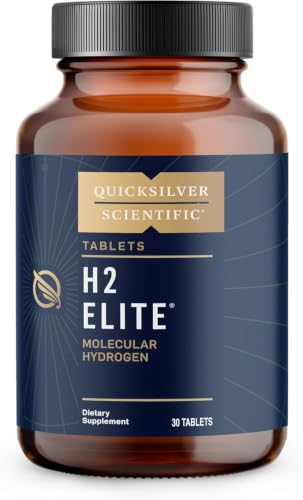
On the product itself: the review notes that the stability of artificially added active hydrogen is far lower than naturally occurring active hydrogen, which reduces the number of active hydrogen molecules actually present in hydrogen-rich water, and that the effect of hydrogen-rich water is relatively slow[2]. That is a direct challenge to the practical value of the consumer product, coming from a paper that otherwise reports positive results.
The review also raises a concern that long-term drinking of hydrogen-rich water may cause abnormal liver function[2]. This appears as a stated caveat rather than as a demonstrated finding with supporting data in the abstract, so it should be treated as a flag worth knowing about rather than an established risk. It is included here because omitting an inconvenient caveat from a source while quoting its favourable numbers is not honest reporting.
The animal work, including the part that complicates the story
In a rat model, periodontitis was induced by placing a ligature around the maxillary molars for four weeks, with animals given drinking water with or without hydrogen[3]. Rats with periodontitis given plain water showed a time-dependent rise in serum reactive oxygen species, along with polymorphonuclear leucocyte infiltration and alveolar bone loss at four weeks.
Hydrogen-rich water intake blocked the rise in serum reactive oxygen species and lowered expression of two oxidative damage markers in periodontal tissue. It prevented leucocyte infiltration and osteoclast differentiation as periodontitis progressed, and inflammatory signalling pathways including mitogen-activated protein kinases were less activated in hydrogen-treated animals[3]. Alveolar bone loss is the outcome that determines whether teeth survive, so a model showing protection there is meaningful.
A second rat study asked a different question: what happens to periodontal tissue over a long stretch of normal ageing, without induced disease. Four-month-old rats drank hydrogen-rich water or distilled water until 16 months of age[4].
The hydrogen group did show lower periodontal oxidative damage at 16 months. But protein expression of interleukin-1 beta did not differ between groups, and gene expression of NLRP3 inflammasomes was activated in periodontal tissues from the hydrogen group compared with controls[4]. The authors’ own conclusion was that drinking hydrogen-rich water has anti-ageing effects on periodontal oxidative damage, but not on inflammatory reactions, in healthy rats.
That is a finding running against the simple story, in a healthy-tissue model rather than a disease model. It fits a pattern that shows up elsewhere in hydrogen research: effects look cleaner where there is existing damage to reduce, and get murkier in healthy tissue.
The oral bacteria question
Alongside the inflammatory and oxidative markers, the meta-analysis assessed effects on oral flora and reported that hydrogen-rich water effectively inhibited oral pathogenic bacterial activity[2].
This is a different kind of claim from the antioxidant one, and it invites a question the antioxidant framing does not: if hydrogen water suppresses bacteria in the mouth, does it distinguish between pathogenic and commensal species? The oral microbiome is not simply a population of invaders. Broad antimicrobial effects are the reason long-term chlorhexidine use is generally restricted to defined courses rather than indefinite daily use.

The available data do not settle this. What can be said is that a mouthwash-style antimicrobial effect and a systemic selective-antioxidant effect are two separate mechanisms with different implications, and that content presenting hydrogen water as purely and passively beneficial is not engaging with the second one.
Making sense of the ageing-rat result
The finding that NLRP3 inflammasome gene expression was higher in hydrogen-treated healthy ageing rats[4] deserves interpretation rather than just disclosure, because it is easy to over-read in either direction.
The NLRP3 inflammasome is a sensor complex that triggers inflammatory signalling. Increased gene expression is not the same as increased inflammatory activity: gene expression, protein levels, and actual activation are three different things, and the same study found interleukin-1 beta protein expression unchanged[4]. If the pathway were meaningfully more active, that downstream protein would be the place to see it.
So the reasonable reading is not that hydrogen water inflames healthy gums. It is that the tidy narrative of hydrogen reducing oxidative stress and therefore reducing inflammation did not hold in this model. Oxidative damage went down; the inflammatory picture did not follow. That decoupling is informative, and the authors state it directly in their own conclusion.
How to read the whole picture
Putting the four studies together, the coherent summary is narrower than the marketing version and stronger than dismissal.
- In diseased periodontal tissue, whether in a rat ligature model or in humans undergoing treatment, adding hydrogen water is associated with better outcomes on measures dentists care about[3][1].
- Pooled marker data across 17 studies moves consistently in the favourable direction, from a body of studies with medium-to-low overall risk of bias[2].
- In healthy ageing tissue, the oxidative damage benefit appears without a matching anti-inflammatory benefit[4].
- The human evidence for clinical outcomes rests on a 13-person pilot[1]. No large randomised trial with clinical periodontal endpoints has been reported.
The practical bottom line
Every human study here tested hydrogen water alongside actual periodontal treatment. None tested it as a replacement, and the pilot that produced the encouraging attachment-level result did so in patients who were also being scaled and root planed by a dental professional.
If your gums are inflamed or bleeding, the interventions with an established evidence base are the unglamorous ones: professional cleaning, treatment of existing pockets, and daily mechanical plaque removal. Hydrogen water, on the current evidence, is a candidate adjunct with a plausible mechanism, favourable marker data, one small positive human pilot, and open questions about how much active hydrogen a consumer product actually delivers. That is a reasonable thing to be curious about. It is not a reason to skip the dentist.
References
- Drinking Hydrogen-Rich Water Has Additive Effects on Non-Surgical Periodontal Treatment of Improving Periodontitis: A Pilot Study. Antioxidants, 2016
- Effects of hydrogen rich water and pure water on periodontal inflammatory factor level, oxidative stress level and oral flora: a systematic review and meta-analysis. Annals of Translational Medicine, 2022
- Hydrogen-rich water attenuates experimental periodontitis in a rat model. Journal of Clinical Periodontology, 2012
- Effects of hydrogen-rich water on aging periodontal tissues in rats. Scientific Reports, 2015
These statements have not been evaluated by the Food and Drug Administration. This information is not intended to diagnose, treat, cure, or prevent any disease. Content is for informational purposes only and is not medical advice; consult a qualified healthcare provider before starting any supplement. As an Amazon Associate we earn from qualifying purchases.
