Two clinical studies have tested inhaled molecular hydrogen in people recovering from COVID-19. One is a randomised placebo-controlled trial with 50 participants and functional outcomes. The other is a 12-patient phase I safety study. They are frequently cited together as though they carry similar weight, and they do not.
Understanding why is more useful than either study on its own, because the gap between them is the gap between “this improved a measured outcome against placebo” and “this appeared safe and everyone got better.”
The randomised trial
A randomised, single-blind, placebo-controlled study examined 14 days of hydrogen inhalation in patients recovering from COVID-19[1]. It included 26 males with a mean age of 44 and 24 females with a mean age of 38, for 50 participants in total.
Participants were symptomatic and were recruited between 21 and 33 days after a positive PCR test. That timing places them in early post-acute recovery rather than in long COVID, which is generally defined by symptoms persisting far longer. The distinction matters, because the study is often cited as long COVID evidence and its recruitment window does not support that.
The protocol was hydrogen or placebo inhalation, twice a day for 60 minutes each session, for 14 days. Outcomes were a six-minute walking test and pulmonary function testing covering forced vital capacity and forced expiratory volume in the first second.
Results
Compared with placebo, hydrogen therapy significantly increased six-minute walking test distance by 64 plus or minus 39 metres, forced vital capacity by 0.19 plus or minus 0.24 litres, and forced expiratory volume in one second by 0.11 plus or minus 0.28 litres, with all three at p less than or equal to 0.025[1].
The walking test result is the most substantial of the three. An additional 64 metres over six minutes is a difference a patient would notice, and a walk test is a functional measure rather than a laboratory marker.
The lung function numbers deserve a closer look. For forced expiratory volume in one second, the mean improvement was 0.11 litres and the standard deviation was 0.28 litres. The variability is more than twice the average effect. For forced vital capacity, the standard deviation of 0.24 litres also exceeds the mean change of 0.19 litres. Statistically the group difference held up, but those spreads say that individual responses varied widely, and that a meaningful number of participants likely saw little or no change on those two measures.
Limitations worth naming
The study was single-blind, not double-blind[1]. Participants did not know their assignment, but the same protection did not extend through the assessment process in the way a double-blind design provides. For an effort-dependent outcome like a walking test, that is a real consideration, because how hard a participant pushes is not fully objective.

Fifty participants is a modest sample. Fourteen days is a short intervention. And the two hours of daily inhalation the protocol required is not a trivial commitment.
What the three outcome measures actually are
The trial picked measures that map onto recovery in a way a patient would recognise, which is worth spelling out.
The six-minute walking test records how far someone can walk on a flat course in six minutes at their own pace. It captures the combined output of lungs, heart, muscles and fatigue tolerance, which is why it is used across respiratory and cardiac rehabilitation. It is also effort-dependent, meaning motivation and encouragement influence the result. That is precisely where a single-blind design is weaker than a double-blind one.
Forced vital capacity is the total volume of air a person can forcibly exhale after a full breath in. Forced expiratory volume in one second is how much of that comes out in the first second. Together they describe lung volume and how freely air moves out, and both are measured by spirometry rather than reported by the patient, so they are not vulnerable to the same effort-and-expectation problem in the way a walk test is.
That difference in measurement type is useful for interpreting the result. The largest, cleanest effect appeared on the effort-dependent measure. The objective spirometry measures moved less, and with variability exceeding the mean change[1].
The protocol asks a lot
The intervention was hydrogen inhalation twice daily for 60 minutes per session across 14 days[1]. That totals 28 hours of inhalation over two weeks.
This is worth stating plainly because it is routinely omitted when the study is summarised. Whatever the biological effect, the protocol that produced it is two hours a day tethered to a device. Any reader mentally translating this result into a product they might use is almost certainly imagining something far less demanding.
It also raises a question the study cannot answer: whether the dose matters, and how much of it is required. With a single protocol tested against placebo, there is no information about whether 30 minutes a day would do anything, or whether the effect scales with exposure.
The phase I study
The second study, registered as NCT04633980, was an open-label, prospective, single-centre, single ascending-dose phase I trial of hydrogen inhalation in patients hospitalised with moderate COVID-19[2].
It used a 3 plus 3 design across three target exposure durations of one day, three days and six days, and enrolled 12 patients. Patients inhaled a mixture of 3.6 percent hydrogen and 96.4 percent nitrogen. The investigators concluded that the maximum tolerated duration is at least three days, that the device and method carry no explosion risk, and that this was the first trial to establish the safety of inhaling this mixture in hospitalised COVID-19 patients[2].
The paper also reports that every patient showed clinical improvement and excellent tolerance.
Why “every patient improved” is not evidence that it worked
That sentence is the one most likely to be extracted and repeated without its context, so it is worth taking apart.
A phase I trial is designed to answer whether an intervention is safe and tolerable, and at what dose or duration. It is not designed to answer whether the intervention works. This particular study had no control group, was open-label so everyone knew what they were receiving, and enrolled 12 people.
Most importantly, the large majority of patients hospitalised with moderate COVID-19 recover regardless of what adjunctive therapy they receive. In an uncontrolled study of 12 such patients, universal clinical improvement is close to what you would expect to observe if the treatment did nothing at all. There is no comparison group against which to measure whether recovery was faster or more complete.
The authors are appropriately careful about this. Their stated conclusion is that the encouraging outcomes justify further exploration through larger controlled clinical trials[2], which is a request for efficacy evidence rather than a claim to have produced any.
The mechanism behind the hypothesis
The rationale draws on the selective antioxidant mechanism proposed in 2007, in which molecular hydrogen reduces particularly damaging oxygen radicals rather than acting as a blanket antioxidant[3]. The phase I paper additionally frames hydrogen as potentially inhibiting intracellular signalling pathways associated with inflammation, particularly when given early alongside nasal oxygen[2].

Severe COVID-19 involves inflammatory and oxidative processes, so the hypothesis is coherent. As always, a coherent hypothesis is a reason to test something, not a result.
The comparison that was not run
The randomised trial compared hydrogen inhalation against placebo inhalation[1]. That answers whether hydrogen beats breathing nothing in particular. It does not answer the question a recovering patient actually faces, which is what to spend their time and effort on.
Pulmonary rehabilitation, meaning structured supervised exercise training, is the intervention with a substantial established evidence base for restoring functional capacity after respiratory illness, and the six-minute walking test is one of the standard outcomes used to measure it. A trial comparing 28 hours of hydrogen inhalation against 28 hours of supervised exercise would be considerably more informative, and considerably less favourable to hydrogen as a use of that time.
Nothing about the trial design was improper. Placebo-controlled is the right first step. But readers should be clear that beating a placebo and being the best available option are different claims, and only the first one was tested.
What is missing from this literature
Anyone weighing these two studies should be clear about what has not been done.
- No large controlled efficacy trial. The phase I authors explicitly call for one.
- No long COVID trial. The randomised study recruited 21 to 33 days after infection. Chronic post-COVID syndrome is a different population.
- No hydrogen water data in this population at all. Both studies used inhaled hydrogen, one at two hours daily for two weeks, the other as a hospital-delivered gas mixture. Neither tells you anything about drinking hydrogen-rich water after COVID.
- No comparison against standard rehabilitation. The randomised trial compared hydrogen inhalation against placebo inhalation, not against a structured exercise rehabilitation programme, which is the intervention with the established evidence base for post-viral functional recovery.
The honest summary
There is one randomised placebo-controlled trial suggesting that two hours of daily hydrogen inhalation for 14 days improved walking distance and, with wide individual variability, lung function measures in people three to four weeks past a COVID infection[1]. There is one small phase I study establishing that a specific hydrogen and nitrogen mixture was safe and tolerable for at least three days in hospitalised patients[2].
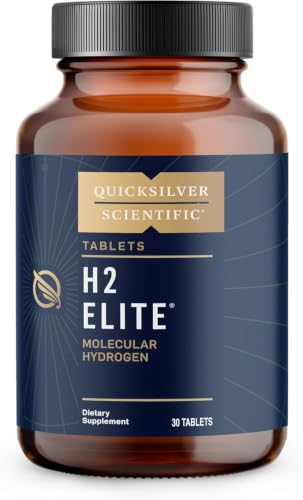
That is a genuine and reasonably encouraging starting point for a research programme. It is not a basis for buying a hydrogen product to treat COVID or its aftermath, and it says nothing about the consumer hydrogen products most readers of this site are actually considering. The intervention that was tested is not the intervention that is for sale.
References
- Molecular Hydrogen Positively Affects Physical and Respiratory Function in Acute Post-COVID-19 Patients: A New Perspective in Rehabilitation. International Journal of Environmental Research and Public Health, 2022
- H2 inhalation therapy in patients with moderate COVID-19 (H2COVID): a prospective ascending-dose phase I clinical trial. Antimicrobial Agents and Chemotherapy, 2024
- Hydrogen acts as a therapeutic antioxidant by selectively reducing cytotoxic oxygen radicals. Nature Medicine, 2007
These statements have not been evaluated by the Food and Drug Administration. This information is not intended to diagnose, treat, cure, or prevent any disease. Content is for informational purposes only and is not medical advice; consult a qualified healthcare provider before starting any supplement. As an Amazon Associate we earn from qualifying purchases.
