Oxidative stress — an imbalance between reactive oxygen species (ROS) and the body’s antioxidant defenses — is implicated in a wide range of chronic conditions, from metabolic dysfunction to accelerated cellular aging [1]. Researchers have long searched for antioxidants that reduce harmful ROS without disrupting the beneficial signaling roles that some reactive species play in normal cell function, a distinction most conventional antioxidants cannot make.
Molecular hydrogen (H2) has attracted scientific attention as a candidate ‘selective antioxidant.’ It is proposed to neutralize primarily the most cytotoxic reactive species — specifically the hydroxyl radical and peroxynitrite — while leaving other ROS that cells need for normal signaling largely intact. This article surveys the available clinical and experimental evidence, explains the proposed mechanism plainly, and is honest about where that evidence remains thin and preliminary.
Key Takeaways
- Molecular hydrogen is proposed to act as a selective antioxidant that targets the hydroxyl radical and peroxynitrite while leaving beneficial redox signaling intact — a mechanism supported by experimental evidence [2] but not yet fully confirmed in large human trials.
- Small randomized controlled trials have found that H2-rich water reduced markers of oxidative stress, inflammation, and cellular apoptosis in healthy adults [3] and in patients with chronic high-altitude disease [4].
- A six-month pilot trial in adults aged 70 and over found changes in aging-related biomarkers with H2 water supplementation [5], but pilot trials are hypothesis-generating, not confirmatory, and require replication at scale.
- H2-rich water has been studied as a protective agent against radiation-induced oxidative damage, with experimental evidence suggesting it reduces hydroxyl radical burden and protects hematopoietic stem cells [2].
- The overall evidence base is early-stage — most trials are small, short-term, and primarily conducted in Japan and East Asia — and molecular hydrogen is not approved by the FDA to treat, prevent, or cure any disease.
The Problem with Unselective Antioxidants
Not all reactive oxygen species are destructive. Superoxide and hydrogen peroxide serve as signaling molecules that regulate immune responses, gene expression, and cellular repair. Indiscriminately neutralizing all ROS — as some high-dose antioxidant supplements are proposed to do — can impair these beneficial pathways. The challenge for researchers has been identifying agents that reduce genuinely damaging oxidation without disrupting healthy redox biology [1].
The hydroxyl radical is among the most damaging ROS the body encounters. It reacts non-specifically with DNA, proteins, and lipids at diffusion-limited rates, contributing to cell damage associated with aging, inflammation, and radiation injury. It is this species, along with peroxynitrite, that molecular hydrogen is proposed to selectively target — a specificity that distinguishes it in principle from conventional broad-spectrum antioxidants, though the full scope of this selectivity under real physiological conditions is still under investigation.
The Proposed Mechanism: Selective Quenching of Cytotoxic Radicals
Molecular hydrogen is the smallest and lightest molecule known. Because of its size and non-polar character, it can rapidly diffuse across cell membranes — including the blood-brain barrier — and reach subcellular compartments such as mitochondria where oxidative damage is often initiated. The proposed mechanism involves direct chemical reaction with the hydroxyl radical, converting it to water, an inert product. Evidence from radiation research supports this: H2-rich water was found to reduce hydroxyl radical load and protect hematopoietic stem cells from irradiation-induced injury in a controlled experimental study [2]. A broader review of hydrogen’s radioprotective potential also highlights its selective radical-scavenging profile as a mechanistic basis for observed cytoprotection [6].
Because H2 does not measurably react with superoxide or hydrogen peroxide under physiological conditions, it is theorized to preserve the redox signaling those molecules provide. This claim is biologically plausible but has not been definitively established in large human trials, and the full mechanism of action continues to be investigated.
Clinical Evidence: Inflammation and Cell Survival in Healthy Adults
One of the more rigorous human studies to date is a randomized, double-blind, controlled trial in healthy adults that examined the effects of hydrogen-rich water on inflammatory markers and cellular apoptosis. The researchers found that H2-rich water intake was associated with reductions in inflammatory responses and inhibited apoptosis in peripheral blood cells, suggesting a measurable antioxidant and cytoprotective effect even without underlying disease [3]. These findings are promising but derive from a single trial with a modest sample, and the long-term clinical significance of these biomarker changes in otherwise healthy individuals is not yet known.
Biomarker improvements — reduced inflammatory cytokines, lower rates of cellular death — do not automatically translate into better clinical outcomes or disease prevention. Replication in larger, independent trials with outcome-based endpoints is needed before clinical conclusions can be drawn from these results.

Aging Biomarkers: A Six-Month Pilot Trial in Older Adults
A randomized controlled pilot trial lasting six months examined hydrogen-rich water supplementation in adults aged 70 and older, tracking both molecular and phenotypic biomarkers associated with aging. The trial reported changes in select aging-related markers over the study period [5]. Because this was a pilot trial — designed primarily to test feasibility and generate hypotheses rather than confirm efficacy — results should be treated as preliminary signals. Sample sizes in pilot studies are typically too small to support definitive conclusions, and this study was not powered to detect differences in clinical outcomes such as disease incidence or mortality.
The scientific rationale for investigating H2 in the context of aging is sound: oxidative damage to DNA and proteins accumulates with age and is considered a central contributor to cellular senescence and functional decline. Research on the mitochondrial dysfunction that underlies senescence in certain cell types provides additional context for why reducing oxidative burden at the mitochondrial level is an active area of inquiry [7], though that work is not specific to molecular hydrogen.
High-Altitude Disease: Testing H2 Under Elevated Oxidative Load
One context where oxidative stress is physiologically acute is chronic high-altitude disease, in which reduced oxygen partial pressure and compensatory responses generate elevated ROS. A 2025 double-blind, randomized, placebo-controlled study found that hydrogen-rich water supplementation attenuated oxidative stress markers and reduced inflammation in patients with this condition [4]. This is among the more recent and methodologically rigorous trials in the H2 literature, and the use of a population with measurably elevated baseline oxidative stress may make it a more sensitive test of H2’s antioxidant effects than studies in healthy individuals.
Even so, this study was conducted in a specialized population under specific environmental conditions — high altitude, chronic hypoxia — and results may not generalize to other populations or disease states. It adds to a growing but still early body of human evidence.

DNA Oxidation, Antioxidant Capacity, and Metabolic Markers
A study examining H2-rich water prepared by alternating-current electrolysis assessed antioxidant activity, DNA oxidative damage (measured through a standard oxidized-DNA marker), and certain diabetes-related indicators. Improvements were observed across several of these measures [8]. Reduced oxidative DNA damage is a biologically meaningful endpoint because accumulated DNA oxidation is associated with aging, increased cancer risk, and metabolic disruption. The metabolic marker findings from this study are exploratory and do not constitute evidence that H2 water manages or prevents diabetes.
Plant research has also provided mechanistic insight at the cellular level: in wheat aleurone layers, hydrogen-rich water was shown to modulate reactive oxygen species metabolism and reduce programmed cell death [9]. While plant and animal models do not translate directly to human outcomes, they help clarify how H2 interacts with ROS pathways at a cellular level and inform the design of human trials.
🛒 Where to Buy Molecular Hydrogen
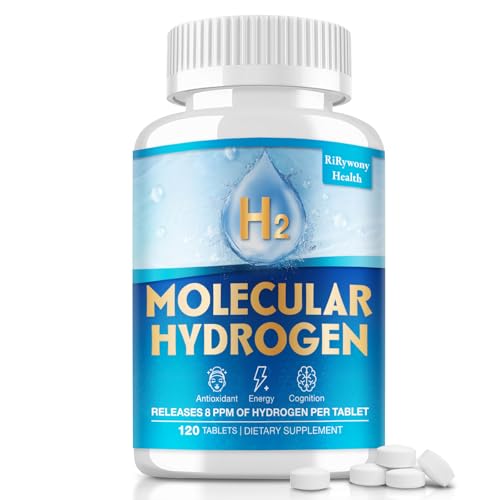
- Drink HRW Rejuvenation Molecular Hydrogen TabletsLab-tested / studied
tablets, 1 tablet per 500ml water — Research-grade effervescent tablet; developed with involvement from the Molecular Hydrogen Foundation; among the highest documented H2 output per tablet; frequently cited in community as the benchmark - Dr. Mercola Molecular Hydrogen Tablets
tablets, 2 tablets daily in water — Mass-market accessible entry point; wide distribution; uses magnesium as hydrogen carrier; good brand recognition for general wellness shoppers - Water & Wellness H2 Elite Molecular Hydrogen Tablets
tablets, 1 tablet per 16 oz water — Travel-friendly compact packaging; practical for daily carry; good entry-level tablet option for those new to H2 - Susosu Water Hydrogen-Infused Sparkling Water Pouches
liquid, 1 pouch (8 oz) — Ready-to-drink sealed aluminum pouches preserve dissolved H2; Japanese-origin brand; no dissolution required; convenient format for on-the-go use
As an Amazon Associate we earn from qualifying purchases. Molecular hydrogen quality comes down to dissolved H2 concentration, not price. Choose a product that states a specific ppm (mg/L) figure backed by third-party testing, and prefer airtight aluminum or sealed glass packaging — a vague high-concentration claim is unverifiable, and H2 escapes quickly from plastic and open containers.
A Note on the Evidence
The clinical evidence on molecular hydrogen and oxidative stress is early-stage and consists primarily of small trials of short duration, most conducted in Japan and East Asia; findings have not been confirmed at scale and no regulatory agency has approved H2 products for treating any condition. Individuals with chronic diseases, those on medications, pregnant or breastfeeding individuals, and anyone with specific health concerns should consult a qualified healthcare provider before adding hydrogen-rich water or H2 supplements to their routine.
Frequently Asked Questions
What is molecular hydrogen and how does it differ from regular antioxidants?
Molecular hydrogen (H2) is a gas dissolved in water to create hydrogen-rich water. Unlike vitamins C or E, which broadly neutralize many reactive oxygen species, H2 is proposed to selectively neutralize only the most cytotoxic species — the hydroxyl radical and peroxynitrite — while leaving other ROS intact [6]. This selectivity is considered a theoretical advantage over broad antioxidants, though it has not been confirmed definitively in large human trials.
What does clinical research actually show about H2 and oxidative stress markers?
The most relevant human trials are small and short-duration. A randomized controlled trial in healthy adults found H2-rich water reduced inflammatory markers and inhibited apoptosis in peripheral blood cells [3]. A separate study found reduced DNA oxidative damage markers with H2-rich water intake [8]. A 2025 double-blind trial found attenuated oxidative stress and inflammation in chronic high-altitude disease patients [4]. All findings are preliminary and await replication.
Is there research on molecular hydrogen and aging?
A six-month randomized controlled pilot trial in adults aged 70 and over reported changes in select molecular and phenotypic aging biomarkers following H2-rich water supplementation [5]. Pilot trials are early-stage studies not designed or powered to prove clinical efficacy, so these results should be considered hypothesis-generating rather than confirmatory evidence of an anti-aging effect.
Why is the hydroxyl radical specifically relevant to H2 research?
The hydroxyl radical is among the most reactive and damaging of all ROS, causing indiscriminate oxidative damage to DNA, proteins, and lipids with no enzymatic defense capable of neutralizing it directly. H2 is proposed to react with and convert hydroxyl radicals to water. Experimental research found that H2-rich water reduced hydroxyl radical levels and protected bone marrow stem cells from radiation-induced damage [2], providing some mechanistic support for this proposed reaction.
Is hydrogen-rich water considered safe?
Based on available research, H2-rich water and effervescent H2 tablets appear broadly inert at studied doses. Molecular hydrogen is non-toxic, and excess gas is exhaled. No significant adverse effects have been reported across controlled trials to date, including the six-month aging study [5] and the inflammatory marker study [3]. Long-term safety data across diverse populations and dosing regimens is still limited, so caution and professional guidance are warranted for ongoing use.
Can molecular hydrogen treat or prevent diseases?
No. Molecular hydrogen is not approved by the FDA to treat, prevent, or cure any condition. Existing trials study biomarker and physiological changes — not clinical disease outcomes — and the evidence base consists primarily of small, short-duration studies conducted outside the United States. Any claims beyond general informational interest should be viewed with appropriate skepticism until larger, independently replicated trials are available.
References
- Žerovnik E et al. Special Issue: "Inflammation, Oxidative Stress and Protein Aggregation; Any Links?". Cells (2020). PMID 33187373
- Zhang J et al. Hydrogen-Rich Water Ameliorates Total Body Irradiation-Induced Hematopoietic Stem Cell Injury by Reducing Hydroxyl Radical. Oxidative medicine and cellular longevity (2017). PMID 28243358
- Sim M et al. Hydrogen-rich water reduces inflammatory responses and prevents apoptosis of peripheral blood cells in healthy adults: a randomized, double-blind, controlled trial. Scientific reports (2020). PMID 32699287
- Zhang Q et al. Hydrogen-rich water supplementation attenuates oxidative stress and inflammation in chronic high-altitude disease patients: A double-blind randomized placebo-controlled study. Food research international (Ottawa, Ont.) (2025). PMID 40922182
- Zanini D et al. The effects of 6-month hydrogen-rich water intake on molecular and phenotypic biomarkers of aging in older adults aged 70 years and over: A randomized controlled pilot trial. Experimental gerontology (2021). PMID 34601077
- Qian L et al. Hydrogen as a new class of radioprotective agent. International journal of biological sciences (2013). PMID 24155664
- Wen J et al. Short-Term DMOG treatment rejuvenates senescent mesenchymal stem cells by enhancing mitochondrial function and mitophagy through the HIF-1α/BNIP3 pathway. Stem cell research & therapy (2025). PMID 40457488
- Asada R et al. Effects of hydrogen-rich water prepared by alternating-current-electrolysis on antioxidant activity, DNA oxidative injuries, and diabetes-related markers. Medical gas research (2020). PMID 33004708
- Wu M et al. Hydrogen-rich water alleviates programmed cell death induced by GA in wheat aleurone layers by modulation of reactive oxygen species metabolism. Plant physiology and biochemistry : PPB (2021). PMID 33901885
These statements have not been evaluated by the Food and Drug Administration. This information is not intended to diagnose, treat, cure, or prevent any disease. Content is for informational purposes only and is not medical advice; consult a qualified healthcare provider before starting any supplement. As an Amazon Associate we earn from qualifying purchases.
