Vitamin C is one of the most studied antioxidants in human nutrition, with decades of research across diverse populations behind it. Molecular hydrogen — delivered as hydrogen-enriched water or via effervescent tablet — is newer to the conversation, with most of its clinical literature emerging from Japanese and East Asian research groups over the past two decades. Both are proposed to reduce oxidative stress, but they appear to work through fundamentally different mechanisms, and that difference may matter more than it first seems.
The core distinction researchers point to is selectivity. Vitamin C is a broad-spectrum electron donor capable of neutralizing a wide range of reactive oxygen species. Molecular hydrogen, by contrast, has been proposed to act selectively against the most cytotoxic oxidants — particularly hydroxyl radical and peroxynitrite — while leaving other reactive species that play constructive roles in cellular signaling largely undisturbed. Whether that selectivity translates into meaningful practical advantages is still an open and genuinely unsettled question.
Key Takeaways
- Vitamin C is a broad-spectrum antioxidant with an extensive research history; molecular hydrogen is proposed to act selectively against only the most cytotoxic reactive species — hydroxyl radical and peroxynitrite — while leaving beneficial signaling ROS intact.
- Antioxidant selectivity may matter because some reactive oxygen species function as cellular signals; broad-spectrum quenching can disrupt those pathways, which may explain mixed results from high-dose antioxidant supplementation trials.
- The evidence for molecular hydrogen is early-stage: most published trials are small, short, and based in Japan; findings should be treated as preliminary, not as established clinical guidance.
- High-dose intravenous vitamin C behaves differently from dietary-level supplementation and can exhibit prooxidant activity in certain conditions — context and dose matter significantly [1].
- Neither compound is a drug, and no regulatory agency has approved H2 products to treat or prevent disease; consult a healthcare provider before adding either at supplemental doses.
How Vitamin C Works as an Antioxidant
Vitamin C, or ascorbic acid, is a water-soluble vitamin that donates electrons to free radicals, neutralizing them and becoming oxidized itself in the process. The resulting compound, dehydroascorbic acid, can be recycled back to ascorbic acid inside cells, giving vitamin C a degree of regenerative capacity. This broad electron-donating activity means it can quench many types of reactive oxygen species, from superoxide to hydrogen peroxide to hydroxyl radical.
A computational comparison of dietary antioxidants found that vitamin C possesses meaningful radical-scavenging capacity, consistent with its long-studied role in human redox biology [2]. At normal dietary intakes, vitamin C is considered safe and well-tolerated. At pharmacological intravenous doses, however, its behavior changes — high concentrations can generate hydrogen peroxide in certain tissue environments, which is part of the rationale behind investigational research combining high-dose vitamin C with other agents [1][3]. This dual behavior underscores a key principle: antioxidants are not uniformly beneficial at all doses and in all contexts.
The Proposed Mechanism of Molecular Hydrogen
Molecular hydrogen (H2) is the smallest and lightest molecule known. Its size allows it to diffuse rapidly across biological membranes — including the blood-brain barrier and mitochondrial membranes — a property that distinguishes it from most other antioxidants, which are larger hydrophilic molecules confined largely to aqueous cellular compartments. Its proposed primary mechanism is direct chemical reaction with hydroxyl radical (•OH) and peroxynitrite (ONOO⁻), two of the most reactive and destructive oxidative species in biology.
Unlike hydrogen peroxide or superoxide, which participate in useful signaling cascades, hydroxyl radical and peroxynitrite are not believed to have beneficial physiological roles. They react indiscriminately with DNA, proteins, and lipids at diffusion-limited rates, producing damage that accumulates in conditions ranging from ischemia-reperfusion injury to chronic inflammation. The proposed selectivity of H2 for these particular oxidants — rather than all reactive oxygen species — is what distinguishes it mechanistically from broad-spectrum antioxidants. This remains an active area of investigation, not a settled clinical conclusion, and the evidence base is early and geographically concentrated in Japan.
Why Antioxidant Selectivity Might Actually Matter
The concept of antioxidant selectivity has gained attention because reactive oxygen species are not uniformly harmful. Hydrogen peroxide, superoxide, and nitric oxide each serve as signaling molecules in pathways governing immune response, insulin sensitivity, cardiovascular tone, and muscle adaptation to exercise. A broad-spectrum antioxidant that quenches all reactive species indiscriminately risks disrupting these signals, not just the damaging ones.
This concern is not purely theoretical. Several large-scale supplementation trials involving antioxidants such as high-dose beta-carotene and vitamin E found no benefit and in some cases potential harm, raising the possibility that neutralizing all oxidative signaling is not inherently protective. Research examining how antioxidants interact with oxidative stress in inflammatory cell models — such as macrophage studies evaluating different antioxidant compounds [4] — reinforces the picture that different reactive species play distinct roles in inflammation, and that indiscriminate quenching is not always the therapeutic goal. Molecular hydrogen’s proposed mechanism, if validated, would address this by targeting only non-signaling oxidants — though this remains a hypothesis rather than an established clinical finding.

What the Research Base Actually Shows
The evidence base for molecular hydrogen is genuinely early-stage. The majority of published clinical trials are small — often fewer than 50 participants — conducted over short periods of weeks to a few months, and originate primarily from Japan. Study quality varies, and most findings have not been independently replicated in large Western randomized controlled trials. Areas studied include inflammatory markers, metabolic parameters, exercise recovery, and cognitive outcomes, with some trials reporting improvements in oxidative stress biomarkers, but without the kind of large, long-term, placebo-controlled evidence that would establish clinical efficacy.
Vitamin C, by contrast, has an extensive and independently replicated research history. Its role as an essential nutrient is beyond dispute, and supplemental benefits for specific groups — those who are deficient, athletes under heavy training loads, people who smoke — are supported by substantial evidence. The practical question is whether the selectivity hypothesis for molecular hydrogen, if validated in larger trials, could make it a useful complement to vitamin C supplementation in some contexts. Currently, there is not enough evidence to answer that question confidently.
Redox Signaling and the Antioxidant Paradox
Exercise physiology has highlighted what is sometimes called the antioxidant paradox: high-dose antioxidant supplementation given around training sessions has in some studies blunted the adaptive responses that make exercise beneficial — including mitochondrial biogenesis and improvements in insulin sensitivity. The working hypothesis is that the mild oxidative stress produced by exercise functions as a signal for these adaptations, and that aggressive antioxidant supplementation interferes with that signaling.
Molecular hydrogen’s proposed selectivity is often framed as a potential solution to this paradox — the idea being that it could reduce pathological oxidative damage from exercise-induced hydroxyl radical accumulation while leaving beneficial signaling ROS intact. This is a compelling hypothesis and the subject of small investigational trials, but it remains largely unproven in rigorous, large-scale human research. Anyone reading about molecular hydrogen and exercise should treat individual trial findings as preliminary rather than as confirmed guidance for supplementation.

Practical Differences Between H2 and Vitamin C
Vitamin C is inexpensive, widely available, and has a well-established safety profile at conventional supplemental doses. It is water-soluble and renally cleared, limiting risk of accumulation. Molecular hydrogen is consumed as H2-enriched water or via effervescent magnesium tablets that generate H2 in solution; after absorption it is rapidly exhaled from the body, and no toxicity has been reported at studied doses.
One frequently cited theoretical difference is tissue distribution. Vitamin C accumulates to high concentrations in immune cells, the adrenal glands, and the brain, contributing to its tissue-specific roles. Molecular hydrogen, because of its very small size and partial lipid solubility, is hypothesized to reach mitochondria and diffuse across the blood-brain barrier more readily than most antioxidant molecules. Whether this theoretical advantage translates into clinically meaningful differences in effect has not been established in large human trials. Both compounds are available as supplements, neither is classified as a drug, and neither should be relied upon to treat diagnosed medical conditions.
🛒 Where to Buy Molecular Hydrogen
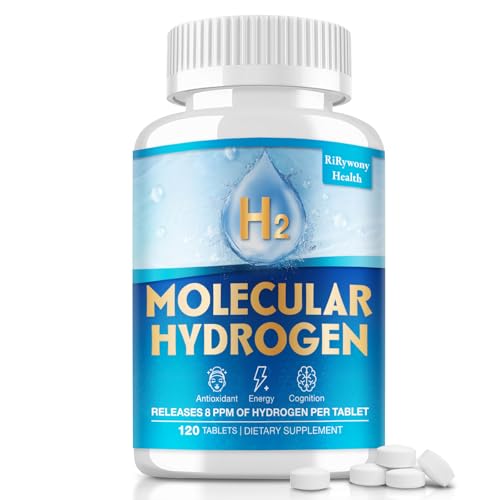
- Drink HRW Rejuvenation Molecular Hydrogen TabletsLab-tested / studied
tablets, 1 tablet per 500ml water — Research-grade effervescent tablet; developed with involvement from the Molecular Hydrogen Foundation; among the highest documented H2 output per tablet; frequently cited in community as the benchmark - Dr. Mercola Molecular Hydrogen Tablets
tablets, 2 tablets daily in water — Mass-market accessible entry point; wide distribution; uses magnesium as hydrogen carrier; good brand recognition for general wellness shoppers - Water & Wellness H2 Elite Molecular Hydrogen Tablets
tablets, 1 tablet per 16 oz water — Travel-friendly compact packaging; practical for daily carry; good entry-level tablet option for those new to H2 - Susosu Water Hydrogen-Infused Sparkling Water Pouches
liquid, 1 pouch (8 oz) — Ready-to-drink sealed aluminum pouches preserve dissolved H2; Japanese-origin brand; no dissolution required; convenient format for on-the-go use
As an Amazon Associate we earn from qualifying purchases. Molecular hydrogen quality comes down to dissolved H2 concentration, not price. Choose a product that states a specific ppm (mg/L) figure backed by third-party testing, and prefer airtight aluminum or sealed glass packaging — a vague high-concentration claim is unverifiable, and H2 escapes quickly from plastic and open containers.
A Note on the Evidence
The clinical evidence for molecular hydrogen is early-stage, with most trials small, short-duration, and conducted outside the US; no regulatory agency has approved H2 products to treat or prevent any disease. Individuals who are pregnant, nursing, taking prescription medications, or managing a chronic health condition should consult a physician before adding molecular hydrogen or high-dose vitamin C supplements to their routine.
Frequently Asked Questions
Is molecular hydrogen more effective than vitamin C as an antioxidant?
The question cannot be answered simply because the two compounds target different reactive species through different mechanisms. Vitamin C has a vastly larger research base confirming its role in human health, and computational analysis supports its meaningful scavenging capacity [2]. Molecular hydrogen’s proposed selectivity is theoretically interesting but remains under investigation in relatively small trials. No large head-to-head human trial comparing the two has been published.
Can I take molecular hydrogen and vitamin C together?
There is no published evidence of harm from combining them, and their proposed mechanisms operate through different pathways. However, combinations have not been specifically studied for safety or additive effects in rigorous trials. If you are considering both supplements — particularly alongside medications or for management of a health condition — consult a qualified healthcare provider before proceeding.
Does vitamin C ever act as a prooxidant rather than an antioxidant?
At very high pharmacological concentrations — typically achievable only through intravenous administration — vitamin C can generate hydrogen peroxide in certain tissue environments. This property has been studied in specific research contexts; for example, combining high-dose vitamin C with auranofin has been investigated in triple-negative breast cancer models [1][3]. At conventional dietary and supplemental oral doses, vitamin C behaves as an antioxidant and is not associated with prooxidant effects in healthy individuals.
What makes hydroxyl radical a specific target for molecular hydrogen?
Hydroxyl radical is one of the most reactive oxidative species in biology and reacts at near-diffusion-limited rates with DNA, proteins, and lipids — producing indiscriminate and potentially cumulative damage. Unlike hydrogen peroxide or superoxide, which participate in regulated immune and metabolic signaling, hydroxyl radical has no known beneficial physiological role. Molecular hydrogen’s proposed affinity for this species is central to the selectivity hypothesis, distinguishing it from broad-spectrum antioxidants that would also neutralize signaling ROS.
Is molecular hydrogen safe to consume?
Molecular hydrogen consumed as H2-enriched water or via effervescent tablet has not shown toxicity at doses studied to date, and is rapidly exhaled from the body after absorption. It is not classified as a drug by regulatory agencies in the US. The evidence base for safety at studied doses is generally reassuring, but long-term data from large human trials is limited. People managing chronic health conditions or taking prescription medications should consult their physician before adding any supplement, including H2 products.
Where does most of the molecular hydrogen research come from, and why does that matter?
The majority of published clinical and preclinical research on molecular hydrogen originates from Japan, with additional contributions from other East Asian countries. This geographic concentration means findings may not fully generalize to other populations, and independent replication in large Western randomized controlled trials remains limited. When evaluating specific claims about H2 benefits, this context is important — the evidence should be considered emerging and preliminary rather than established, and individual study results should not be interpreted in isolation.
References
- Hatem E et al. Auranofin/Vitamin C: A Novel Drug Combination Targeting Triple-Negative Breast Cancer. Journal of the National Cancer Institute (2019). PMID 30779852
- Pandithavidana DR et al. Comparative Study of Antioxidant Potential of Selected Dietary Vitamins; Computational Insights. Molecules (Basel, Switzerland) (2019). PMID 31027343
- Hatem E et al. Auranofin/Vitamin C: A Novel Drug Combination Targeting Triple-Negative Breast Cancer. Journal of the National Cancer Institute (2018). PMID 30462268
- Liu R et al. Torreya grandis Seed Polyphenols Protect RAW264.7 Macrophages by Inhibiting Oxidative Stress and Inflammation. Food science & nutrition (2025). PMID 40735402
These statements have not been evaluated by the Food and Drug Administration. This information is not intended to diagnose, treat, cure, or prevent any disease. Content is for informational purposes only and is not medical advice; consult a qualified healthcare provider before starting any supplement. As an Amazon Associate we earn from qualifying purchases.
