Not all antioxidants work the same way. Most — vitamin C, vitamin E, polyphenols — scavenge a broad range of reactive oxygen species (ROS), including ones your body actually needs for immune defense, cell signaling, and gene regulation. Molecular hydrogen (H2) has attracted research attention for a different reason: it is proposed to react preferentially with only the most cytotoxic ROS, primarily the hydroxyl radical and peroxynitrite, while leaving beneficial oxidants largely untouched. This selectivity, if confirmed at physiological concentrations, would distinguish H2 from conventional antioxidant supplements in a meaningful way.
The evidence behind this idea is preliminary. Most published trials are small, short in duration, and concentrated in Japanese and East Asian research institutions. Nothing here constitutes medical advice, and H2-enriched water or effervescent tablets are not approved by the FDA to treat or prevent any disease. What follows is an honest summary of the proposed mechanism and what early-stage research has explored so far.
Key Takeaways
- Molecular hydrogen is proposed to selectively neutralize hydroxyl radical and peroxynitrite — among the most damaging reactive oxygen species — while leaving beneficial redox signaling molecules intact.
- This selectivity is based on H2’s reduction potential: strong enough to react with the most oxidizing ROS, but insufficient to consume superoxide, hydrogen peroxide, or nitric oxide that cells use for normal signaling.
- Early-stage research has examined H2-enriched water in metabolic, inflammatory, and exercise-recovery contexts, with some trials observing reductions in oxidative damage biomarkers — findings that are preliminary, not established.
- H2 from enriched water or effervescent tablets is broadly regarded as safe at studied doses; it is not a drug and makes no FDA-approved disease-treatment claims.
- The evidence base consists primarily of small, short-duration trials conducted outside the US, and the field requires larger, independently replicated studies before strong conclusions can be drawn.
The Reactive Oxygen Species Spectrum: Not All Are Created Equal
Reactive oxygen species are a heterogeneous group of molecules. Some, like superoxide and hydrogen peroxide, play essential physiological roles: they participate in immune cell killing of pathogens, modulate insulin signaling, regulate vascular tone, and act as second messengers in redox-sensitive transcription pathways. Indiscriminately eliminating these species would be counterproductive and could, in theory, blunt adaptive responses to exercise, infection, or cellular stress.
At the other end of the spectrum sits the hydroxyl radical (•OH) and peroxynitrite (ONOO−). The hydroxyl radical is among the most chemically reactive species known in biological systems. It is generated primarily through the Fenton reaction — iron or copper ions reacting with hydrogen peroxide — and has a half-life measured in nanoseconds. In that brief window, it reacts nonselectively with whatever molecule is nearest: DNA bases, lipid membranes, and proteins. Peroxynitrite, formed when superoxide reacts with nitric oxide, is similarly indiscriminate and potent. Neither has a well-established beneficial signaling role, and both are implicated in the oxidative damage seen in aging, neurodegeneration, ischemia-reperfusion injury, and chronic inflammation.

Why H2 May Selectively Neutralize Hydroxyl Radical and Peroxynitrite
The proposed selectivity of molecular hydrogen comes down to chemistry. H2 is a very small, nonpolar molecule with low chemical reactivity under ordinary conditions. Its reduction potential is not strong enough to react appreciably with superoxide, hydrogen peroxide, nitric oxide, or other ROS that carry out normal physiological functions. However, the hydroxyl radical has an exceptionally high oxidizing potential — high enough that the reaction with H2 is thermodynamically favorable and proceeds at a meaningful rate.
Peroxynitrite’s reaction with H2 has also been proposed, though the in vitro evidence for this is more limited and the in vivo relevance at physiological H2 concentrations remains under investigation. The key point researchers have highlighted is that H2’s reactivity profile may sit in a narrow window: reactive enough to engage the most damaging oxidants, but insufficiently reactive to consume species that cells depend on for normal function. This is the core of what investigators mean when they call H2 a ‘selective’ antioxidant, a term introduced in the 2007 Nature Medicine paper that reported H2 selectively reducing the hydroxyl radical in cultured cells while not reacting with other ROS that carry physiological roles, with the protective effect then shown in a rat focal-ischemia model rather than in humans [1]. It is now widely repeated in the literature, though not yet definitively proven in human tissue.
Does H2 Preserve Beneficial Redox Signaling?
One of the standing criticisms of high-dose antioxidant supplementation — particularly in the context of exercise adaptation — is that it can blunt hormetic responses. Moderate oxidative stress during and after exercise is part of the signal that drives mitochondrial biogenesis, upregulates endogenous antioxidant enzymes like superoxide dismutase and catalase, and supports muscle adaptation. Studies on high-dose vitamin C and E supplementation have raised concerns that these benefits may be partially suppressed when antioxidant load is too high.
The proposed advantage of H2 is that it would not interfere with this signaling cascade. Because it is thought to leave hydrogen peroxide and superoxide — the primary redox messengers — intact, the adaptive response to exercise or mild stress could in theory proceed normally even in the presence of H2 supplementation. Researchers investigating H2 in exercise-recovery contexts have pointed to this as a theoretical advantage over conventional antioxidants. The human results are split. A randomized trial in professional soccer players found hydrogen-rich water improved sprint times in the later repetitions of a repeated-sprint protocol, by 3.4% and 2.7% at 15 m on the 14th and 15th sprints, while blood lactate and ratings of perceived exertion did not differ from placebo [2]. A randomized double-blind crossover in 14 endurance-trained runners found that acute hydrogen-rich water produced no change in time to exhaustion, maximal oxygen uptake, maximal heart rate or perceived exertion [3]. This reasoning, while mechanistically plausible, requires considerably more human evidence before it can be stated as an established benefit.
What the Early Research Has Examined
Preliminary clinical trials have explored H2-enriched water and inhalation in contexts where hydroxyl radical and peroxynitrite are thought to contribute to tissue damage: ischemia-reperfusion injury, metabolic syndrome, neurodegenerative conditions, and inflammatory disorders. A 10-week randomized, double-blinded, placebo-controlled trial in 68 people with untreated hypercholesterolemia reported improved HDL function and a greater rate of reduction in total and LDL cholesterol, though plasma HDL-cholesterol itself did not change [4], and a 6-month randomized controlled pilot in 40 adults aged 70 and over reported a treatment-by-time interaction for telomere length at a borderline p = 0.049, among a large panel of simultaneously measured outcomes [5]. Most of these trials enrolled small numbers of participants, ran for weeks to a few months, and were conducted without large-scale replication in diverse populations.
Researchers have used biomarkers such as urinary 8-hydroxydeoxyguanosine (8-OHdG), a marker of oxidative DNA damage, and malondialdehyde (MDA), a marker of lipid peroxidation, as indirect proxies for hydroxyl radical activity in tissue. The human results are genuinely mixed, and not in the direction this category’s marketing usually implies. An open-label pilot in 20 adults with features of metabolic syndrome reported a 43% fall in urinary TBARS (a lipid-peroxidation proxy) and a 39% rise in superoxide dismutase over eight weeks, but it had no placebo group and no blinding [6]. The two placebo-controlled trials that measured these markers directly found the opposite. A randomized, double-blinded, placebo-controlled crossover trial in 20 Parkinson’s patients found that inhaled hydrogen raised urinary 8-OHdG by 16%, and did not significantly influence any clinical parameter [7]. An 8-week randomized, blinded, placebo-controlled trial in 60 people with chronic mountain sickness found hydrogen-rich water increased MDA relative to placebo (p < 0.001), and concluded that it did not reduce oxidative stress-induced damage and may increase oxidative risk in individuals with higher BMI [8]. The Parkinson’s investigators proposed that a modest rise in oxidative markers may reflect hormesis rather than harm, but that is a hypothesis rather than a demonstrated mechanism. On the downstream biomarker evidence available today, the selective-scavenging model is not confirmed in humans.
A separate line of investigation has examined whether H2 modulates the Nrf2 pathway — a transcription factor that upregulates the body’s own antioxidant enzyme systems. This would represent an indirect mechanism beyond direct radical scavenging. Early evidence is exploratory and has not been confirmed in large human trials.
How H2 Is Consumed and What Concentrations Reach Tissues
Molecular hydrogen can be administered through several routes: H2-enriched water (typically 0.5–1.6 parts per million dissolved H2), effervescent tablets that generate H2 in water upon dissolving, inhaled H2 gas at low concentrations, and H2-saturated saline used in clinical research settings. Each delivery method produces different tissue concentrations and durations of exposure.
H2 is a gas at room temperature, is absorbed rapidly in the gastrointestinal tract, and distributes freely across cell membranes — including the blood-brain barrier — due to its small size and nonpolar character. This distribution profile is relevant to the selectivity argument: H2 can theoretically reach intracellular compartments where hydroxyl radical damage occurs. However, the concentrations achieved in human tissues from drinking H2-enriched water are low and transient, and whether they are sufficient to meaningfully scavenge hydroxyl radicals in vivo at the rate they are generated remains an open question in the literature.

At studied doses, H2-enriched water and effervescent tablets are broadly considered safe and inert. H2 is not classified as a drug, does not accumulate in tissue, and exits primarily through respiration. No significant adverse effects have been reported in published trials at typical supplemental doses.
Honest Limitations of the Current Evidence Base
The selectivity hypothesis for molecular hydrogen is chemically coherent and supported by in vitro data and animal models. The translation to human physiology is less certain. Published human trials are predominantly small (often 20–50 participants), conducted at single centers, frequently without independent replication, and concentrated within Japan and East Asia. Publication bias — the tendency for positive findings to reach journals more readily than null results — is a recognized concern in this literature.
Mechanistic studies in humans face a specific challenge: hydroxyl radical has a half-life of nanoseconds and cannot be measured directly in vivo. Researchers rely on downstream damage biomarkers as proxies, which introduces interpretive ambiguity. A change in 8-OHdG after H2 consumption, in either direction, is hard to interpret: it may track hydroxyl radical activity, but equally antioxidant enzyme activity, diet, inflammation, or an adaptive hormetic response [7]. The field is early-stage and would benefit substantially from larger, independently replicated, double-blind trials with standardized H2 delivery and outcome measures.
🛒 Where to Buy Molecular Hydrogen
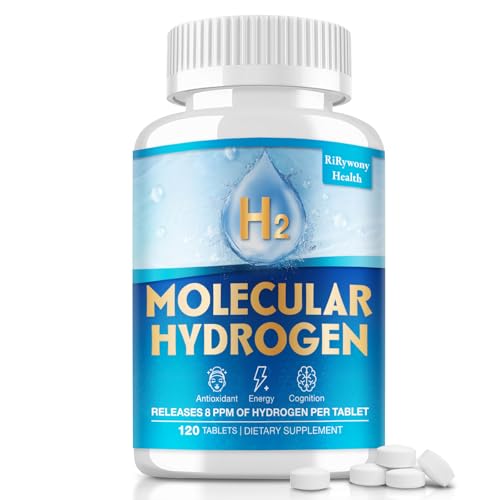
- Drink HRW Rejuvenation Molecular Hydrogen TabletsLab-tested / studied
tablets, 1 tablet per 500ml water — Research-grade effervescent tablet; developed with involvement from the Molecular Hydrogen Foundation; among the highest documented H2 output per tablet; frequently cited in community as the benchmark - Dr. Mercola Molecular Hydrogen Tablets
tablets, 2 tablets daily in water — Mass-market accessible entry point; wide distribution; uses magnesium as hydrogen carrier; good brand recognition for general wellness shoppers - Water & Wellness H2 Elite Molecular Hydrogen Tablets
tablets, 1 tablet per 16 oz water — Travel-friendly compact packaging; practical for daily carry; good entry-level tablet option for those new to H2 - Susosu Water Hydrogen-Infused Sparkling Water Pouches
liquid, 1 pouch (8 oz) — Ready-to-drink sealed aluminum pouches preserve dissolved H2; Japanese-origin brand; no dissolution required; convenient format for on-the-go use
As an Amazon Associate we earn from qualifying purchases. Molecular hydrogen quality comes down to dissolved H2 concentration, not price. Choose a product that states a specific ppm (mg/L) figure backed by third-party testing, and prefer airtight aluminum or sealed glass packaging — a vague high-concentration claim is unverifiable, and H2 escapes quickly from plastic and open containers.
A Note on the Evidence
The evidence for molecular hydrogen’s selective antioxidant mechanism in humans is preliminary, with most trials being small, short-term, and conducted at single research centers. This article is informational only and does not constitute medical advice; H2-enriched water is not approved by the FDA to treat, prevent, or cure any disease, and individuals with health conditions or those taking medications should consult a qualified healthcare provider before use.
Frequently Asked Questions
What makes the hydroxyl radical more dangerous than other reactive oxygen species?
The hydroxyl radical has an exceptionally high oxidizing potential and a half-life of nanoseconds. It reacts nonselectively with whichever biological molecule is closest — DNA, lipid membranes, or proteins — and cannot be enzymatically neutralized the way superoxide or hydrogen peroxide can. This combination of high reactivity and lack of enzymatic defense makes it particularly damaging.
Does molecular hydrogen react with beneficial ROS like hydrogen peroxide?
Based on the proposed mechanism, H2 does not react appreciably with hydrogen peroxide, superoxide, or nitric oxide under physiological conditions because its reduction potential is not sufficient to drive those reactions at meaningful rates. This theoretical selectivity is a core feature of the H2 antioxidant hypothesis, though confirming it in living human tissue remains an active area of investigation.
How is H2-enriched water different from taking a standard antioxidant supplement?
Conventional antioxidants like vitamin C or polyphenols scavenge a broad spectrum of ROS and can, in high doses, interfere with beneficial redox signaling and adaptive responses to exercise. H2 is proposed to act more selectively, targeting primarily the most cytotoxic radicals. Whether this distinction produces meaningfully different outcomes in human health is not yet established by large clinical trials.
Is there direct evidence that H2 scavenges hydroxyl radical in human tissue?
Direct measurement of hydroxyl radical in living tissue is not feasible due to its nanosecond half-life. Human research relies on downstream biomarkers of oxidative damage — such as urinary 8-OHdG for DNA oxidation or MDA for lipid peroxidation — as indirect indicators. The results are mixed and do not currently support the mechanism. An uncontrolled open-label pilot reported reductions in a lipid-peroxidation proxy [6], but the two placebo-controlled trials that measured these markers found 8-OHdG rose 16% in Parkinson’s patients [7] and MDA rose relative to placebo in chronic mountain sickness [8]. No human trial has directly confirmed hydroxyl-radical scavenging.
Is molecular hydrogen safe to consume?
At doses used in published research, H2-enriched water and effervescent tablets are broadly regarded as safe and inert. H2 does not accumulate in the body, exits primarily through respiration, and no significant adverse effects have been reported in clinical trials at typical supplemental concentrations. It is not classified as a drug. Anyone with a medical condition should consult a healthcare provider before adding any supplement.
Why is most H2 research from Japan and East Asia?
Molecular hydrogen research was pioneered largely in Japan, beginning with foundational mechanistic work in the mid-2000s. Japanese research institutions, universities, and the broader medical community developed an early and sustained interest in H2’s potential, which accounts for the geographic concentration in the literature. This does not diminish the findings, but it does mean independent replication in diverse Western populations is limited.
References
- Ohsawa I et al. Hydrogen acts as a therapeutic antioxidant by selectively reducing cytotoxic oxygen radicals. Nat Med (2007). PMID 17486089
- Botek M et al. Molecular Hydrogen Mitigates Performance Decrement during Repeated Sprints in Professional Soccer Players. Nutrients (2022). PMID 35276867
- Ooi CH et al. Acute ingestion of hydrogen-rich water does not improve incremental treadmill running performance in endurance-trained athletes. Appl Physiol Nutr Metab (2020). PMID 31675478
- Song G et al. Hydrogen Activates ATP-Binding Cassette Transporter A1-Dependent Efflux Ex Vivo and Improves High-Density Lipoprotein Function in Patients With Hypercholesterolemia: A Double-Blinded, Randomized, and Placebo-Controlled Trial. J Clin Endocrinol Metab (2015). PMID 25978109
- Zanini D et al. The effects of 6-month hydrogen-rich water intake on molecular and phenotypic biomarkers of aging in older adults aged 70 years and over: A randomized controlled pilot trial. Exp Gerontol (2021). PMID 34601077
- Nakao A et al. Effectiveness of hydrogen rich water on antioxidant status of subjects with potential metabolic syndrome: an open label pilot study. J Clin Biochem Nutr (2010). PMID 20216947
- Hirayama M et al. Inhalation of hydrogen gas elevates urinary 8-hydroxy-2′-deoxyguanine in Parkinson’s disease. Med Gas Res (2018). PMID 30713666
- Zhang F et al. Does Hydrogen-Rich Water Reduce Oxidative Stress in Patients with Chronic Mountain Sickness? A Randomized, Blinded, Controlled Trial. High Alt Med Biol (2026). PMID 41371770
These statements have not been evaluated by the Food and Drug Administration. This information is not intended to diagnose, treat, cure, or prevent any disease. Content is for informational purposes only and is not medical advice; consult a qualified healthcare provider before starting any supplement. As an Amazon Associate we earn from qualifying purchases.
