Hydrogen water — plain water infused with dissolved molecular hydrogen (H2) gas — has drawn increasing attention from dermatology researchers as a candidate antioxidant agent with an unusual property: it is proposed to selectively neutralize only the most destructive reactive oxygen species, primarily the hydroxyl radical and peroxynitrite, while leaving milder oxidants that serve as beneficial cellular signals largely undisturbed. This selectivity, if confirmed at scale, would distinguish H2 from conventional broad-spectrum antioxidants that can blunt the redox signals skin cells rely on for normal repair and communication.
In skin science, oxidative stress sits at the center of photoaging — the cumulative visible damage from UV radiation including wrinkles, uneven tone, and loss of firmness. The hypothesis that H2 might address this damage at a molecular level has produced a small but growing body of laboratory studies and clinical trials, concentrated primarily in Japan and East Asia. This article summarizes that emerging evidence honestly, noting where findings are preliminary, where study designs are limited, and where meaningful questions remain unanswered. Nothing here constitutes medical advice.
Key Takeaways
- Molecular hydrogen is proposed to selectively neutralize the hydroxyl radical and peroxynitrite — the most damaging reactive oxygen species in UV-exposed skin — without suppressing beneficial redox signaling.
- A 2020 formulation study found antioxidant activity in a hydrogen water mask pack composition, providing early laboratory-level support for topical H2 delivery in cosmetic formats [1].
- A 2025 dermatology review identified UV protection, anti-inflammatory effects, and skin hydration support as the most studied proposed applications of molecular hydrogen in cosmetology, while calling for larger clinical trials [2].
- H2 gas is volatile, and maintaining effective dissolved concentrations in topical products through storage and application is an unresolved formulation challenge.
- The evidence base for hydrogen water skin benefits is early-stage — primarily small trials and laboratory studies from East Asia — and should not be interpreted as established clinical efficacy.
Oxidative Stress and Skin Aging: The Problem Hydrogen Research Is Trying to Address
The outer layers of skin are continuously exposed to ultraviolet radiation, air pollution, and other environmental stressors that generate reactive oxygen species (ROS) within the epidermis and dermis. Sustained ROS accumulation triggers lipid peroxidation, DNA strand breaks, and enzymatic degradation of collagen and elastin — the structural proteins responsible for skin firmness and elasticity. This process, broadly called photooxidative damage, is one of the most studied drivers of premature skin aging.
Researchers have investigated many antioxidant strategies for interrupting this cascade at the skin surface. Studies on topical antioxidant formulations have found that protective effects depend on combinations of water-soluble, enzymatic, and lipid-soluble antioxidants working together [3]. Plant-derived polyphenols such as rutin have also been shown to modulate age-related skin changes through antioxidant and anti-inflammatory pathways in laboratory models [4]. Molecular hydrogen enters this space not as a replacement for established antioxidants, but as a structurally distinct agent — a gas small enough to cross cell membranes and potentially reach intracellular compartments where the most damaging oxidants originate.

How Molecular Hydrogen Is Proposed to Work in Skin Tissue
H2’s proposed antioxidant mechanism is based on its chemical reactivity with the hydroxyl radical (•OH) and peroxynitrite (ONOO⁻) — two of the most cytotoxic ROS generated in UV-exposed skin. The hydroxyl radical is particularly destructive because it reacts indiscriminately with nearby lipids, proteins, and nucleic acids within nanoseconds of formation, making it nearly impossible to neutralize by delivering antioxidants after the fact. Peroxynitrite forms when superoxide combines with nitric oxide and can nitrate proteins and oxidize DNA, contributing to inflammatory signaling cascades in aging skin.
Unlike vitamin C, vitamin E, or polyphenols, H2 is not believed to scavenge hydrogen peroxide or superoxide at meaningful rates under physiological conditions. This is significant because both of those species also function as second messengers in normal cell signaling, including pathways that regulate skin cell proliferation and repair. The proposed selectivity of H2 suggests it may be able to reduce injurious oxidation without broadly suppressing the redox environment that skin cells depend on — though this proposed selectivity requires continued validation in human skin tissue specifically.
Because H2 is a gas, it diffuses rapidly through lipid bilayers without requiring a transporter or delivery vehicle, allowing it to reach mitochondria and the cell nucleus — compartments that large antioxidant molecules often fail to penetrate. The challenge of delivering active ingredients past the stratum corneum barrier is a recognized limitation of many topical skincare actives [5], and H2’s small molecular size is one reason dermatology researchers have proposed it as a candidate for intracellular antioxidant delivery, though clinical confirmation in skin remains preliminary.
Topical Hydrogen Water Applications: Mask Packs and Direct Skin Contact
One of the more direct dermatological approaches studied is the hydrogen water mask pack — a face mask formulated with H2-enriched water or a hydrogen-generating powder component. A 2020 study evaluated a gel-type emulsion mask pack incorporating such a powder and measured antioxidant activity attributed to the H2 component, finding that the formulation demonstrated free radical scavenging capacity in laboratory assays [1]. This represents an early proof-of-concept for incorporating H2 into a conventional cosmetic delivery format, though the study was primarily a formulation and antioxidant-capacity study rather than a clinical trial measuring outcomes in human skin over time.
The practical challenge for any H2-containing topical product is stability. Dissolved molecular hydrogen is volatile and escapes from water relatively quickly, meaning that concentration at the time of skin contact may differ substantially from concentration at the time of manufacture. Researchers working on novel delivery formats for sensitive skin care — including self-assembled nanovesicle systems — have highlighted the broader difficulty of retaining bioactive compounds in a form that can interact meaningfully with skin at the point of application [6]. Ensuring that H2 concentration remains therapeutically relevant through packaging, storage, and use is an active area of product development that has not yet been standardized.
What the Dermatology Literature Reviews Say
A 2025 review published in Clinical, Cosmetic and Investigational Dermatology mapped the current state of molecular hydrogen research specifically within medical skin cosmetology, covering applications including UV-induced skin damage, inflammatory skin conditions, and anti-aging [2]. The review characterizes the evidence base as developing but emphasizes the need for larger, rigorously controlled clinical trials before H2 can be positioned as an established dermatological treatment. The areas identified as most promising include reduction of UV-induced oxidative markers and potential support for skin hydration and barrier function.
The review also notes that proposed mechanisms in skin include modulation of inflammatory cytokines — signaling proteins that amplify oxidative damage and contribute to the breakdown of dermal collagen — and possible indirect support for fibroblast function, the cells responsible for collagen synthesis in the dermis. These mechanisms are grounded in laboratory evidence and small human trials rather than large multicenter studies, and the authors of that review are explicit that translation to clinical recommendations requires further investigation [2].
Oral Hydrogen Water and Skin: The Indirect Pathway Hypothesis
Some researchers have proposed that drinking H2-enriched water might benefit skin through systemic antioxidant activity rather than, or in addition to, topical delivery. The hypothesis is that H2 absorbed through the gastrointestinal tract reduces systemic oxidative stress and inflammatory signaling, and that skin — a metabolically active organ sensitive to systemic inflammation — benefits downstream. This indirect pathway is the least-studied avenue in the skin-specific hydrogen water literature.

The idea has a loose parallel in research on other orally consumed compounds studied for skin effects. Investigations into fermented lysate ingredients have explored whether systemic delivery of bioactive compounds produces measurable improvements in skin parameters such as hydration and elasticity [7], and fullerene-based antioxidant water complexes have been examined for effects on collagen quality and skin function following consumption [8]. Oral collagen peptide supplementation has been studied in a controlled trial setting and associated with improvements in stratum corneum hydration and skin elasticity in older adults [9]. These parallel lines of inquiry illustrate the plausibility of a systemic-to-skin antioxidant effect, but they do not establish that drinking H2 water produces skin benefits — that specific question has not yet been well-characterized in published human trials.
Limitations, Gaps, and What Responsible Use Looks Like
The hydrogen water and skin evidence base has several recognized limitations. Most published studies are small, range from single-session to a few weeks in duration, and have been conducted primarily in Japan and South Korea, raising questions about how findings generalize across populations and skin types. Few studies have been pre-registered, blinded, or compared against active antioxidant controls, making it difficult to determine how much of any observed effect is attributable specifically to H2 rather than the hydration associated with increased water contact or other formulation components.
H2-enriched water and products containing it are generally regarded as safe at studied doses — molecular hydrogen is inert in biological systems at the concentrations studied, and no significant adverse effects have been reported in published trials. However, consumer products vary widely in actual H2 concentration, and concentration claims on product labels are not uniformly regulated or verified. For skin applications specifically, the gap between a laboratory antioxidant assay result [1] and a clinically meaningful improvement in wrinkle depth or skin elasticity in a diverse real-world population is substantial, and that gap has not yet been fully bridged in the published literature [2].
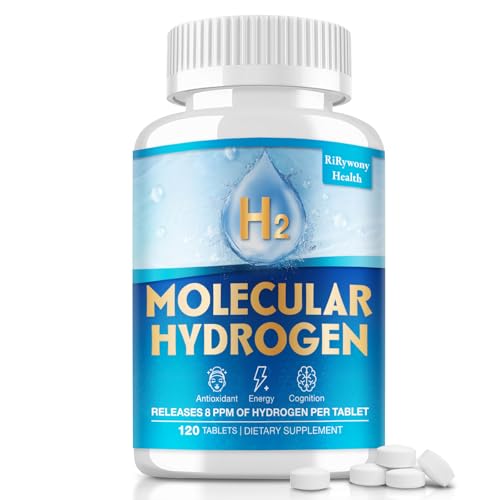
🛒 Where to Buy Molecular Hydrogen
- Drink HRW Rejuvenation Molecular Hydrogen TabletsLab-tested / studied
tablets, 1 tablet per 500ml water — Research-grade effervescent tablet; developed with involvement from the Molecular Hydrogen Foundation; among the highest documented H2 output per tablet; frequently cited in community as the benchmark - Dr. Mercola Molecular Hydrogen Tablets
tablets, 2 tablets daily in water — Mass-market accessible entry point; wide distribution; uses magnesium as hydrogen carrier; good brand recognition for general wellness shoppers - Water & Wellness H2 Elite Molecular Hydrogen Tablets
tablets, 1 tablet per 16 oz water — Travel-friendly compact packaging; practical for daily carry; good entry-level tablet option for those new to H2 - Susosu Water Hydrogen-Infused Sparkling Water Pouches
liquid, 1 pouch (8 oz) — Ready-to-drink sealed aluminum pouches preserve dissolved H2; Japanese-origin brand; no dissolution required; convenient format for on-the-go use
As an Amazon Associate we earn from qualifying purchases. Molecular hydrogen quality comes down to dissolved H2 concentration, not price. Choose a product that states a specific ppm (mg/L) figure backed by third-party testing, and prefer airtight aluminum or sealed glass packaging — a vague high-concentration claim is unverifiable, and H2 escapes quickly from plastic and open containers.
A Note on the Evidence
The evidence for hydrogen water skin benefits is early-stage, consisting mostly of small laboratory and clinical studies that cannot yet support firm clinical recommendations; individuals with active skin conditions, those who are pregnant or nursing, or anyone considering H2 products as part of a treatment plan for a diagnosed skin disorder should consult a board-certified dermatologist before use. This article is informational only and does not constitute medical advice.
Frequently Asked Questions
What is hydrogen water and how is it used in skin care?
Hydrogen water is water in which molecular hydrogen (H2) gas has been dissolved, typically through electrolysis or the dissolution of effervescent hydrogen-generating tablets. For skin applications it has been studied in two formats: topical products such as mask packs that deliver H2-enriched water directly to the skin surface [1], and oral consumption of H2-enriched water, which researchers hypothesize may produce systemic antioxidant effects that extend to skin tissue [2].
Does hydrogen water actually reduce skin aging?
No study to date has established that hydrogen water reverses or prevents skin aging in a clinically meaningful way in large human populations. A 2025 review of molecular hydrogen in medical skin cosmetology identified promising early signals in laboratory and small-trial research across UV damage, inflammation, and hydration endpoints, but characterized the evidence as preliminary and called for larger controlled trials before clinical recommendations can be made [2]. Current findings should be understood as hypothesis-generating rather than conclusive.
How is H2 different from vitamin C or other antioxidants used in skin care?
Conventional topical antioxidants like vitamin C are well-studied and their mechanisms established; their limitations include stability in formulation and penetration depth through the stratum corneum [5]. H2 is proposed to differ in two key ways: its very small molecular size may allow it to penetrate cell membranes and reach intracellular compartments, and it is proposed to react only with the most cytotoxic oxidants rather than broadly scavenging all ROS, potentially preserving redox signaling needed for skin repair. This selectivity hypothesis is under active investigation and not yet clinically confirmed for skin.
Are hydrogen water mask packs safe to use?
Molecular hydrogen is chemically inert at the concentrations studied in cosmetic and clinical research, and no significant adverse skin reactions have been reported in published studies. A formulation study of a gel-type hydrogen water mask pack found antioxidant activity without noting safety concerns [1]. That said, individual skin sensitivities vary, and cosmetic product quality — including actual H2 concentration — is not uniformly regulated. Patch testing before wide-area facial use is reasonable practice, particularly for those with sensitive or reactive skin.
Can drinking hydrogen water improve skin hydration or elasticity?
This indirect pathway — that systemic absorption of H2 reduces oxidative and inflammatory signals in a way that benefits skin — is biologically plausible but has not been demonstrated in well-controlled human trials specific to H2 water. Research on other orally consumed compounds has found measurable skin effects: oral collagen peptide supplementation was associated with improvements in stratum corneum hydration and skin elasticity in a multicenter controlled study of older adults [9], and fermented lysate ingredients have shown preliminary anti-aging skin effects [7]. Whether oral H2 water produces similar outcomes is an open question.
What are the biggest gaps in current hydrogen water skin research?
The primary gaps are volume, rigor, and generalizability. Most published hydrogen water skin studies are small, short-duration, and conducted in East Asian populations, limiting generalization. Few compare H2 directly against established active controls such as vitamin C serums or retinoids, making it difficult to contextualize the magnitude of any observed effects. Formulation stability — ensuring meaningful H2 concentration survives from manufacture through application — is also unresolved. A 2025 review of the field explicitly identified the need for larger, well-controlled clinical trials as the central requirement for advancing this area [2].
References
- Kwon HJ et al. Antioxidant Activity of Hydrogen Water Mask Pack Composed of Gel-Type Emulsion and Hydrogen Generation Powder. International journal of molecular sciences (2020). PMID 33419292
- Guo N et al. Progress in the Application of Molecular Hydrogen in Medical Skin Cosmetology. Clinical, cosmetic and investigational dermatology (2025). PMID 40061044
- McDaniel DH et al. Evaluation of the Antioxidant Capacity and Protective Effects of a Comprehensive Topical Antioxidant Containing Water-soluble, Enzymatic, and Lipid-soluble Antioxidants. The Journal of clinical and aesthetic dermatology (2019). PMID 31119011
- Choi SJ et al. Biological effects of rutin on skin aging. International journal of molecular medicine (2016). PMID 27220601
- Wang J et al. Phloretin Transfersomes for Transdermal Delivery: Design, Optimization, and In Vivo Evaluation. Molecules (Basel, Switzerland) (2023). PMID 37836633
- Kwon KC et al. Nanovesicles for Sensitive Skin Care Developed via Self-Assembly of Glutamine Linoleate. Journal of cosmetic dermatology (2025). PMID 40259621
- Cui H et al. Research on the anti-aging efficacy of fermented lysate VHProbi® MixA as the functional skincare ingredient. Journal of applied microbiology (2024). PMID 37977853
- Miljkovic S et al. Influence of hyper-harmonized fullerene water complex on collagen quality and skin function. Journal of cosmetic dermatology (2020). PMID 31141275
- Nomoto T et al. Effect of an Oral Nutrition Supplement Containing Collagen Peptides on Stratum Corneum Hydration and Skin Elasticity in Hospitalized Older Adults: A Multicenter Open-label Randomized Controlled Study. Advances in skin & wound care (2020). PMID 32195722
These statements have not been evaluated by the Food and Drug Administration. This information is not intended to diagnose, treat, cure, or prevent any disease. Content is for informational purposes only and is not medical advice; consult a qualified healthcare provider before starting any supplement. As an Amazon Associate we earn from qualifying purchases.
