Hydrogen water — plain water infused with dissolved molecular hydrogen gas (H2) — has attracted growing interest as a wellness supplement, with researchers investigating potential roles in metabolic health, inflammation reduction, and exercise recovery. As with any supplement gaining mainstream attention, a reasonable first question is: does it cause side effects, and who should be careful?
Based on available clinical data, hydrogen water appears well-tolerated at studied doses. That said, the evidence base is early-stage, most published trials are small and short in duration, and long-term safety data from large populations simply does not yet exist. This article reviews what is and is not known about hydrogen water side effects, framed honestly within the limits of current research.
Key Takeaways
- Hydrogen water appears well-tolerated in short-term clinical trials; no serious adverse events have been consistently reported [1].
- Mild bloating or increased flatulence is the most plausible direct side effect, arising from dissolved H2 gas releasing in the GI tract.
- Long-term safety data from large populations does not yet exist; the evidence base is early-stage and primarily from small Asian trials.
- Product quality matters: poorly stored or low-quality hydrogen water may deliver negligible H2, and some devices or tablets carry separate quality risks.
- Pregnant women, children, those with serious medical conditions, and individuals on complex medication regimens should consult a healthcare provider before use.
Why Hydrogen Water Has a Low Pharmacological Burden
Molecular hydrogen (H2) is the smallest known molecule. It passes readily through cell membranes and biological barriers, which is one reason researchers believe it can reach subcellular compartments quickly. The proposed mechanism of action is selective neutralization of only the most cytotoxic reactive oxygen species — primarily the hydroxyl radical (•OH) and peroxynitrite (ONOO⁻) — without broadly suppressing beneficial redox signaling that the body relies on for normal immune and cellular function. This selectivity, if confirmed, would distinguish H2 from conventional antioxidants that may indiscriminately quench both harmful and necessary oxidants.
Importantly, the human gut microbiome naturally produces small amounts of hydrogen gas as a byproduct of carbohydrate fermentation [2]. The body therefore already has biological pathways for handling dissolved H2. The amounts delivered via hydrogen-enriched water or effervescent tablets are modest relative to what the colon generates endogenously, which helps explain why severe systemic adverse effects have not been a prominent feature of published trials.
What Clinical Trials Report About Side Effects
The most informative safety signals come from randomized controlled trials that monitor participants over weeks. In an 8-week placebo-controlled trial in obese men and women, participants consumed hydrogen-rich water daily while researchers tracked appetite, body composition, sleep quality, and circulating glucagon-like peptide-1 levels [1]. No serious adverse events were attributed to hydrogen water in that trial — a finding consistent with the broader pattern across the H2 clinical literature, which generally does not report significant harms.
Across the published trial landscape — which skews heavily toward Japanese and East Asian research groups — the most commonly noted complaints are mild and transient gastrointestinal symptoms in a subset of participants. Headaches have occasionally been mentioned anecdotally, though these are not well-documented as a consistent finding in controlled settings. The absence of reported serious adverse events is reassuring but should be interpreted cautiously: most studies are short (four to twelve weeks), enroll relatively small numbers of participants, and are not powered to detect rare adverse outcomes.
Gastrointestinal Effects: Bloating and Gas
The side effect most plausibly linked to hydrogen water’s mechanism is mild abdominal bloating or increased flatulence, particularly when large volumes are consumed quickly or on an empty stomach. This occurs because dissolved H2 gas can be released within the gastrointestinal tract before it is absorbed. The gut already produces hydrogen via microbial fermentation [2], so the body is not encountering an entirely foreign substance, but adding exogenous H2 can temporarily increase intraluminal gas pressure in individuals who are sensitive to it.
For most people, these effects, if experienced at all, are mild and resolve on their own. Starting with smaller volumes — such as one glass rather than a liter — and drinking slowly may reduce the likelihood of bloating. People who already experience significant gas or distension from dietary sources may notice these effects more than those without baseline GI sensitivity.
Groups Who Should Exercise Additional Caution
Hydrogen water is not classified as a drug and has not been evaluated by the FDA for the treatment of any condition. Because the trials to date have generally enrolled healthy or metabolically overweight adults, safety data in specific populations — pregnant or breastfeeding women, children, individuals with serious organ dysfunction, and the elderly with multiple comorbidities — is essentially absent. This is not evidence of harm in those groups; it is simply a gap in the evidence that warrants caution.
Individuals with existing gastrointestinal conditions such as irritable bowel syndrome (IBS), small intestinal bacterial overgrowth (SIBO), or inflammatory bowel disease may be more sensitive to additional gas load and should consider starting at low volumes and monitoring their response. Anyone taking prescription medications — particularly those that interact with oxidative stress pathways, such as certain chemotherapy agents — should consult a healthcare provider before adding hydrogen water to their routine, as potential interactions have not been studied.
People drawn to hydrogen water specifically because of a serious health condition should understand that there are no established clinical indications; the research is investigational, and self-managing a medical condition with an unregulated supplement carries its own risks independent of the supplement’s direct safety profile.
Product Quality and Delivery Method Risks
A meaningful but often overlooked risk is not from H2 itself but from product quality and water source. Hydrogen gas is highly diffusible and escapes from water quickly; a bottle that has been opened, stored improperly, or is past its stated shelf life may contain negligible dissolved H2 by the time of consumption — meaning you are paying for and expecting a product that is no longer delivering its active component.
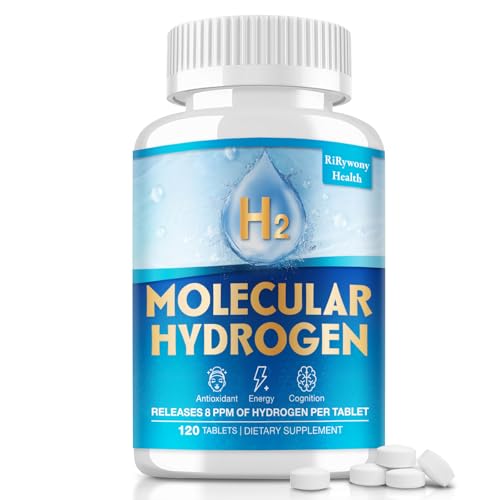
Effervescent tablets dropped into water produce hydrogen via a chemical reaction. The excipients and reaction byproducts in low-quality tablets may themselves carry risks unrelated to H2. Electrolysis devices that split water to generate H2 can, if poorly designed, also generate chlorine or ozone as byproducts if tap water is used. Choosing products from manufacturers who publish third-party dissolved hydrogen measurements and use clean water inputs reduces this category of risk substantially.

Hydrogen-enriched water should be stored in airtight, ideally pressurized or aluminum containers and consumed promptly after opening. Glass and standard plastic bottles are permeable to H2 and are generally inadequate for long-term storage.
The Honest Limits of What We Know
The clinical literature on hydrogen water consists predominantly of small trials, often with fewer than 50 participants, running for weeks rather than years. Many are conducted by a concentrated group of researchers in Japan, and independent replication in Western populations is limited. The 8-week trial in obese adults [1] represents a relatively robust design for this field, but even it cannot speak to what happens with years of daily use.
Long-term chronic effects of daily H2 consumption — whether beneficial or potentially adverse — are simply not yet characterized by large-scale epidemiological or multi-year clinical data. The absence of long-term safety studies is not the same as evidence of harm, but intellectual honesty requires acknowledging this gap. The field is maturing, and future larger trials will provide clearer answers.
🛒 Where to Buy Molecular Hydrogen
- Drink HRW Rejuvenation Molecular Hydrogen TabletsLab-tested / studied
tablets, 1 tablet per 500ml water — Research-grade effervescent tablet; developed with involvement from the Molecular Hydrogen Foundation; among the highest documented H2 output per tablet; frequently cited in community as the benchmark - Dr. Mercola Molecular Hydrogen Tablets
tablets, 2 tablets daily in water — Mass-market accessible entry point; wide distribution; uses magnesium as hydrogen carrier; good brand recognition for general wellness shoppers - Water & Wellness H2 Elite Molecular Hydrogen Tablets
tablets, 1 tablet per 16 oz water — Travel-friendly compact packaging; practical for daily carry; good entry-level tablet option for those new to H2 - Susosu Water Hydrogen-Infused Sparkling Water Pouches
liquid, 1 pouch (8 oz) — Ready-to-drink sealed aluminum pouches preserve dissolved H2; Japanese-origin brand; no dissolution required; convenient format for on-the-go use
As an Amazon Associate we earn from qualifying purchases. Molecular hydrogen quality comes down to dissolved H2 concentration, not price. Choose a product that states a specific ppm (mg/L) figure backed by third-party testing, and prefer airtight aluminum or sealed glass packaging — a vague high-concentration claim is unverifiable, and H2 escapes quickly from plastic and open containers.
A Note on the Evidence
The clinical evidence on hydrogen water consists of small, short-duration trials, and effects over years of daily use are not established; all potential benefits and the full risk profile remain under investigation. Anyone with an existing health condition, who is pregnant or breastfeeding, or who takes prescription medications should consult a qualified healthcare provider before beginning hydrogen water supplementation. This article is informational and does not constitute medical advice.
Frequently Asked Questions
Is hydrogen water safe to drink every day?
Based on available short-term trials, daily hydrogen water consumption has not produced significant adverse events in study participants [1]. However, there are no large-scale, long-term safety studies, so definitive conclusions about years of daily use cannot yet be made. Current evidence supports it as generally well-tolerated in healthy and overweight adults over periods of weeks to months.

Can hydrogen water cause stomach pain or bloating?
Mild bloating or increased gas is the most commonly reported GI effect and is mechanistically plausible: dissolved H2 can be released in the gut, temporarily adding to the hydrogen gas already produced there by microbial fermentation [2]. This effect is typically mild and transient. Drinking smaller amounts slowly, rather than large volumes quickly, may reduce the likelihood of discomfort.
Does hydrogen water interact with medications?
No systematic studies of hydrogen water–drug interactions have been published. Because H2 is proposed to modulate reactive oxygen species — which play a role in the metabolism of some compounds and in the mechanisms of certain drugs — theoretical interactions cannot be ruled out. Anyone on prescription medication, particularly for cancer, cardiovascular conditions, or immune-related conditions, should discuss hydrogen water use with their physician before starting.
Is hydrogen water safe during pregnancy?
Pregnant and breastfeeding women were not enrolled in the trials that form the current evidence base for hydrogen water. Safety in this population has not been established, and as a general principle, unregulated supplements with limited clinical data should be used only under medical supervision during pregnancy. This is a data gap, not a confirmed risk.
What happens if you drink too much hydrogen water?
There is no established toxic dose for hydrogen-enriched water at concentrations achievable through commercial products. Excessive intake would primarily risk worsening GI gas and bloating rather than systemic toxicity. Practically, the main concern with very large volumes is the same as with drinking excessive plain water — overhydration — rather than anything specific to the H2 content.
Are effervescent hydrogen tablets riskier than pre-made H2 water?
The H2 gas itself carries the same profile regardless of delivery method. The difference lies in product quality: effervescent tablets produce H2 via a chemical reaction whose excipients and byproducts vary by manufacturer. Low-quality tablets may include additives that carry their own tolerability concerns. Pre-made canned hydrogen water from reputable producers with verified dissolved H2 content is often easier to evaluate for quality, but product-specific transparency matters more than the delivery format itself.
References
- Todorovic N et al. The Effects of 8-Week Hydrogen-Rich Water Consumption on Appetite, Body Composition, Sleep Quality, and Circulating Glucagon-like Peptide-1 in Obese Men and Women (HYDRAPPET): A Randomized Controlled Trial. Medicina (Kaunas, Lithuania) (2025). PMID 40731927
- Florin TH et al. Alkyl halides, super hydrogen production and the pathogenesis of pneumatosis cystoides coli. Gut (1997). PMID 9462210
These statements have not been evaluated by the Food and Drug Administration. This information is not intended to diagnose, treat, cure, or prevent any disease. Content is for informational purposes only and is not medical advice; consult a qualified healthcare provider before starting any supplement. As an Amazon Associate we earn from qualifying purchases.
