If you have browsed health food stores in Tokyo or scrolled Japanese wellness social media, you have likely encountered hydrogen water — sold in sealed aluminum pouches, dispensed from café machines, and marketed with a level of mainstream confidence rarely seen in Western supplement culture. Japan is widely regarded as the birthplace of modern hydrogen water research and its most enthusiastic commercial adopter, a distinction that reflects both the country’s scientific output and its distinctive wellness philosophy.
Understanding why hydrogen water took root in Japan first requires looking at the intersection of serious molecular biology, a longstanding Japanese interest in functional water, and a regulatory environment that allowed consumer products to move quickly from laboratory curiosity to convenience-store shelf. This article traces that history honestly, notes where the science stands today, and explains the proposed biological mechanism without overstating what remains an early-stage evidence base.
Key Takeaways
- Modern hydrogen water research originated in Japan with a 2007 Nippon Medical School paper proposing H2 as a selective antioxidant targeting hydroxyl radical and peroxynitrite.
- Japan’s prior cultural familiarity with functional waters (alkaline ionized water, mineral springs) gave hydrogen water a ready consumer framework that accelerated mainstream adoption.
- Japanese regulatory pathways allowed commercial products to reach shelves rapidly, ahead of a mature clinical evidence base — a pattern distinct from US drug approval processes.
- The hydrogen water literature remains heavily concentrated in Japanese and East Asian institutions, composed mostly of small pilot trials; large independently replicated RCTs are lacking.
- Molecular hydrogen is proposed to act selectively on the most cytotoxic reactive oxygen species without disrupting beneficial redox signaling, a mechanism that is plausible but not yet definitively confirmed in humans.
The Scientific Spark: A 2007 Paper That Changed the Conversation
The modern era of hydrogen water research is generally traced to a landmark 2007 paper published in Nature Medicine by Ohsawa and colleagues at Nippon Medical School in Tokyo. The researchers reported that inhaling hydrogen gas at low concentrations reduced brain injury in a rat model of stroke, proposing that molecular hydrogen (H2) acted as a selective antioxidant capable of neutralizing hydroxyl radical and peroxynitrite — two of the most destructive reactive oxygen species — without interfering with the beneficial signaling functions of milder oxidants like hydrogen peroxide.
This selectivity hypothesis was the conceptually compelling element. Most conventional antioxidants are pharmacologically blunt: they scavenge oxidants indiscriminately, which can paradoxically disrupt the body’s own redox signaling. The proposition that H2 might neutralize only the most cytotoxic species while leaving beneficial oxidants intact attracted serious academic interest. Japanese universities and research hospitals moved quickly, producing a substantial body of cell, animal, and small human trials over the following decade — a body of literature that remains concentrated in Japan and East Asia to this day.
It is important to be clear about what that 2007 paper was and was not. It was a rodent study, and while it generated a productive research agenda, it did not establish clinical efficacy in humans. That paper reported that hydrogen selectively reduced the hydroxyl radical in cultured cells while leaving other reactive oxygen species that serve physiological roles untouched, and that inhaled H2 gas markedly suppressed brain injury in a rat model of focal ischemia and reperfusion[1].
Japan's Pre-Existing Relationship With Functional Water
The 2007 paper did not land in a cultural vacuum. Japan had a well-established tradition of attaching health significance to water quality and composition long before hydrogen became a focus. Alkaline ionized water (kangen water, generated via electrolysis) had been sold in Japan since the 1970s and was classified as a medical device by Japan’s Ministry of Health, Labour and Welfare for use in mild gastrointestinal complaints. Mineral-rich spring waters from specific regions carried strong cultural cachet. The concept that water could be more than a passive hydration vehicle was already embedded in Japanese consumer thinking.
This context meant that when researchers began producing hydrogen-enriched water — either through pressurized dissolution of H2 gas or via magnesium-based tablet reactions with water — there was a ready framework for Japanese consumers to understand it as a distinct functional product rather than dismiss it as an implausible wellness novelty. Hydrogen water slotted into an existing category rather than having to create one from scratch, which accelerated both adoption and commercial investment.
From Laboratory to Convenience Store: Japan's Commercial Rollout
Japanese beverage and appliance companies moved into the hydrogen water market with unusual speed. By the early 2010s, sealed aluminum pouches of hydrogen-enriched water — designed to prevent H2 gas from escaping before consumption — were available in pharmacy chains and convenience stores across Japan. The aluminum packaging was a practical engineering response to a real problem: dissolved hydrogen dissipates rapidly from plastic bottles, meaning an unsealed product loses most of its H2 content before it reaches the consumer.
Countertop hydrogen water generators, which use electrolysis or pressurization to infuse tap water with H2, became popular household appliances. Cafés and gyms began offering hydrogen water as a premium option. The product spread from health-conscious early adopters to mainstream consumers in a trajectory that resembled how green tea catechin drinks and collagen beverages had entered the Japanese mass market in earlier decades.
Crucially, Japanese consumer product regulations do not require the same level of pre-market clinical proof that the FDA demands for drug claims in the United States. Products making general wellness or antioxidant positioning claims — without specific disease treatment language — could reach shelves while the underlying research was still accumulating. This regulatory environment enabled rapid commercialization that preceded, rather than followed, a mature evidence base.

Why the Research Stayed Concentrated in Japan
The dominance of Japanese and East Asian institutions in the hydrogen water literature is not accidental. Japanese research funding bodies, hospital systems, and universities provided the infrastructure for pilot trials. Researchers like Shigeo Ohta at Nippon Medical School and others at Keio University and Juntendo University became prolific contributors. The Japan Society for the Promotion of Science funded multiple hydrogen biology projects. A dedicated scientific society — the Molecular Hydrogen Foundation, and the Japanese counterpart organizations — helped coordinate and publicize emerging findings.
Western academic and pharmaceutical institutions had less incentive to pursue a line of research where the primary commercial application was an over-the-counter beverage rather than a patentable drug. Hydrogen gas and dissolved H2 cannot be patented as molecules, which reduces the financial motivation for large Western pharmaceutical companies to fund expensive Phase III trials. The result is a literature that is genuine and peer-reviewed, but geographically concentrated and composed predominantly of small, short-duration pilot studies rather than the large randomized controlled trials that form the gold standard for clinical evidence.
The Proposed Mechanism: What Researchers Think Is Happening
The central hypothesis behind hydrogen water’s proposed benefits is the selective antioxidant theory. Molecular hydrogen is the smallest molecule known — two hydrogen atoms bonded together — which allows it to diffuse rapidly across cell membranes and into subcellular compartments, including mitochondria, that larger antioxidant molecules cannot easily reach. Once there, it is proposed to react preferentially with hydroxyl radical (•OH) and peroxynitrite (ONOO−), both of which are highly reactive species implicated in oxidative damage to DNA, lipids, and proteins.

The selective action, if confirmed, would distinguish H2 from broad-spectrum antioxidants. Superoxide and hydrogen peroxide, for example, serve important roles in immune function and cellular signaling; an antioxidant that neutralized everything nonselectively could theoretically impair those functions. H2 is proposed not to react with these milder oxidants under physiological conditions, leaving beneficial redox biology intact while dampening the most destructive oxidative stress.
It is worth stating plainly that this mechanism, while scientifically coherent and supported by in vitro and animal data, has not been definitively proven to operate in the same way in living humans at the concentrations achieved by drinking hydrogen-enriched water. The evidence is mechanistically plausible and generates testable hypotheses, but remains under active investigation. Consumers encountering ‘antioxidant’ claims on hydrogen water products should understand they are engaging with a hypothesis that is promising but not settled.
Global Spread and Where the Evidence Stands Today
Hydrogen water has spread beyond Japan to South Korea, China, Taiwan, and increasingly to North America, Europe, and Australia. The global market has attracted both serious researchers and marketers making claims that outrun the evidence. This creates a consumer environment where it can be difficult to distinguish preliminary scientific investigation from confirmed clinical benefit.
The honest summary of where the evidence stands is as follows: there are a meaningful number of small human trials examining hydrogen water across conditions including metabolic syndrome, exercise recovery, inflammatory markers, and neurological endpoints. Several report statistically significant findings on specific biomarkers. However, most trials involve fewer than 100 participants, run for weeks rather than months or years, and have not been independently replicated at scale in Western populations. No regulatory agency has approved hydrogen water as a treatment for any disease. The FDA has not evaluated it as a drug. It is broadly regarded as safe at consumed doses, since H2 is an inert gas at physiological concentrations and is naturally produced in the gut by bacterial fermentation.
Japan’s head start in research gives it a foundational role in the field, but the science it initiated remains unfinished. The tradition that began in Japanese laboratories and spread to Japanese convenience stores is now a global conversation — one that deserves continued rigorous investigation rather than premature conclusions in either direction.
🛒 Where to Buy Molecular Hydrogen
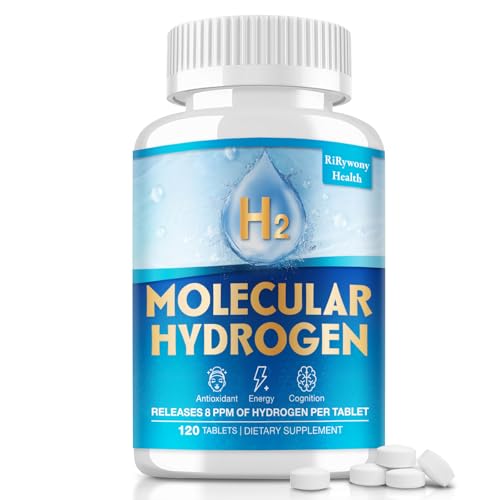
- Drink HRW Rejuvenation Molecular Hydrogen TabletsLab-tested / studied
tablets, 1 tablet per 500ml water — Research-grade effervescent tablet; developed with involvement from the Molecular Hydrogen Foundation; among the highest documented H2 output per tablet; frequently cited in community as the benchmark - Dr. Mercola Molecular Hydrogen Tablets
tablets, 2 tablets daily in water — Mass-market accessible entry point; wide distribution; uses magnesium as hydrogen carrier; good brand recognition for general wellness shoppers - Water & Wellness H2 Elite Molecular Hydrogen Tablets
tablets, 1 tablet per 16 oz water — Travel-friendly compact packaging; practical for daily carry; good entry-level tablet option for those new to H2 - Susosu Water Hydrogen-Infused Sparkling Water Pouches
liquid, 1 pouch (8 oz) — Ready-to-drink sealed aluminum pouches preserve dissolved H2; Japanese-origin brand; no dissolution required; convenient format for on-the-go use
As an Amazon Associate we earn from qualifying purchases. Molecular hydrogen quality comes down to dissolved H2 concentration, not price. Choose a product that states a specific ppm (mg/L) figure backed by third-party testing, and prefer airtight aluminum or sealed glass packaging — a vague high-concentration claim is unverifiable, and H2 escapes quickly from plastic and open containers.
A Note on the Evidence
The evidence base for hydrogen water benefits in humans remains early-stage — most published trials are small, short in duration, and conducted outside the US, and findings have not yet been replicated in large independent studies. This article is informational only and does not constitute medical advice; individuals with health conditions, those who are pregnant, or those taking medications should consult a qualified healthcare provider before adding hydrogen water to their routine.
Frequently Asked Questions
Why did hydrogen water become popular in Japan before anywhere else?
A combination of factors converged: foundational research published by Japanese scientists in 2007, an existing cultural tradition of treating water as a functional health product, and a regulatory environment that allowed consumer products to reach market quickly. Japanese companies rapidly engineered aluminum-packaged beverages and home electrolysis devices to preserve dissolved H2 content, creating a commercially viable product before Western markets had engaged with the concept.
What is the proposed mechanism of hydrogen water?
Molecular hydrogen is proposed to act as a selective antioxidant, neutralizing hydroxyl radical and peroxynitrite — two highly destructive reactive oxygen species — while leaving milder oxidants that serve important signaling roles largely unaffected. Its small molecular size allows it to diffuse into cell compartments, including mitochondria, that larger antioxidant molecules cannot easily access. This mechanism is biologically coherent and supported by laboratory and animal data, but has not been definitively confirmed in human clinical settings.
Is hydrogen water safe to drink?
Hydrogen water is broadly regarded as safe at the concentrations studied. Molecular hydrogen is an inert gas at physiological levels and is already produced naturally in the human gut through bacterial fermentation of dietary fiber. No significant adverse effects have been reported in published trials. However, as with any supplement, individuals with health conditions or who take medications should consult a healthcare provider before use.
Does hydrogen water treat any diseases?
No. Hydrogen water has not been approved by the FDA or any major Western regulatory authority as a treatment for any disease or medical condition. Existing human trials are small, short in duration, and have not produced the level of evidence required for drug approval. Any product making disease-treatment claims would be making claims that exceed what the current science supports.
Why is most of the hydrogen water research from Japan?
Japanese research institutions, funding bodies, and hospitals invested heavily in hydrogen biology following the 2007 Nature Medicine paper. In contrast, Western pharmaceutical companies had limited financial incentive to fund large trials for a product that cannot be patented as a molecule. The result is a genuine but geographically concentrated literature. Independent replication of Japanese findings in Western populations at large scale remains limited.
How is hydrogen water typically consumed?
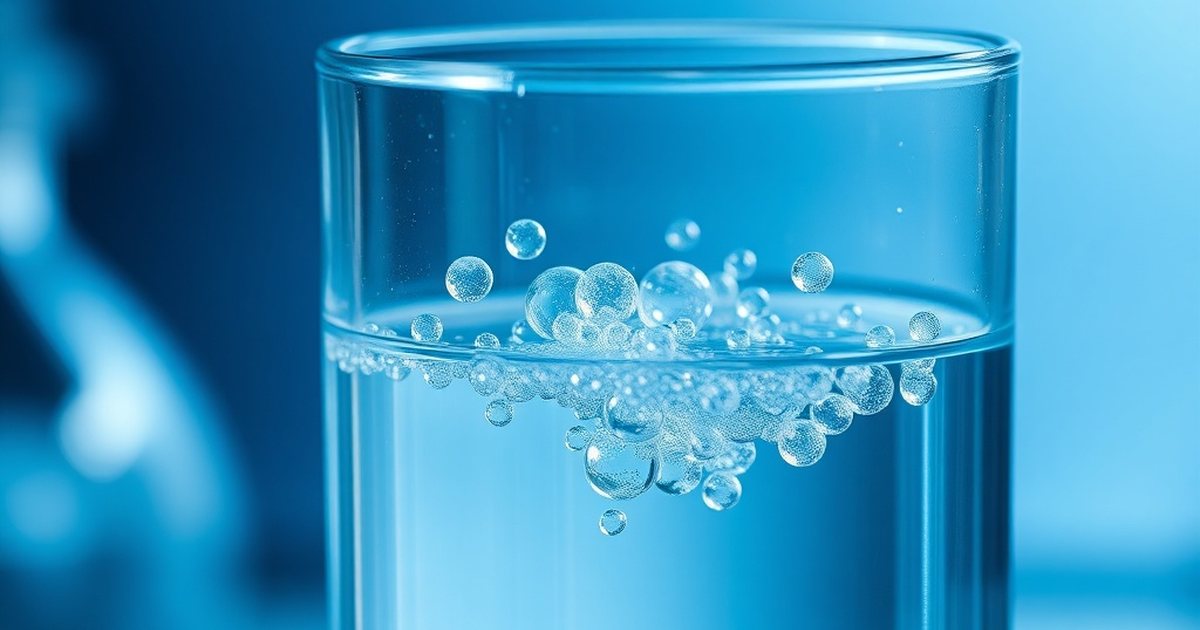
The two most common delivery formats are sealed aluminum pouches or cans of pre-infused water (designed to prevent H2 from escaping before consumption) and effervescent tablets containing magnesium that react with water to generate H2 in the glass just before drinking. Home electrolysis generators are also widely used in Japan. Dissolved hydrogen dissipates quickly from plastic bottles and open containers, so packaging and timing of consumption matter for maintaining H2 concentration.
References
- Ohsawa I et al. Hydrogen acts as a therapeutic antioxidant by selectively reducing cytotoxic oxygen radicals. Nat Med (2007). PMID 17486089
These statements have not been evaluated by the Food and Drug Administration. This information is not intended to diagnose, treat, cure, or prevent any disease. Content is for informational purposes only and is not medical advice; consult a qualified healthcare provider before starting any supplement. As an Amazon Associate we earn from qualifying purchases.
