Hydrogen gas (H2) inhalation is an emerging area of biomedical research exploring whether inhaled molecular hydrogen can act as a selective antioxidant inside the body. Unlike broad-spectrum antioxidant supplements, molecular hydrogen is proposed to neutralize only the most harmful reactive oxygen species — particularly hydroxyl radical and peroxynitrite — without interfering with the beneficial signaling roles that milder oxidants play in normal cell function.
The clinical evidence base remains early-stage. Most published trials are small, short in duration, and originate primarily from Japan, China, and other East Asian countries. Larger, independent replication studies are still underway or pending. This article reviews the proposed mechanism, the key preclinical and clinical findings to date, and what researchers are currently investigating — without overstating what has been established. This is informational content, not medical advice.
Key Takeaways
- Molecular hydrogen is proposed to act as a selective antioxidant, targeting hydroxyl radical and peroxynitrite specifically — a mechanism first described in a 2007 Nature Medicine study [1], but still under active investigation in human populations.
- Preclinical studies across cardiac, cerebral, retinal, limb, and cutaneous ischemia-reperfusion models have associated H2 inhalation with reduced tissue injury in animals [2][3][4][5][6], but animal findings do not guarantee equivalent benefit in humans.
- Early human trials have generally reported H2 inhalation to be tolerable at studied doses across conditions including stroke, COPD exacerbations, and moderate COVID-19, though most trials are small and short-term.
- No H2 inhalation therapy has received FDA approval for any medical condition; the evidence base is preliminary and no efficacy claims are established.
- Several randomized controlled trials and feasibility studies are currently underway or planned, meaning the evidence base is actively evolving and any conclusions drawn today should be held loosely.
The Proposed Mechanism: Selective Antioxidant Activity
Scientific interest in molecular hydrogen as a potential therapy traces to a landmark 2007 paper in Nature Medicine, which demonstrated that H2 could act as a therapeutic antioxidant by selectively reducing cytotoxic oxygen radicals [1]. The key distinction the researchers identified was selectivity: H2 appeared to react preferentially with hydroxyl radical (•OH) and peroxynitrite (ONOO⁻), two of the most damaging reactive oxygen species, while leaving other oxidants — such as hydrogen peroxide and superoxide, which perform important roles in cellular signaling — largely unaffected.
This selectivity is thought to matter because strategies that broadly suppress all oxidative activity can paradoxically disrupt immune function and other beneficial cellular processes. If the selective mechanism holds in humans at clinically relevant concentrations, it could theoretically offer a more targeted approach to managing oxidative stress in acute injury and inflammatory conditions. However, this mechanistic model is still under active scientific investigation. The precise pathways through which inhaled H2 acts in human tissue are not fully characterized, and translating mechanism to clinical benefit requires robust human trial data that is still being gathered.
Ischemia-Reperfusion Injury: A Primary Preclinical Focus
A substantial portion of hydrogen inhalation research has focused on ischemia-reperfusion (I/R) injury — the tissue damage that occurs when blood flow is restored to an organ after a period of deprivation. The restoration of circulation paradoxically generates a burst of reactive oxygen species that can cause significant harm to cells that survived the initial oxygen deficit. Preclinical studies have explored H2 inhalation as a potential intervention across multiple tissue types.
In a rat model of myocardial infarction, inhaled hydrogen gas was associated with reduced infarct size following cardiac ischemia-reperfusion [2]. Similar observations were reported in a mouse model of hind limb ischemia-reperfusion injury [3] and in a mouse pressure-ulcer model involving cutaneous ischemia-reperfusion, where H2 inhalation was associated with reduced skin injury [6]. In rat retinal tissue, low-concentration H2 inhalation was associated with inhibited retinal damage following ischemia-reperfusion [4]. A 2026 study in neuronal cell lines and mice found that H2 inhalation appeared to alleviate cerebral ischemia-reperfusion injury by regulating a mitochondrial quality-control process called mitophagy, specifically via the PINK1/Parkin signaling pathway [5].
The consistency of protective signals across multiple animal models and tissue types has encouraged researchers to advance toward human trials. However, animal-to-human translation in this domain remains uncertain — many interventions that reduce injury in rodent ischemia models have not replicated cleanly in human trials — and none of these preclinical findings should be interpreted as proof of clinical efficacy in people.

Neurological Conditions: Stroke and Cerebrovascular Injury
Among completed human clinical trials, neurological conditions — particularly stroke — represent a well-studied application. A randomized controlled trial published in 2017 examined hydrogen gas inhalation in patients with acute cerebral infarction and found that the intervention appeared safe, with some evidence of neuroprotective effects compared to controls [7]. The study was relatively small, and the authors explicitly noted the need for larger confirmatory trials before any conclusions could be drawn.
More recently, a 2024 publication described the protocol for the HOMA randomized controlled trial, which plans to evaluate early hydrogen-oxygen gas mixture inhalation in patients with aneurysmal subarachnoid hemorrhage — a particularly severe form of intracranial bleeding [8]. This is a planned study, not a completed one, and its protocol publication reflects the ongoing effort to refine trial design for high-acuity neurological emergencies. Results from HOMA and similar trials will be necessary before conclusions about efficacy can be considered.
Cardiovascular Emergencies and the Hydrogen-FAST Trial
One of the most clinically ambitious applications currently under investigation is the use of inhaled hydrogen gas alongside extracorporeal cardiopulmonary resuscitation (ECPR) — an advanced life-support technique used in refractory cardiac arrest. The Hydrogen-FAST study, whose protocol was published in 2025, outlines a feasibility and safety trial of H2 inhalation as an adjunctive therapy in patients undergoing ECPR [9]. The rationale is rooted in the intense oxidative stress generated when circulation is restored after prolonged cardiac arrest, which may cause substantial reperfusion injury to the brain and other organs.
This trial is in the feasibility phase, meaning its primary goals are to determine whether the intervention is safe and logistically viable — not to demonstrate efficacy. The existence of this trial reflects serious scientific interest in the H2 mechanism for acute reperfusion contexts, while also illustrating that definitive clinical evidence for these applications remains years away from completion.
Pulmonary Conditions and Respiratory Research
Chronic obstructive pulmonary disease (COPD) has been another focus of hydrogen inhalation research, partly because H2 can be blended with oxygen for delivery via standard respiratory equipment. A multicenter, randomized, double-blind, parallel-group controlled trial published in 2021 evaluated hydrogen-oxygen therapy during acute exacerbations of COPD, with findings suggesting potential benefit in respiratory symptom parameters compared to standard oxygen therapy alone [10]. The authors described the findings as preliminary and called for larger-scale replication.


The COVID-19 pandemic also prompted early investigation into H2 inhalation. The H2COVID study, a prospective phase I ascending-dose clinical trial published in 2024, evaluated the safety and tolerability of H2 inhalation in patients with moderate COVID-19 [11]. Phase I trials are designed to assess safety and dosing — not to demonstrate that an intervention works — so these results should not be interpreted as evidence that H2 treats COVID-19. The study’s significance is in establishing a tolerable dose range for future efficacy research.
Oncology: Earliest-Stage Feasibility Signals
Hydrogen inhalation has entered very early investigation as a potential supportive therapy in oncology. A 2024 pilot feasibility and safety study examined H2 gas inhalation in patients with locally advanced head and neck cancer undergoing conventional treatment [12]. The study’s design was limited to assessing whether H2 inhalation was feasible and tolerable in this patient population — not whether it produced any anti-cancer effect. The pilot found the approach feasible for further study.
It is essential to be explicit: there is no established clinical evidence that hydrogen inhalation treats, prevents, or slows the progression of cancer. Research in this area is at the earliest exploratory stage, focused entirely on feasibility and safety signals rather than clinical outcomes. Anyone with cancer should rely on evidence-based treatment under the direct supervision of an oncologist, and should discuss any complementary approaches with their care team before pursuing them.
🛒 Where to Buy Molecular Hydrogen
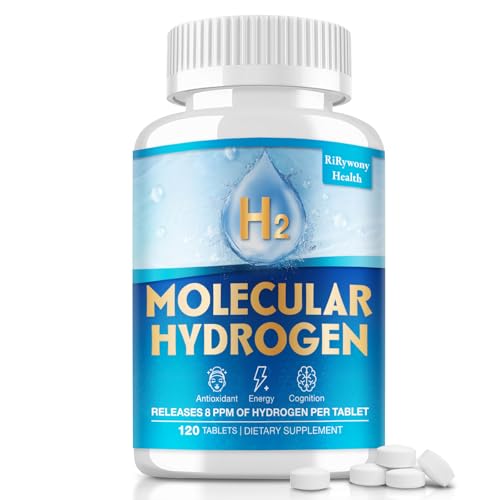
- Drink HRW Rejuvenation Molecular Hydrogen TabletsLab-tested / studied
tablets, 1 tablet per 500ml water — Research-grade effervescent tablet; developed with involvement from the Molecular Hydrogen Foundation; among the highest documented H2 output per tablet; frequently cited in community as the benchmark - Dr. Mercola Molecular Hydrogen Tablets
tablets, 2 tablets daily in water — Mass-market accessible entry point; wide distribution; uses magnesium as hydrogen carrier; good brand recognition for general wellness shoppers - Water & Wellness H2 Elite Molecular Hydrogen Tablets
tablets, 1 tablet per 16 oz water — Travel-friendly compact packaging; practical for daily carry; good entry-level tablet option for those new to H2 - Susosu Water Hydrogen-Infused Sparkling Water Pouches
liquid, 1 pouch (8 oz) — Ready-to-drink sealed aluminum pouches preserve dissolved H2; Japanese-origin brand; no dissolution required; convenient format for on-the-go use
As an Amazon Associate we earn from qualifying purchases. Molecular hydrogen quality comes down to dissolved H2 concentration, not price. Choose a product that states a specific ppm (mg/L) figure backed by third-party testing, and prefer airtight aluminum or sealed glass packaging — a vague high-concentration claim is unverifiable, and H2 escapes quickly from plastic and open containers.
A Note on the Evidence
The clinical evidence for hydrogen inhalation therapy is preliminary — most human trials are small, short-term, and have not yet been replicated in large independent studies, and no H2 inhalation therapy has received regulatory approval for any medical use. Anyone with a serious medical condition, or who is considering hydrogen inhalation for any health purpose, should consult a qualified healthcare provider before use. This content is informational only and does not constitute medical advice.
Frequently Asked Questions
What is hydrogen inhalation therapy?
Hydrogen inhalation therapy involves breathing low concentrations of molecular hydrogen gas (H2), sometimes mixed with oxygen. It is under clinical investigation as a potential selective antioxidant intervention, based on early research suggesting H2 may preferentially neutralize highly cytotoxic reactive oxygen species without disrupting normal redox signaling [1]. It is not an approved medical treatment.
Is hydrogen inhalation considered safe?
Early-phase clinical trials have reported H2 inhalation to be tolerable in the populations studied. A 2024 phase I trial in moderate COVID-19 patients found the therapy safe across ascending dose levels [11], and a 2017 randomized trial in acute stroke patients reported no serious adverse events attributed to H2 inhalation [7]. That said, long-term safety data in humans is limited, and individuals with underlying conditions should consult a physician before considering any form of gas inhalation therapy.
What medical conditions are researchers studying hydrogen inhalation for?
Completed and ongoing trials have examined H2 inhalation in acute cerebral infarction [7], aneurysmal subarachnoid hemorrhage [8], refractory cardiac arrest [9], COPD exacerbations [10], moderate COVID-19 [11], and locally advanced head and neck cancer [12]. All of these represent early-stage investigation, not established clinical applications.
What does the animal research show about ischemia-reperfusion injury?
Multiple preclinical studies have found H2 inhalation associated with reduced ischemia-reperfusion injury in animal models, including cardiac muscle [2], hind limb tissue [3], retinal tissue [4], and brain tissue via a mitophagy pathway [5]. These findings are consistent across tissue types and have informed the design of human trials, but animal results do not directly predict human outcomes.
Does hydrogen inhalation therapy treat or cure any disease?
No. Hydrogen inhalation therapy has not been approved by the FDA or equivalent regulatory agencies to treat, cure, or prevent any disease. The current evidence base consists of small early-phase trials, planned trial protocols, and preclinical data. All potential clinical applications are under active investigation, and efficacy for any condition has not been established in large, replicated human studies.
How does inhaled hydrogen differ from drinking hydrogen-enriched water?
Both approaches aim to deliver molecular hydrogen to the body, but via different routes and concentrations. Inhalation delivers H2 directly through the lungs into the bloodstream and may achieve higher tissue concentrations more rapidly, which is why inhalation is the delivery method used in acute-condition research such as stroke and cardiac arrest trials. Hydrogen-enriched water delivers lower concentrations orally. These are distinct delivery methods with separate evidence bases, and findings from one should not be assumed to apply to the other.
References
- Ohsawa I et al. Hydrogen acts as a therapeutic antioxidant by selectively reducing cytotoxic oxygen radicals. Nature medicine (2007). PMID 17486089
- Hayashida K et al. Inhalation of hydrogen gas reduces infarct size in the rat model of myocardial ischemia-reperfusion injury. Biochemical and biophysical research communications (2008). PMID 18541148
- Tong J et al. Protective Effect of Hydrogen Gas on Mouse Hind Limb Ischemia-Reperfusion Injury. The Journal of surgical research (2021). PMID 33992001
- Otsuka M et al. Inhibition of retinal ischemia-reperfusion injury in rats by inhalation of low-concentration hydrogen gas. Graefe's archive for clinical and experimental ophthalmology = Albrecht von Graefes Archiv fur klinische und experimentelle Ophthalmologie (2024). PMID 37851131
- Wang Z et al. Hydrogen gas inhalation alleviated cerebral ischemia/reperfusion injury by regulating mitophagy in SH-SY5Y cells and mice via PTEN-induced kinase 1/Parkin pathway. Journal of stroke and cerebrovascular diseases : the official journal of National Stroke Association (2026). PMID 42049119
- Fang W et al. Hydrogen gas inhalation protects against cutaneous ischaemia/reperfusion injury in a mouse model of pressure ulcer. Journal of cellular and molecular medicine (2018). PMID 29921037
- Ono H et al. Hydrogen Gas Inhalation Treatment in Acute Cerebral Infarction: A Randomized Controlled Clinical Study on Safety and Neuroprotection. Journal of stroke and cerebrovascular diseases : the official journal of National Stroke Association (2017). PMID 28669654
- Lin F et al. Early Hydrogen-Oxygen Gas Mixture Inhalation in Patients with Aneurysmal Subarachnoid Hemorrhage (HOMA): study protocol for a randomized controlled trial. Trials (2024). PMID 38863026
- Habet V et al. Hydrogen's Feasibility and Safety as a Therapy in Extracorporeal Cardiopulmonary Resuscitation (Hydrogen-FAST): study protocol for a trial of inhaled hydrogen gas as an adjunctive therapy in refractory cardiac arrest. Trials (2025). PMID 41204320
- Zheng ZG et al. Hydrogen/oxygen therapy for the treatment of an acute exacerbation of chronic obstructive pulmonary disease: results of a multicenter, randomized, double-blind, parallel-group controlled trial. Respiratory research (2021). PMID 33985501
- Salomez-Ihl C et al. H(2) inhalation therapy in patients with moderate COVID-19 (H(2)COVID): a prospective ascending-dose phase I clinical trial. Antimicrobial agents and chemotherapy (2024). PMID 39016593
- Chitapanarux I et al. Pilot Feasibility and Safety Study of Hydrogen Gas Inhalation in Locally Advanced Head and Neck Cancer Patients. OncoTargets and therapy (2024). PMID 39493677
These statements have not been evaluated by the Food and Drug Administration. This information is not intended to diagnose, treat, cure, or prevent any disease. Content is for informational purposes only and is not medical advice; consult a qualified healthcare provider before starting any supplement. As an Amazon Associate we earn from qualifying purchases.
