If you have shopped for hydrogen water products, you have almost certainly seen the abbreviation ‘ppm’ — parts per million — listed prominently on labels. Some tablets claim 3 ppm, some machines advertise 1.6 ppm, and a few premium devices boast 5 ppm or higher. The numbers vary widely, and marketing materials rarely explain what they mean or whether the differences are meaningful. This guide cuts through that noise with a grounded look at the science and the practical realities of hydrogen concentration.
Molecular hydrogen (H2) is a dissolved gas, not a nutrient in the traditional sense, and its behavior in water follows gas-dissolution chemistry rather than supplement pharmacology. Understanding even a few basic principles about how H2 dissolves and escapes from water can help you interpret product claims more critically — and make better decisions about what to buy and how to use it. The evidence base for hydrogen water is genuinely early-stage, and concentration thresholds have not been firmly established in large, replicated clinical trials, so this guide aims to be informative rather than prescriptive.
Key Takeaways
- PPM (parts per million) in hydrogen water equals milligrams of dissolved H2 per liter — 1 ppm and 1 mg/L are the same thing.
- Water at room temperature and atmospheric pressure saturates at approximately 1.6 ppm; concentrations above this require pressurized packaging that begins releasing H2 the moment it is opened.
- Most published clinical research has used concentrations between 0.5 and 1.6 ppm; no definitive minimum effective concentration or dose-response curve has been established.
- Delivery method (tablet, machine, or sealed pouch) matters less than verified concentration, packaging integrity, and how quickly you drink after opening.
- Claims of extremely high ppm in non-pressurized containers, or disease-treatment claims of any kind, should be viewed critically.
What PPM Actually Means in Hydrogen Water
Parts per million (ppm) in hydrogen water refers to milligrams of dissolved molecular hydrogen gas per liter of water — so 1 ppm equals 1 mg/L. Because hydrogen is the lightest element, even 1 mg/L represents a substantial number of H2 molecules. A concentration of 1 ppm means that for every one million units of water by weight, one unit is dissolved hydrogen gas. In practice, ppm and mg/L are used interchangeably for H2 water, and for the purposes of this guide they mean the same thing.
This measurement matters because H2 is a gas, not a mineral or vitamin that simply stays dissolved at a stable concentration. Molecular hydrogen is highly diffusible — it passes through most container materials and escapes quickly when water is opened or agitated. A product that measures 3 ppm in a sealed pouch immediately after production may deliver significantly less by the time you drink it, especially if stored improperly or left open. The ppm on a label represents a target concentration under ideal conditions, not necessarily what reaches your digestive tract.

The Saturation Limit: Why You Can't Simply Add More H2
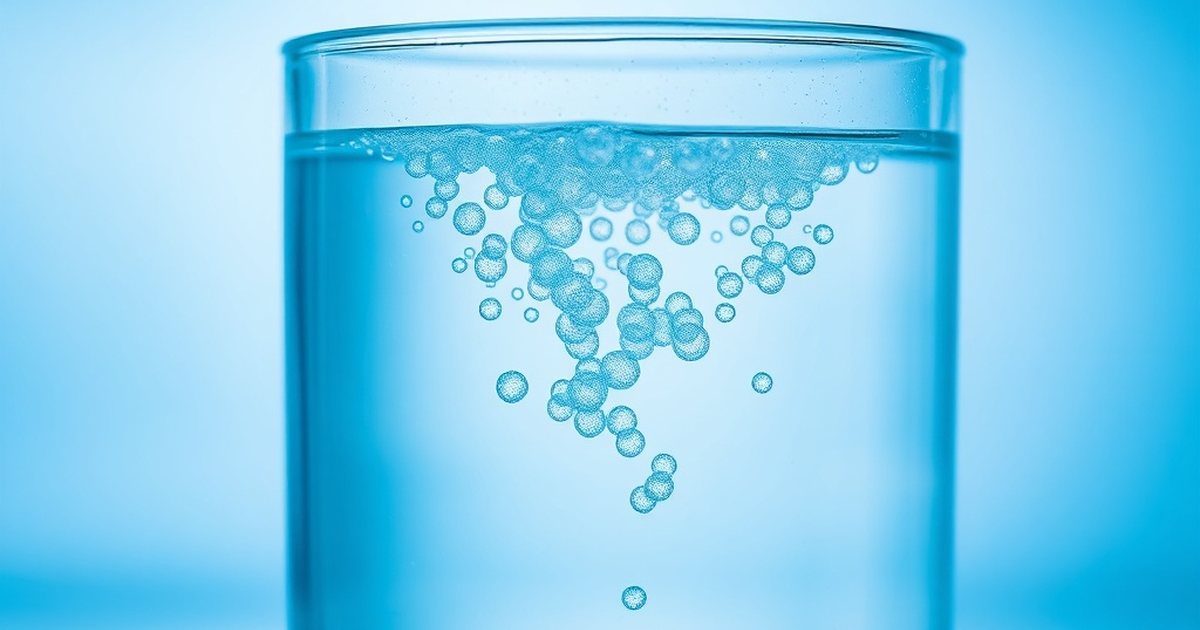
Water at standard atmospheric pressure and room temperature (roughly 25°C) can dissolve approximately 1.6 mg/L (1.6 ppm) of molecular hydrogen. This is the natural saturation point — the maximum amount of H2 that water will hold under typical conditions without pressurization. Products that advertise concentrations above 1.6 ppm achieve this by using pressurized containers (aluminum pouches, sealed cans, or pressurized chambers) that keep the dissolved gas in solution under elevated pressure. The moment that pressure is released — when you open the pouch or pour the water — the supersaturated hydrogen begins escaping immediately, similar to carbonation fizzing out of a soda.
This saturation chemistry has a direct practical implication: very high ppm claims (4 ppm, 5 ppm, or higher) are only meaningful if you can consume the water while it is still under pressure or within seconds of opening. For most real-world use cases, the window between opening and drinking determines how much H2 you actually ingest. A product at 1.6 ppm stored in a well-sealed aluminum pouch and consumed immediately may deliver more active hydrogen than a 4 ppm product poured into a glass and sipped over ten minutes.
The Proposed Therapeutic Range: What Researchers Have Used
The published clinical literature on hydrogen water — primarily from Japan, South Korea, and China — has used a fairly consistent range of concentrations. Most small trials have employed water containing between 0.5 mg/L and 1.6 mg/L of dissolved H2, administered in volumes of 500 mL to 1,500 mL per day. This means total daily H2 doses in published research have generally ranged from roughly 0.5 mg to 2.4 mg per day. No large, replicated clinical trial has established a minimum effective concentration, and no dose-response relationship has been definitively characterized in humans.
The proposed mechanism — selective neutralization of hydroxyl radical and peroxynitrite without broadly disrupting redox signaling — is biologically plausible but remains under investigation. Researchers have hypothesized that even small amounts of dissolved H2 may be sufficient to exert localized antioxidant effects given the molecule’s rapid diffusibility across biological membranes. Whether higher concentrations produce proportionally stronger effects, or whether there is a plateau, is not yet established by the available evidence. Honest framing requires acknowledging this gap: concentrations above 1.6 ppm have not been prominently featured in the peer-reviewed trial literature, partly because of the practical storage challenges described above.
For scale, the eight-week open-label metabolic-syndrome pilot most often cited in this area used water at a hydrogen concentration of 0.55–0.65 mM, which is roughly 1.1–1.3 ppm[1]. Any product or source claiming a specific proven therapeutic ppm threshold should be viewed skeptically unless it references indexed peer-reviewed literature.
Comparing Delivery Methods: Tablets, Machines, and Pre-Made Water
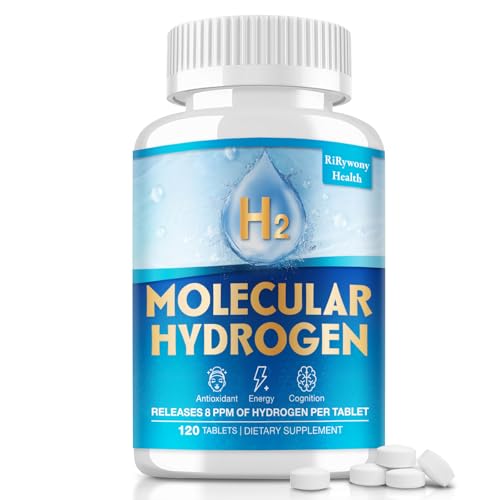
Effervescent hydrogen tablets dissolve in water and typically produce concentrations in the range of 1.0 to 2.5 ppm, depending on tablet formulation, water volume, water temperature, and how quickly you seal and consume the glass. The advantage is convenience and low cost per serving; the limitation is that open-container dissolution allows rapid off-gassing, so consumption speed matters. Using a sealed container — even a simple screw-top water bottle — and drinking within a few minutes of tablet dissolution is good practice.
Electrolysis-based hydrogen water machines (also called hydrogen water generators) split water molecules using electrolysis to produce H2 at the cathode. Quality machines can reliably produce 1.0 to 1.6 ppm under normal atmospheric conditions; some pressurized machines claim higher concentrations. The consistency of output depends heavily on source water quality, electrode condition, and machine maintenance. Pre-made hydrogen water in aluminum pouches or cans uses either electrolysis or direct infusion and is sealed under pressure, which preserves higher concentrations until opening.
For practical purposes, the delivery method matters less than the combination of verified concentration at point of manufacture, packaging integrity, and consumption speed. A 1.0 ppm tablet consumed within two minutes in a sealed bottle is likely more effective than a 3.0 ppm product poured into an open glass and consumed over twenty minutes.
What to Look for on Product Labels (and What to Question)
A credible hydrogen water product should state the H2 concentration in mg/L or ppm, specify the measurement conditions (sealed vs. at time of drinking), and ideally provide third-party laboratory verification. Dissolved hydrogen concentration is measured using reagent drop tests (methylene blue or Hanna reagents) or dissolved hydrogen meters. Both methods have limitations — drop tests are qualitative, and meters require regular calibration — but they are the standard tools used by researchers and manufacturers.

Claims that deserve skepticism include concentrations far above 1.6 ppm in non-pressurized or non-hermetically-sealed packaging, vague language like ‘hydrogen-infused’ without a stated concentration, and disease-treatment claims of any kind. In the United States, molecular hydrogen products sold as foods or supplements cannot legally claim to treat, cure, or prevent any disease. Legitimate H2 water brands typically frame benefits as general wellness or antioxidant support and present their products as food-grade rather than pharmaceutical.
It is also worth noting that the presence of other ingredients — minerals, electrolytes, or adaptogens like shilajit — does not itself increase or stabilize H2 concentration. If a product combines hydrogen water with other ingredients, the H2 component still follows the same dissolution and off-gassing chemistry. Evaluate the hydrogen content and the additional ingredients separately.
Practical Guidance: Getting the Most From Hydrogen Water
Based on the chemistry and the broad concentration range used in research, a reasonable practical target for someone exploring hydrogen water is at least 1.0 mg/L (1.0 ppm) consumed in volumes consistent with published trials — roughly 500 mL to 1,000 mL per day. This is achievable with quality tablets, a well-maintained machine, or sealed pouches. Chasing concentrations above 1.6 ppm is unlikely to add meaningful benefit unless you can verify the concentration at the point of drinking, not just at manufacture.
Store hydrogen water products in cool conditions and minimize exposure to air and light. Consume promptly after opening. If using a tablet, prefer smaller water volumes (300–500 mL) rather than a full liter — the same amount of H2 dissolved in less water produces a higher concentration, and the surface-area-to-volume ratio affects off-gassing speed. These small adjustments may matter more than the difference between a 1.5 ppm and a 2.0 ppm product claim.
🛒 Where to Buy Molecular Hydrogen
- Drink HRW Rejuvenation Molecular Hydrogen TabletsLab-tested / studied
tablets, 1 tablet per 500ml water — Research-grade effervescent tablet; developed with involvement from the Molecular Hydrogen Foundation; among the highest documented H2 output per tablet; frequently cited in community as the benchmark - Dr. Mercola Molecular Hydrogen Tablets
tablets, 2 tablets daily in water — Mass-market accessible entry point; wide distribution; uses magnesium as hydrogen carrier; good brand recognition for general wellness shoppers - Water & Wellness H2 Elite Molecular Hydrogen Tablets
tablets, 1 tablet per 16 oz water — Travel-friendly compact packaging; practical for daily carry; good entry-level tablet option for those new to H2 - Susosu Water Hydrogen-Infused Sparkling Water Pouches
liquid, 1 pouch (8 oz) — Ready-to-drink sealed aluminum pouches preserve dissolved H2; Japanese-origin brand; no dissolution required; convenient format for on-the-go use
As an Amazon Associate we earn from qualifying purchases. Molecular hydrogen quality comes down to dissolved H2 concentration, not price. Choose a product that states a specific ppm (mg/L) figure backed by third-party testing, and prefer airtight aluminum or sealed glass packaging — a vague high-concentration claim is unverifiable, and H2 escapes quickly from plastic and open containers.
A Note on the Evidence
The evidence supporting hydrogen water benefits is preliminary, based largely on small, short-duration trials conducted outside the United States, and no specific ppm threshold for therapeutic effect has been established in rigorous human research. This article is for informational purposes only and does not constitute medical advice; consult a qualified healthcare provider before using hydrogen water as part of any health protocol, particularly if you have an existing medical condition or take medications.
Frequently Asked Questions
Is higher ppm always better in hydrogen water?
Not necessarily. The concentration at the time of drinking is what matters, not the concentration at manufacture. A product claiming 4 ppm in a non-pressurized container may deliver less H2 than a 1.5 ppm product in a sealed aluminum pouch consumed immediately after opening. The research literature has primarily used concentrations in the 0.5–1.6 ppm range without establishing that higher concentrations produce proportionally greater effects.
What is the maximum amount of H2 that can dissolve in water?
At standard atmospheric pressure and room temperature, water can hold approximately 1.6 mg/L (1.6 ppm) of dissolved hydrogen gas. Supersaturation above this level requires pressurized containers; once that pressure is released, the excess H2 escapes quickly, similar to carbonation in a fizzy drink.
How do I know if a hydrogen water product actually contains the advertised H2 level?
Look for third-party laboratory verification using dissolved hydrogen meters or reagent drop tests. Some reputable brands publish batch test results. Without independent verification, label claims are difficult to confirm at home, though consumer-grade H2 test kits are available and can provide a rough check.
Does the concentration degrade during storage?
Yes. Molecular hydrogen is extremely small and diffuses through many materials over time, including some plastics. Aluminum pouches and glass bottles with airtight seals preserve H2 concentration best. Temperature also matters — warmer storage conditions accelerate off-gassing. Always check the expiration date and store products in a cool location.
Are hydrogen water tablets as effective as machines or pre-made water?
Tablets can produce comparable concentrations (often 1.0–2.5 ppm) when used correctly — dissolved in a smaller volume of cool water in a sealed container and consumed promptly. The key variable is minimizing time between dissolution and consumption. Machines and sealed pouches have their own trade-offs in terms of consistency and convenience, but no delivery format has been shown clinically superior.
Is hydrogen water safe to drink?
Molecular hydrogen at concentrations found in commercial H2 water products is broadly regarded as inert and safe. H2 is naturally produced in small amounts in the human gut through fermentation, and it is not classified as a drug. Most published studies have not reported adverse effects at typical doses. That said, the evidence base is primarily from short-duration trials in Asian populations, and individuals with specific medical conditions or who are pregnant or breastfeeding should consult a healthcare provider before regular use.
References
- Nakao A et al. Effectiveness of hydrogen rich water on antioxidant status of subjects with potential metabolic syndrome-an open label pilot study. J Clin Biochem Nutr (2010). PMID 20216947
These statements have not been evaluated by the Food and Drug Administration. This information is not intended to diagnose, treat, cure, or prevent any disease. Content is for informational purposes only and is not medical advice; consult a qualified healthcare provider before starting any supplement. As an Amazon Associate we earn from qualifying purchases.
