Hydrogen water — water infused with dissolved molecular hydrogen (H2) gas — has attracted growing consumer interest alongside a modest but developing body of scientific investigation, concentrated largely in Japan and East Asia. Proponents propose that dissolved H2 may act as a selective antioxidant, preferentially neutralizing highly reactive oxidant species such as the hydroxyl radical without broadly suppressing the redox signaling your cells depend on. Before asking whether it works, many people reasonably ask a more basic question: is it safe to drink?
The honest answer is that hydrogen water, at the concentrations studied in published trials, has not produced signals of serious harm in otherwise healthy adults. That said, the evidence base is early-stage — most published studies involve small numbers of participants, short observation periods, and populations outside the United States. This article reviews what safety-oriented research actually shows, what it cannot yet confirm, and who should approach the product with additional caution.
Key Takeaways
- Published short-term studies have not identified serious adverse events associated with hydrogen water consumption in healthy adults [1].
- The evidence base is early-stage: most trials are small, short in duration, and conducted primarily in East Asian populations — long-term safety data does not yet exist.
- Molecular hydrogen is proposed to act as a selective antioxidant, targeting only the most cytotoxic reactive oxygen species; this selectivity is central to arguments about its favorable safety profile, though the mechanism remains under investigation.
- Children, pregnant individuals, breastfeeding individuals, and those with serious chronic conditions should not assume general-adult safety data applies to them.
- Hydrogen water is not FDA-regulated as a drug, and no disease-treatment claims are permitted; it is consumed as a beverage and is informational only — not a substitute for medical advice.
What Hydrogen Water Is and How It Is Consumed
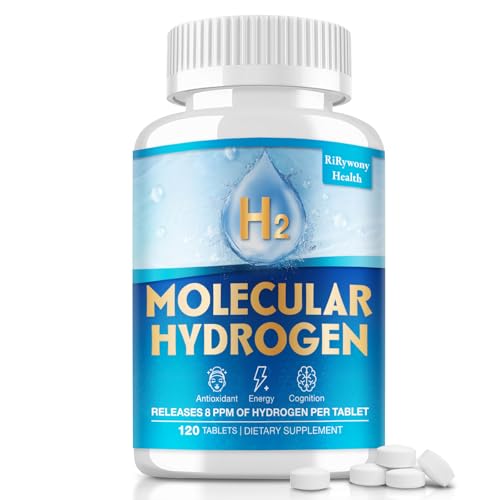
Molecular hydrogen (H2) is the smallest known molecule — a diatomic gas that, when dissolved into water under pressure, produces what is marketed as hydrogen-rich or hydrogen-enriched water. Common delivery formats include water infused at point of production and sealed in aluminum pouches, effervescent tablets dropped into a glass of water, and electrolysis-based pitchers or generators. The resulting dissolved H2 concentration typically ranges from roughly 0.5 to 1.6 parts per million (ppm), though concentrations vary by product and preparation method.
Molecular hydrogen is not classified as a drug in the United States, and the FDA has not evaluated or approved hydrogen water for the treatment, cure, or prevention of any disease. It is consumed as a beverage, and the H2 gas itself is largely exhaled through the lungs within minutes of ingestion — a physiological feature that has implications both for its proposed mechanism and for understanding its safety profile.
The Proposed Mechanism: Why Selective Antioxidant Activity Is Central to Safety Claims
Understanding the proposed mechanism helps frame why researchers believe hydrogen water may be benign. The prevailing hypothesis is that dissolved H2 reacts preferentially with the most cytotoxic reactive oxygen species — primarily the hydroxyl radical (·OH) and peroxynitrite (ONOO⁻) — while leaving other reactive oxygen species, such as hydrogen peroxide and superoxide, largely undisturbed. This selectivity matters because those less-reactive species serve important biological roles in immune defense, cell signaling, and gene expression.
By contrast, broad-spectrum antioxidant supplements can interfere with beneficial redox signaling, which has raised questions about their long-term safety in certain contexts. The selectivity hypothesis, if borne out by further research, would suggest H2 carries fewer of those concerns. However, this mechanism remains under active investigation and has not been definitively confirmed in large, long-duration human trials.
What Published Safety Data Actually Exists
The most directly relevant safety data comes from small prospective studies examining hydrogen-rich supplementation in clinical populations. One prospective case series study evaluated the safety and tolerability of oral hydrogen-rich coral calcium capsules in patients with metabolic syndrome over a defined follow-up period. Investigators reported no serious adverse events and observed a favorable tolerability profile among participants [1]. While this study involved a capsule-delivered hydrogen formulation rather than hydrogen-enriched water consumed as a beverage, it represents published human safety observation under conditions of regular oral H2 exposure.
Across the broader published literature on hydrogen water and hydrogen-enriched beverages, reported adverse events have been uncommon and generally mild — most often transient gastrointestinal sensations such as bloating, attributable to dissolved gas rather than any pharmacological effect. No studies in the published record have identified organ toxicity, hematological abnormalities, or serious adverse events at the concentrations typically delivered by commercial hydrogen water products.
It is important to contextualize these reassuring signals appropriately. Most published trials in this space involve tens to low hundreds of participants observed over weeks to a few months. Long-duration safety data — the kind needed to identify delayed effects or risks in vulnerable subpopulations — is not yet available. The absence of reported harm in short-term small trials is meaningful preliminary evidence, but it is not equivalent to a rigorous long-term safety profile.
Why the Evidence Base Remains Preliminary
The published clinical literature on hydrogen water is dominated by studies from Japan, South Korea, and China, conducted in relatively small, often homogeneous populations. Very few trials have been conducted under US regulatory standards, and independent replication of key findings remains limited. This geographic and methodological concentration means that extrapolating safety conclusions broadly requires caution.
Short study durations are a recurring limitation. A six- to twelve-week trial may be sufficient to observe acute tolerability, but it provides little insight into cumulative exposure effects, interactions with chronic medications, or safety in populations with significant organ impairment. Until longer-duration, larger, and more geographically diverse trials are published, safety conclusions should be regarded as provisional.
Additionally, the hydrogen content of commercial products varies considerably. Concentration, stability during shipping and storage, and the delivery format (pouched water, tablet, generator) all affect how much dissolved H2 a consumer actually receives. Studies conducted on precisely characterized research preparations may not perfectly represent what is purchased over the counter.
Populations Who Should Exercise Additional Caution
Most published studies have enrolled healthy adults or patients with specific, well-characterized conditions such as metabolic syndrome. Children, pregnant individuals, people who are breastfeeding, and those with serious kidney, liver, or cardiovascular disease have not been meaningfully studied in this context. For these groups, the precautionary principle applies: the absence of reported harm in the general adult population does not establish safety for populations excluded from the research.

People taking prescription medications should also consider that, while molecular hydrogen at studied concentrations appears pharmacologically inert, it has not been systematically tested for interactions with drug metabolism. Anyone managing a chronic health condition should discuss the addition of any new supplement — including hydrogen water — with a qualified healthcare provider before beginning regular use.
Practical Takeaways on the Safety Question
Hydrogen water, when produced from clean water sources and consumed at the concentrations found in published studies, does not have a documented record of serious harm in the adult populations studied. Molecular hydrogen is a naturally occurring molecule already present in trace amounts in the gut environment, and the amounts delivered by enriched water products are modest. This is consistent with a reasonable presumption of safety for healthy adults consuming the product occasionally or regularly in amounts comparable to those studied.
That presumption is not the same as a proven safety clearance. Consumers should distinguish between ‘no serious harm observed in small short-term studies’ — which is where the evidence currently stands — and ‘conclusively demonstrated to be safe at all doses for all populations over long periods,’ which is a bar the existing evidence cannot meet. Purchasing from reputable manufacturers who provide transparent third-party testing for dissolved hydrogen concentration and water quality is a reasonable risk-reduction step.
🛒 Where to Buy Molecular Hydrogen
- Drink HRW Rejuvenation Molecular Hydrogen TabletsLab-tested / studied
tablets, 1 tablet per 500ml water — Research-grade effervescent tablet; developed with involvement from the Molecular Hydrogen Foundation; among the highest documented H2 output per tablet; frequently cited in community as the benchmark - Dr. Mercola Molecular Hydrogen Tablets
tablets, 2 tablets daily in water — Mass-market accessible entry point; wide distribution; uses magnesium as hydrogen carrier; good brand recognition for general wellness shoppers - Water & Wellness H2 Elite Molecular Hydrogen Tablets
tablets, 1 tablet per 16 oz water — Travel-friendly compact packaging; practical for daily carry; good entry-level tablet option for those new to H2 - Susosu Water Hydrogen-Infused Sparkling Water Pouches
liquid, 1 pouch (8 oz) — Ready-to-drink sealed aluminum pouches preserve dissolved H2; Japanese-origin brand; no dissolution required; convenient format for on-the-go use
As an Amazon Associate we earn from qualifying purchases. Molecular hydrogen quality comes down to dissolved H2 concentration, not price. Choose a product that states a specific ppm (mg/L) figure backed by third-party testing, and prefer airtight aluminum or sealed glass packaging — a vague high-concentration claim is unverifiable, and H2 escapes quickly from plastic and open containers.
A Note on the Evidence
The evidence on hydrogen water safety is preliminary, drawn from small and largely short-term studies in selected populations — it cannot be extrapolated to children, pregnant or breastfeeding individuals, or people with serious organ disease. This article is informational only and is not medical advice; consult a qualified healthcare provider before using hydrogen water if you have a chronic health condition or take prescription medications.
Frequently Asked Questions
Has hydrogen water been tested in any clinical populations for safety?
Yes, in a limited way. A prospective case series evaluated oral hydrogen-rich supplementation in patients with metabolic syndrome and reported a favorable tolerability and safety profile with no serious adverse events observed [1]. Most other published safety observations come from small, short-duration studies in otherwise healthy adults.

Is there any risk of consuming too much dissolved hydrogen?
At concentrations found in commercial products, dissolved H2 is rapidly exhaled through the lungs after ingestion — it does not accumulate. No toxicity threshold has been identified at studied doses in the published human literature. However, very high-concentration exposures have not been characterized in long-term human trials, so extreme doses should not be assumed safe by extrapolation.
Can hydrogen water interact with medications?
Systematic medication-interaction data does not exist in the published literature. Molecular hydrogen at typical beverage concentrations is not known to inhibit or induce drug-metabolizing enzymes, but this has not been formally studied. Anyone on prescription medications should consult their prescribing physician before adding hydrogen water regularly.
Is hydrogen water safe during pregnancy?
Pregnant individuals were not included in the published trials on hydrogen water. There is no evidence of harm, but equally no evidence of safety for this population. Current data is insufficient to make any recommendation; this group should consult an obstetrician or midwife.
Why is most hydrogen water research from Japan and East Asia?
Research interest in molecular hydrogen therapeutics originated largely in Japan following a landmark 2007 publication by Ohsawa and colleagues. Subsequent clinical trial activity has remained concentrated in Japan, South Korea, and China. Very few Western clinical trials have been conducted, which limits generalizability and independent replication of findings.
Does hydrogen water taste or smell different from regular water?
Dissolved molecular hydrogen is colorless, odorless, and essentially tasteless at the concentrations present in commercial products. Most consumers report no perceptible difference from plain water. The gas does gradually escape from solution after a container is opened, which is why many products are sealed in aluminum pouches or pressurized bottles.
References
- Chiu SH et al. Evaluation of the safety and potential lipid-lowering effects of oral hydrogen-rich coral calcium (HRCC) capsules in patients with metabolic syndrome: a prospective case series study. Frontiers in nutrition (2023). PMID 37521410
These statements have not been evaluated by the Food and Drug Administration. This information is not intended to diagnose, treat, cure, or prevent any disease. Content is for informational purposes only and is not medical advice; consult a qualified healthcare provider before starting any supplement. As an Amazon Associate we earn from qualifying purchases.
