Hydrogen water devices have moved from niche wellness products to a crowded consumer market in a short time. The core premise is straightforward: an electrolysis cell splits water molecules and dissolves molecular hydrogen (H2) gas into the water you drink. Proponents point to a body of preliminary research — concentrated largely in Japan and East Asia — suggesting that dissolved H2 may act as a selective antioxidant[1][2], preferentially neutralizing hydroxyl radicals and peroxynitrite without disrupting the body’s normal redox signaling. That mechanism is still under active investigation, and no hydrogen water device is approved to treat, cure, or prevent any disease.
If you are considering a hydrogen water bottle or countertop generator, the market can be genuinely confusing. Prices range from under thirty dollars to several hundred, specifications are often presented without context, and marketing language frequently outpaces the evidence. This guide focuses on what the specifications actually mean, what separates a functional device from an ineffective one, and what honest expectations look like given the current state of the science.
Key Takeaways
- The most important specification is dissolved H2 concentration in mg/L — look for at least 0.5 mg/L and prefer third-party verification over manufacturer claims alone.
- A genuine dual-chamber SPE or PEM membrane is essential for separating hydrogen from oxidative byproducts like ozone; single-chamber budget devices may not provide this separation.
- H2 gas is volatile — drink within 10 to 15 minutes of completing a cycle, and prefer sealed or pressurized bottle designs for better gas retention.
- ORP (oxidation-reduction potential) is a useful secondary indicator but is less precise than direct dissolved H2 measurement and should not be your primary comparison metric.
- The research on hydrogen water is preliminary — no device is approved to treat or prevent any condition, and results from small Asian clinical trials should not be extrapolated into guarantees of benefit.
How These Devices Work
All credible hydrogen water generators use electrolysis to produce H2 gas. An electrical current passes through water via a membrane-electrode assembly, splitting H2O into hydrogen gas at the cathode and oxygen gas at the anode. The hydrogen dissolves into the water; the oxygen (and any ozone or chlorine byproducts) is vented away. The quality of this process depends almost entirely on the membrane technology used.
Portable bottles use a sealed chamber where you add water, run a short electrolysis cycle (typically 3 to 10 minutes), and drink directly from the bottle. Countertop or inline generators connect to a water line or reservoir and produce hydrogen water continuously or on demand. Both can be effective, but their practical tradeoffs — capacity, H2 concentration, convenience, and cost — differ substantially.
The Most Important Specification: Dissolved H2 Concentration
Dissolved hydrogen is measured in parts per million (ppm) or, equivalently, milligrams per liter (mg/L). These units are interchangeable for H2 in water. The human-studies literature has most commonly used concentrations in the range of 0.5 to 1.6 mg/L, though some protocols have used higher concentrations. A device that cannot reliably deliver at least 0.5 mg/L is unlikely to be useful for any research-informed application.
Many budget devices claim high ppm figures but produce those readings only under controlled lab conditions — cold, still, distilled water with no dissolved minerals. Real-world performance with tap or filtered water at room temperature is typically lower. When evaluating a device, look for third-party H2 concentration testing using reagent drop tests (H2Blue is a common consumer standard) or dissolved hydrogen meters, not just manufacturer claims. A reputable brand will share this data transparently.
H2 gas is volatile. It begins escaping the moment electrolysis stops. A device that produces 1.2 ppm during the cycle may deliver noticeably less by the time you finish drinking if the bottle is left open or if significant time passes. Closed, pressurized designs retain dissolved H2 longer than open-chamber bottles. Drinking within 10 to 15 minutes of a cycle is a practical rule of thumb.
Membrane Technology: SPE vs. PEM and Why It Matters
Solid Polymer Electrolyte (SPE) and Proton Exchange Membrane (PEM) are terms often used interchangeably in consumer marketing, though they describe related technologies. A genuine PEM or SPE cell uses a solid ionomer membrane (Nafion is a common material) that allows protons to pass while separating the cathode and anode chambers. This design is critical because it vents ozone, chlorine, and oxygen out of the drinking side of the device rather than allowing them to dissolve into your water.
Devices without a proper dual-chamber membrane architecture — particularly very cheap models using simple titanium or platinum-coated plates in a single chamber — cannot separate these byproducts. They may dissolve ozone or chlorine along with H2. This is not merely a purity concern; ozone in drinking water at detectable concentrations can be irritating. For any device you are seriously considering, confirm it uses a genuine dual-chamber SPE or PEM cell. This is one area where price is a meaningful proxy for quality — legitimate membrane cells are not cheap components.
Some manufacturers publish the material source or model number of their membrane. Others partner with established industrial membrane suppliers. When this information is absent from product listings and not available from customer support, treat that opacity as a caution.

ORP: A Useful Signal, Not the Primary Metric
Oxidation-Reduction Potential (ORP) measures a liquid’s tendency to oxidize or reduce other substances, expressed in millivolts. Hydrogen water typically shows a negative ORP, meaning it has reducing (antioxidant) potential. Some devices advertise ORP values as their primary marketing claim — figures like -300 mV or -500 mV appear frequently.
ORP is a real measurement and a negative value does confirm the presence of dissolved hydrogen or other reducing agents. However, it is a less precise metric than direct H2 concentration measurement. The relationship between ORP and actual dissolved H2 content is nonlinear and affected by water mineral content, temperature, and other variables. A device with a very negative ORP reading is not necessarily producing more bioavailable H2 than one with a moderately negative reading. Use ORP as a secondary confirmation, not as your primary comparison point.
Practical Features Worth Comparing
Capacity and cycle time matter for daily use. Most portable hydrogen water bottles hold between 200 and 400 mL and complete a cycle in 3 to 10 minutes. If you intend to drink multiple liters per day — as some protocols suggest — a bottle requiring a 7-minute cycle per 300 mL serving creates real friction. Countertop generators with larger reservoirs or continuous-flow designs remove this bottleneck but add cost and counter space.

Battery life and charging method affect convenience significantly. Lithium-ion batteries in portable bottles vary widely in how many cycles they support per charge. USB-C charging has become standard on newer models and is preferable to proprietary chargers. If you travel frequently, a bottle that charges via standard USB-C with a reported battery life of 15 or more cycles is more practical than one requiring proprietary cables or offering only 5 to 8 cycles per charge.
Materials in contact with your water should be verified. Borosilicate glass chambers are chemically inert and do not off-gas into the water. High-grade stainless steel (316L food-grade) is an acceptable alternative. Avoid devices where the primary water contact surface is unspecified plastic, particularly if the device heats water during operation. Titanium-coated electrodes are standard on legitimate devices; the coating should be certified food-safe. Ask manufacturers for material certifications if this information is not in product documentation.
Setting Honest Expectations
The published clinical research on hydrogen water is genuinely interesting but remains early-stage. Most trials involve small sample sizes, short durations (weeks rather than months or years), and populations that may not reflect your own health status. The proposed antioxidant mechanism — selective neutralization of hydroxyl radical and peroxynitrite — is biologically plausible and has been studied in cell and animal models as well as human trials, but the translation from bench findings to clinically meaningful human outcomes is not yet established in the way required for medical claims.
Areas where the preliminary literature has focused include metabolic markers, inflammatory indicators, exercise recovery, and neurological conditions — but none of these research threads has produced the kind of large, replicated, long-term randomized controlled trial data that would support confident claims of benefit. Buying a hydrogen water device is a personal wellness decision; it is not equivalent to adopting an evidence-based therapeutic intervention. Anyone with an existing medical condition, anyone who is pregnant, or anyone taking medication should speak with a physician before adding hydrogen water to their routine.
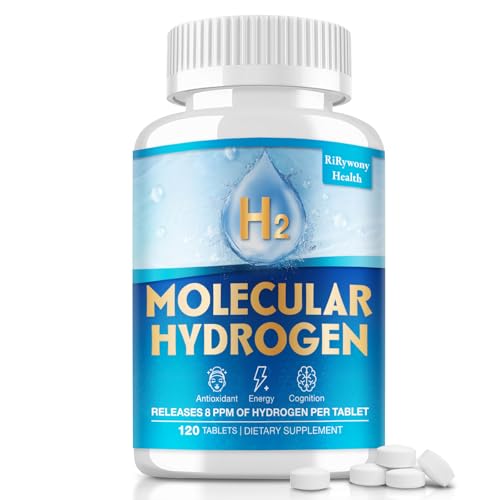
🛒 Where to Buy Molecular Hydrogen
- Drink HRW Rejuvenation Molecular Hydrogen TabletsLab-tested / studied
tablets, 1 tablet per 500ml water — Research-grade effervescent tablet; developed with involvement from the Molecular Hydrogen Foundation; among the highest documented H2 output per tablet; frequently cited in community as the benchmark - Dr. Mercola Molecular Hydrogen Tablets
tablets, 2 tablets daily in water — Mass-market accessible entry point; wide distribution; uses magnesium as hydrogen carrier; good brand recognition for general wellness shoppers - Water & Wellness H2 Elite Molecular Hydrogen Tablets
tablets, 1 tablet per 16 oz water — Travel-friendly compact packaging; practical for daily carry; good entry-level tablet option for those new to H2 - Susosu Water Hydrogen-Infused Sparkling Water Pouches
liquid, 1 pouch (8 oz) — Ready-to-drink sealed aluminum pouches preserve dissolved H2; Japanese-origin brand; no dissolution required; convenient format for on-the-go use
As an Amazon Associate we earn from qualifying purchases. Molecular hydrogen quality comes down to dissolved H2 concentration, not price. Choose a product that states a specific ppm (mg/L) figure backed by third-party testing, and prefer airtight aluminum or sealed glass packaging — a vague high-concentration claim is unverifiable, and H2 escapes quickly from plastic and open containers.
A Note on the Evidence
The evidence base for hydrogen water is early-stage[3]; most published trials are small, short in duration, and conducted outside the United States, and no hydrogen water device is approved by the FDA to diagnose, treat, cure, or prevent any disease. Individuals with cardiovascular conditions, kidney disease, or any chronic illness, as well as those who are pregnant or breastfeeding, should consult a licensed healthcare provider before using these devices.
Frequently Asked Questions
What H2 concentration should I look for in a hydrogen water device?
Most human studies have used concentrations in the range of 0.5 to 1.6 mg/L (ppm). A device that reliably delivers at least 0.5 mg/L under real-world conditions — not just in manufacturer lab tests — is a reasonable baseline. Verify with an H2 reagent test (H2Blue drops) or a dissolved hydrogen meter if precision matters to you.
Is it safe to drink hydrogen water every day?
Molecular hydrogen is the smallest known molecule and is naturally present in small amounts in the gut. At concentrations produced by consumer devices, it is considered inert and is not classified as a drug or controlled substance. The studies conducted to date have not identified safety concerns at typical usage levels, though most trials have been short in duration. As with any wellness product, individuals with medical conditions, pregnant individuals, or those on medication should consult a physician.
What is the difference between an SPE cell and a regular electrolysis plate?
A solid polymer electrolyte (SPE) or proton exchange membrane (PEM) cell uses a solid ionomer membrane to physically separate the hydrogen-producing cathode side from the oxygen-producing anode side. This allows H2 to dissolve into your drinking water while venting oxygen, ozone, and chlorine away. Simple plate-based devices without this dual-chamber design cannot reliably separate these byproducts, which may end up dissolved in the water alongside the hydrogen.
How quickly does dissolved hydrogen escape from the water?
H2 is a very small, light gas and begins escaping from solution as soon as the electrolysis cycle ends. The rate of off-gassing depends on temperature, water agitation, and whether the container is sealed. As a practical guideline, drinking hydrogen water within 10 to 15 minutes of a cycle preserves more of the dissolved gas. Sealed or pressurized bottle designs slow off-gassing compared to open-chamber bottles.
Are countertop generators better than portable bottles?
Neither format is universally superior — they suit different needs. Countertop or inline generators typically produce higher volumes of hydrogen water continuously, which suits households intending to drink multiple liters per day. Portable bottles are more convenient for travel and single-serving use. Both can be effective if they use proper SPE or PEM membrane technology and achieve adequate H2 concentration; the key quality indicators are the same regardless of form factor.
Can hydrogen water replace my other antioxidant supplements?
This is not a question the current research can answer. The proposed mechanism of molecular hydrogen — selective neutralization of certain reactive oxygen species without disrupting beneficial redox signaling — is conceptually distinct from broad antioxidant supplementation, but whether this translates to additive, synergistic, or redundant effects alongside other supplements has not been studied in controlled trials. Hydrogen water should not be treated as a substitute for a physician-recommended supplementation regimen.
References
- Ohsawa I et al. Hydrogen acts as a therapeutic antioxidant by selectively reducing cytotoxic oxygen radicals. Nat Med (2007). PMID 17486089
- Ohta S. Molecular hydrogen as a preventive and therapeutic medical gas: initiation, development and potential of hydrogen medicine. Pharmacol Ther (2014). PMID 24769081
- Dhillon G et al. Hydrogen Water: Extra Healthy or a Hoax? A Systematic Review. Int J Mol Sci (2024). PMID 38256045
These statements have not been evaluated by the Food and Drug Administration. This information is not intended to diagnose, treat, cure, or prevent any disease. Content is for informational purposes only and is not medical advice; consult a qualified healthcare provider before starting any supplement. As an Amazon Associate we earn from qualifying purchases.
