Hydrogen water — plain water infused with dissolved molecular hydrogen (H2) gas — has attracted growing research interest, particularly in Japan and East Asia, as a potential dietary source of a selective antioxidant. The core hypothesis is that H2 may neutralize highly reactive oxygen species such as hydroxyl radical and peroxynitrite without disrupting the body’s normal redox signaling. Unlike broad antioxidant supplements, that selectivity is what separates molecular hydrogen from older antioxidant approaches, at least in theory.
If you are considering hydrogen water, one of the first practical questions is how much to drink each day. The honest answer is that no universally agreed-upon daily dose exists — regulatory bodies have not established one, and the published clinical trials use a range of volumes and concentrations. This article walks through what those studies have actually tested, what variables matter beyond volume alone, and where the evidence is genuinely limited.
Key Takeaways
- Most human studies have used 1 to 1.5 liters of hydrogen water per day at concentrations of roughly 0.8–1.6 ppm H2, delivering an estimated 1–2.4 mg of dissolved hydrogen daily.
- Total H2 intake depends on both volume and concentration — the ppm of your product matters as much as how many glasses you drink.
- H2 escapes rapidly from open water; drinking it promptly after preparation is more important than the time of day.
- At volumes and concentrations studied to date, hydrogen water appears broadly well-tolerated, though long-term and large-scale safety data are lacking.
- No regulatory body has established a recommended daily dose, and the evidence supporting any specific dosage for health outcomes remains preliminary and largely from small trials outside the US.
What 'Dose' Actually Means for Hydrogen Water
With most supplements, dosage is straightforward: milligrams or micrograms of a stable compound. Hydrogen water is different because the active component — dissolved H2 gas — is volatile. The relevant variables are (1) the volume of water you drink, (2) the dissolved H2 concentration in that water, usually expressed in parts per million (ppm) or milligrams per liter (mg/L), and (3) how quickly you consume it, since H2 escapes into the air once a container is opened.
A glass of hydrogen water at 0.5 ppm H2 and a glass at 1.6 ppm H2 are both ‘hydrogen water,’ but they deliver meaningfully different amounts of molecular hydrogen. This is why comparing dosages across studies requires looking at total H2 intake — volume multiplied by concentration — rather than liters alone. Most published human trials have used total daily H2 intakes ranging from roughly 0.5 mg to 4 mg of dissolved H2, achieved through varying combinations of volume and concentration.
Effervescent tablets, electrolysis machines, and pre-bottled hydrogen water can produce H2 concentrations ranging from under 0.5 ppm up to supersaturated levels above 5 ppm. Understanding the concentration of your particular product is essential before estimating how much you are actually consuming.
Volumes Used in Human Studies
Published clinical trials — most of which are small, short-duration, and conducted in Japan, China, and South Korea — have most commonly tested daily volumes between 0.5 liters and 2 liters of hydrogen-enriched water per day, often at concentrations between 0.8 ppm and 1.6 ppm. A frequently referenced range in the literature is roughly 1 to 1.5 liters per day at concentrations at or above 1 ppm, delivering somewhere between 1 mg and 2.4 mg of H2 daily.
Some studies have explored shorter, higher-dose protocols — for example, drinking 500 mL of high-concentration hydrogen water (above 5 ppm) once or twice daily — to compensate for the volatility of dissolved H2 and maximize delivery before gas escapes. There is no head-to-head evidence clearly establishing that higher volumes outperform moderate volumes when concentration is held constant, and no human dose-response study of sufficient size has been completed to draw firm conclusions.
It is worth noting that much of the hydrogen gas research has been conducted using inhalation models in animals rather than drinking water in humans. For example, one study examined inhaled high-concentration hydrogen gas in a rat model of cardiac arrest and cognitive deficit [1]. While such preclinical work informs mechanistic hypotheses, it does not translate directly into drinking-water dosage guidance for people.
Does Drinking More Hydrogen Water Deliver More H2?
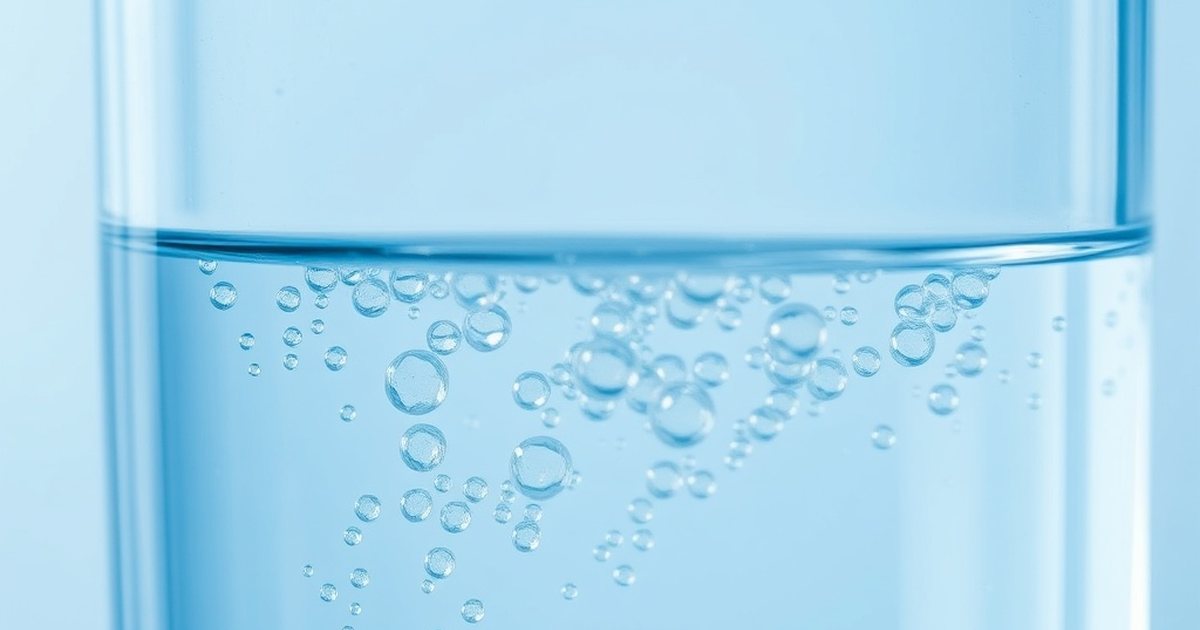
Up to a point, yes — volume and concentration together determine total H2 intake. But practical limits apply. H2 is the smallest known molecule and diffuses rapidly out of solution once a container is opened or the water is exposed to air. Drinking a large quantity of hydrogen water that has been sitting open for an hour may deliver far less H2 than the labeled concentration suggests. Speed of consumption after preparation or opening matters as much as volume.
The gastrointestinal tract itself appears to be an important route for H2 absorption. Research suggests that dissolved H2 in the stomach and intestines can pass into the bloodstream, though the precise absorption kinetics in humans remain under investigation. Drinking slowly over many hours is likely less efficient than drinking a full serving within a short window after preparation.
There is no established evidence that dramatically high volumes — say, four or five liters per day — confer proportionally greater benefit than one to two liters. The current evidence base simply does not extend to those volumes at any meaningful sample size, and very high plain water intake carries its own physiological considerations unrelated to hydrogen content.
Timing: Does When You Drink It Matter?
Timing has been investigated primarily in the context of exercise recovery, where several small trials have administered hydrogen water immediately before or after physical activity. The rationale is that oxidative stress rises acutely during intense exercise, and that H2 might be most useful when that oxidative load peaks. Some researchers have also proposed morning consumption on an empty stomach to maximize gastric absorption, though direct comparative data on timing windows in humans is sparse.
Splitting the daily volume into two servings — for example, one glass in the morning and one in the evening — appears in several study protocols, partly to distribute H2 exposure across the day and partly for practical tolerability. Whether this split-dose approach outperforms a single daily serving has not been formally tested.
From a practical standpoint, the most important timing consideration is proximity to opening or preparing the water. Consuming hydrogen water within a few minutes of preparation, before significant H2 off-gassing occurs, is likely more important than the specific time of day.
Safety at Studied Doses
Molecular hydrogen is an inert, non-toxic gas at the concentrations found in hydrogen water. It is not a drug and is not classified as one. The volumes and concentrations used in published human studies — generally up to approximately 2 liters per day at concentrations below 7 ppm — have not produced clinically significant adverse effects in reported trials. H2 has no known reactive metabolites; it is exhaled unchanged through the lungs once absorbed.

Because hydrogen water is essentially water with a dissolved gas, tolerability concerns are similar to those of drinking water in general. Consuming very large volumes of any water in a short period carries a small risk of electrolyte disruption, though this is not specific to hydrogen water and has not been a feature of reported hydrogen water adverse events. People with conditions that require fluid restriction should consult a physician before increasing their water intake for any reason.
The evidence base for long-term safety at higher doses and in special populations — including pregnant or breastfeeding individuals, children, and people with chronic kidney disease — is essentially absent. Caution and medical consultation are warranted for those groups.
Honest Limitations of the Current Evidence
The question of how much hydrogen water to drink per day cannot be answered with the same confidence as, say, a well-studied pharmaceutical dose, because the clinical trial foundation is early-stage. Most published studies enrolling human participants have sample sizes under 40 people, run for weeks rather than months, and often lack placebo controls or blinding procedures that meet rigorous standards. The majority are published in Japanese or Chinese journals and have not been replicated in large, independently funded Western trials.
No major health authority — including the FDA, EFSA, or WHO — has issued a recommended daily intake for molecular hydrogen. The existing trial volumes (roughly 1–1.5 liters at 1–1.6 ppm) should be understood as the ranges that have been studied, not as validated therapeutic doses. Claims that hydrogen water treats, cures, or prevents specific diseases are not supported by the current evidence and are not permitted under FDA regulations.
Anyone reading about hydrogen water should also recognize that product quality varies substantially. Third-party testing of dissolved H2 concentrations in commercial products is limited, and the labeled concentration may not reflect what is actually delivered at the time of consumption, particularly in bottled products that have been stored or transported.
🛒 Where to Buy Molecular Hydrogen
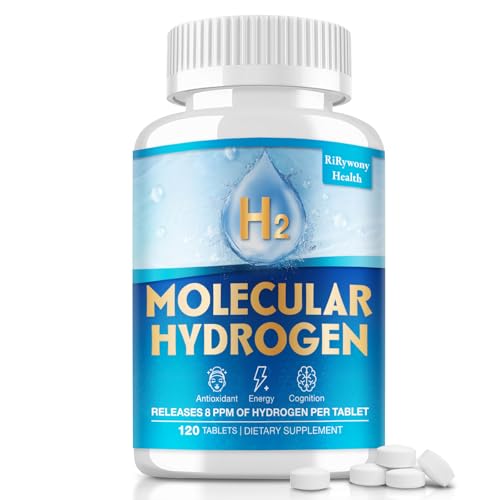
- Drink HRW Rejuvenation Molecular Hydrogen TabletsLab-tested / studied
tablets, 1 tablet per 500ml water — Research-grade effervescent tablet; developed with involvement from the Molecular Hydrogen Foundation; among the highest documented H2 output per tablet; frequently cited in community as the benchmark - Dr. Mercola Molecular Hydrogen Tablets
tablets, 2 tablets daily in water — Mass-market accessible entry point; wide distribution; uses magnesium as hydrogen carrier; good brand recognition for general wellness shoppers - Water & Wellness H2 Elite Molecular Hydrogen Tablets
tablets, 1 tablet per 16 oz water — Travel-friendly compact packaging; practical for daily carry; good entry-level tablet option for those new to H2 - Susosu Water Hydrogen-Infused Sparkling Water Pouches
liquid, 1 pouch (8 oz) — Ready-to-drink sealed aluminum pouches preserve dissolved H2; Japanese-origin brand; no dissolution required; convenient format for on-the-go use
As an Amazon Associate we earn from qualifying purchases. Molecular hydrogen quality comes down to dissolved H2 concentration, not price. Choose a product that states a specific ppm (mg/L) figure backed by third-party testing, and prefer airtight aluminum or sealed glass packaging — a vague high-concentration claim is unverifiable, and H2 escapes quickly from plastic and open containers.

A Note on the Evidence
The evidence supporting specific hydrogen water dosages and health outcomes is early-stage, derived primarily from small, short-duration trials with significant methodological limitations — treat any dosage figure as a research observation, not a clinical recommendation. Individuals who are pregnant, breastfeeding, have kidney disease, or are on fluid-restricted diets should consult a qualified healthcare provider before making changes to their daily water intake.
Frequently Asked Questions
Is there an official recommended daily dose of hydrogen water?
No regulatory body — including the FDA or WHO — has established an official recommended daily intake for hydrogen water. The figures most commonly referenced in research discussions (1–1.5 liters per day) reflect the volumes used in published clinical trials, not a validated therapeutic guideline. This is informational context, not a medical recommendation.
Does drinking more hydrogen water always mean more benefit?
Not necessarily. Benefit, if any, depends on actual H2 delivered to tissues, which is a function of both volume and concentration, as well as how quickly the water is consumed before off-gassing occurs. Dramatically increasing volume without accounting for these variables may not proportionally increase H2 intake, and the dose-response relationship in humans has not been adequately studied.
Can you drink too much hydrogen water?
The hydrogen component itself has not been associated with toxicity at studied concentrations. The more relevant risk at very high volumes is general water overload, which can dilute electrolytes — a concern with any high-volume fluid intake unrelated to hydrogen content. People on fluid-restricted diets for medical reasons should consult their doctor before significantly increasing daily water intake.
Do hydrogen tablets produce the same dose as a hydrogen water machine?
Both can produce dissolved H2, but concentrations vary considerably between products and preparation methods. Some effervescent tablet systems claim to produce high-ppm concentrations, while lower-end electrolysis machines may produce less. Without third-party concentration testing, it is difficult to compare products directly. The key is knowing the actual dissolved H2 concentration in your prepared water, not just the product category.
Does animal research on hydrogen gas apply to hydrogen water dosage for humans?
Animal studies, including inhalation models, have helped researchers build mechanistic hypotheses about how molecular hydrogen might interact with oxidative stress pathways [1]. However, inhalation delivers H2 directly to the bloodstream via the lungs, while drinking hydrogen water relies on gastrointestinal absorption — different routes with different pharmacokinetics. Animal inhalation data does not translate into human drinking-water dosage recommendations.
How long do you need to drink hydrogen water before noticing any effect?
Published trial durations range from a single session to several weeks, and reported outcomes vary by study design and population. Given that the overall evidence base is preliminary and most trials are small, there is no reliable general answer to this question. Anyone expecting a specific health outcome from hydrogen water should be aware that robust evidence for most claimed benefits has not yet been established in adequately powered clinical trials.
References
- Huang L et al. Inhalation of high-concentration hydrogen gas attenuates cognitive deficits in a rat model of asphyxia induced-cardiac arrest. Medical gas research (2019). PMID 31552874
These statements have not been evaluated by the Food and Drug Administration. This information is not intended to diagnose, treat, cure, or prevent any disease. Content is for informational purposes only and is not medical advice; consult a qualified healthcare provider before starting any supplement. As an Amazon Associate we earn from qualifying purchases.
