Molecular hydrogen (H2) tablets are effervescent supplements that dissolve in water to produce hydrogen-enriched water. Interest in them has grown alongside a body of preliminary research — largely from Japanese and East Asian institutions — exploring whether dissolved H2 might act as a selective antioxidant, neutralizing highly reactive oxygen species without broadly suppressing the redox signals the body relies on. For people drawn to this category, one practical question comes first: how many tablets, how often, and when?
The honest answer is that no large, long-term, randomized clinical trial has established a universally validated dosing protocol for H2 tablets. What exists are manufacturer guidelines, the doses used in small published trials, and reasonable inferences from how effervescent delivery works. This article pulls those threads together so you can make an informed, cautious decision — and know exactly where the evidence ends and practical guidance begins.
Key Takeaways
- Most commercial protocols suggest one to three hydrogen tablets per day, each dissolved in 8–16 oz of cold water and consumed within 10 minutes of dissolution.
- Morning on an empty or lightly-fed stomach is the most common timing recommendation and aligns with how most small trials have been designed.
- Cold water, a sealed container, and drinking promptly after dissolution all help retain dissolved H2 before it off-gasses.
- No large clinical trial has established an optimal dose or timing for H2 tablets; all dosing guidance is based on preliminary research and manufacturer protocols.
- Hydrogen tablets are not drugs and are not approved to treat any condition — consult a healthcare provider if you have a medical concern.
What a Hydrogen Tablet Actually Does in Your Glass
Hydrogen tablets are typically made with a food-grade effervescent base — commonly magnesium or calcium compounds — that reacts with water to release molecular hydrogen gas. The H2 dissolves into the water during the fizzing process, and you drink it before the gas escapes. This is the same delivery principle used in effervescent pharmaceutical tablets, a format studied for how reliably it can deliver active compounds in solution.
The critical variable is concentration: how much dissolved H2 ends up in your glass depends on tablet potency, water volume, water temperature, altitude, and how quickly you drink it. Most commercial H2 tablets are formulated to produce somewhere between 1 and 3 parts per million (ppm) of dissolved hydrogen in a standard 8–16 oz glass of cold water, though independent third-party verification of these figures varies by brand. Colder water retains dissolved gas longer, so using cold or room-temperature water and drinking within a few minutes of dissolution is consistently recommended.
Typical Dosage Ranges Used in Early Research
The small clinical and pilot trials that form the current evidence base for molecular hydrogen have used a range of dosing approaches. Some studies delivered H2 via hydrogen-enriched water produced by electrolysis machines rather than tablets; others used effervescent tablets or hydrogen-generating reagents. Across these studies, daily H2 intake has generally ranged from roughly 0.5 mg to 5 mg of dissolved hydrogen, consumed once or twice daily, over periods ranging from four weeks to three months.
Translating that into tablet terms is imprecise because tablet potency varies. A tablet yielding approximately 1–2 mg of H2 in 250–500 mL of water is a common commercial claim. Most published small trials used one to two servings of H2-enriched water per day. There is no established minimum effective dose and no established upper threshold for safety concerns in the studies published to date — though the evidence base remains early-stage and primarily short-duration.
It is important to note that the published literature does not include a dosing trial run specifically on H2 effervescent tablets. The human trials that do exist dosed hydrogen-enriched water by volume and concentration rather than by tablet: 900 mL per day for eight weeks[1], 1.5 L per day for four weeks[2], 0.5 L per day at 15 ppm for six months[3], and a target above 5.5 millimoles of H2 per day for 24 weeks[4]. Converting any of those into a number of tablets requires knowing your tablet’s actual yield, which is why the figure on the label matters more than the brand. Any specific milligram figures you encounter in marketing materials should be read with that in mind. Consult the original study references a brand provides, and treat them skeptically if the study populations, durations, or delivery methods differ substantially from how you intend to use the product.
How Many Tablets Per Day: A Practical Starting Framework
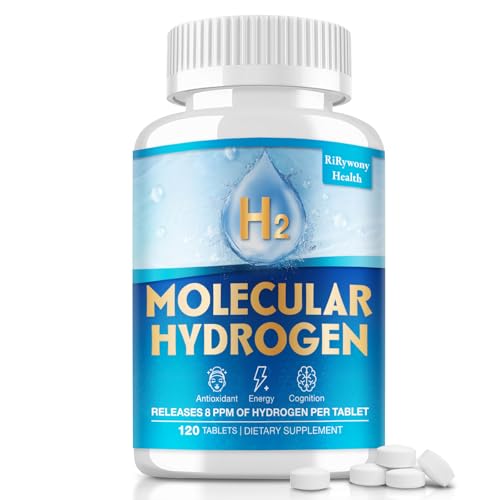
Most commercial hydrogen tablet products recommend one to three tablets per day, each dissolved in 8–16 oz of water. Starting at the lower end — one tablet daily — is a reasonable approach for someone new to the category. This conservative starting point reflects the limited long-term safety data, not any evidence that lower doses are less effective; the dose-response relationship for H2 in humans has not been clearly characterized.
Some users and practitioners in the field suggest splitting daily intake across two sessions — once in the morning and once in the afternoon or early evening — on the reasoning that H2 is rapidly absorbed and cleared, so spreading doses may sustain exposure longer than a single bolus. This rationale is biologically plausible given hydrogen’s short half-life in tissue, but it has not been directly tested in controlled trials comparing single versus split dosing in humans.
Three tablets per day appears to be a practical ceiling in most product protocols, and exceeding manufacturer guidance without clinical supervision adds no clearly demonstrated benefit and introduces unnecessary cost. Molecular hydrogen at studied doses is broadly regarded as physiologically inert beyond its proposed antioxidant activity — it is not stored, and excess dissolves out of the body rapidly — but more is not necessarily more effective.
Timing: When During the Day to Take Hydrogen Tablets
Morning, on an empty stomach or with a light meal, is the most commonly recommended timing in both commercial protocols and in the design of small trials examining metabolic and inflammatory outcomes. The reasoning is that gastric motility is more predictable in a fasted state, and H2 absorption through the gastrointestinal tract may be less impeded. However, there is no published human trial directly comparing fasted versus fed administration of H2 tablets.
For exercise-related applications — one area where preliminary research has examined H2’s potential role in oxidative stress and recovery — some small trials administered H2-enriched water before or immediately after exercise sessions. If exercise performance or recovery is your primary interest, aligning one tablet with your pre- or post-workout window follows the closest available trial precedent, though the evidence in this area remains preliminary.
Evening use before bed is sometimes suggested for sleep or recovery purposes, but this timing has the least trial precedent of the three. Avoid taking tablets within an hour of sleep simply because the fizzing process can cause mild bloating in some people, which could disrupt rest.
Practical Preparation: Getting the Most from Each Tablet
Use cold or room-temperature filtered water in a glass or stainless steel vessel. Plastic bottles can be used if they seal tightly, since a closed container retains dissolved H2 better than an open glass. Drop the tablet in, close or cover the vessel, let it fully dissolve (usually 1–3 minutes), and drink the entire serving within 10 minutes. The longer you wait after dissolution, the more gas escapes.

Avoid hot water: elevated temperature dramatically accelerates H2 off-gassing, and most of the dissolved hydrogen will escape before you drink it. Similarly, avoid adding the tablet to carbonated water, juice, or other beverages — the chemical environment affects the dissolution reaction and may reduce H2 yield. Plain water is the appropriate medium.
Store tablets in a sealed, dry container away from humidity. Moisture exposure before use can trigger partial dissolution in the packaging, reducing potency. Most quality products use individually sealed or desiccant-protected packaging for this reason.
Molecular Hydrogen (H2) Dosage & Cost Calculator
Based on the labeled dose options for Dr. Mercola H2 Molecular Hydrogen Tablets and the published 90-count bottle at $49.97.
Open the full dosage & cost calculator →
Estimate only – based on the current listed price of the 90-count Dr. Mercola H2 Molecular Hydrogen Tablets bottle. Actual Amazon price can change; check the live price before buying.
Why no height/weight input? Unlike per-kg supplements (creatine, protein), Molecular Hydrogen (H2) has no published bodyweight-adjusted dosing in the research behind it. This calculator doesn't fabricate a per-kg formula that doesn't exist in the literature.
Get Dr. Mercola H2 Molecular Hydrogen Tablets on Amazon(paid link) As an Amazon Associate we earn from qualifying purchases.
Honest Caveats About the Evidence Base
The molecular hydrogen research field is active but early. Most published clinical trials are small (often fewer than 50 participants), short in duration (four to twelve weeks), conducted predominantly in Japan and East Asian research centers, and have not been replicated in larger independent cohorts. The proposed mechanism — selective neutralization of hydroxyl radical and peroxynitrite without disrupting beneficial reactive oxygen species — is scientifically coherent and under active investigation, but has not been definitively established in humans.
Hydrogen tablets are not drugs. They are not approved by the FDA to treat, cure, or prevent any disease, and no dosing recommendation in this article should be interpreted as medical guidance. Optimal dosing for any specific health goal has not been established by the published evidence. The guidance above reflects manufacturer protocols and the dose ranges used in preliminary trials — not clinically validated prescriptions.
If you are managing a health condition, taking medications, are pregnant or breastfeeding, or are considering hydrogen tablets for a child, speak with a qualified healthcare provider before use. The absence of reported adverse effects in small short-term trials does not equal confirmed long-term safety across all populations.
🛒 Where to Buy Molecular Hydrogen
- Drink HRW Rejuvenation Molecular Hydrogen TabletsLab-tested / studied
tablets, 1 tablet per 500ml water — Research-grade effervescent tablet; developed with involvement from the Molecular Hydrogen Foundation; among the highest documented H2 output per tablet; frequently cited in community as the benchmark - Dr. Mercola Molecular Hydrogen Tablets
tablets, 2 tablets daily in water — Mass-market accessible entry point; wide distribution; uses magnesium as hydrogen carrier; good brand recognition for general wellness shoppers - Water & Wellness H2 Elite Molecular Hydrogen Tablets
tablets, 1 tablet per 16 oz water — Travel-friendly compact packaging; practical for daily carry; good entry-level tablet option for those new to H2 - Susosu Water Hydrogen-Infused Sparkling Water Pouches
liquid, 1 pouch (8 oz) — Ready-to-drink sealed aluminum pouches preserve dissolved H2; Japanese-origin brand; no dissolution required; convenient format for on-the-go use
As an Amazon Associate we earn from qualifying purchases. Molecular hydrogen quality comes down to dissolved H2 concentration, not price. Choose a product that states a specific ppm (mg/L) figure backed by third-party testing, and prefer airtight aluminum or sealed glass packaging — a vague high-concentration claim is unverifiable, and H2 escapes quickly from plastic and open containers.

A Note on the Evidence
The evidence for molecular hydrogen tablets is early-stage — most published trials are small, short, and conducted outside the US — and no dosing protocol has been validated by large independent clinical trials; all guidance here is informational and does not constitute medical advice. People who are pregnant, breastfeeding, taking prescription medications, or managing a chronic health condition should consult a qualified healthcare provider before using hydrogen tablets.
Frequently Asked Questions
Can I take more than three hydrogen tablets a day for better results?
There is no published evidence showing that more than two to three daily servings of H2-enriched water improves outcomes compared to lower doses. The dose-response relationship in humans is not well characterized. Exceeding manufacturer guidance adds cost without a demonstrated benefit, and long-term high-dose data in humans does not exist.
Does it matter whether I take hydrogen tablets with food or on an empty stomach?
Most small trials and commercial protocols suggest an empty or lightly-fed stomach, particularly in the morning, on the reasoning that gastric conditions are more predictable. However, no human trial has directly compared fasted versus fed timing for H2 tablet absorption, so this guidance is reasonable inference rather than established fact.
How long should I take hydrogen tablets before expecting to notice anything?
The small trials that have reported outcomes generally ran for four to twelve weeks. Any effects observed in those studies were measured at those endpoints, not after a day or two. It would be unrealistic to expect rapid or dramatic changes, and it is important to remember that the overall evidence for H2 tablet benefits in humans remains preliminary.
Can I dissolve hydrogen tablets in a water bottle and drink them later?
A sealed bottle retains dissolved H2 better than an open glass, but dissolved hydrogen still off-gasses over time. Drinking within 10–15 minutes of dissolution is the practical recommendation. A bottle left sealed for an hour will have lost a significant portion of its H2 concentration; leaving it overnight is not effective.
Are hydrogen tablets safe to combine with other supplements?
Molecular hydrogen at typical doses is regarded as physiologically inert beyond its proposed antioxidant mechanism, and no known harmful interactions with common supplements have been reported in the small published literature. That said, no systematic interaction studies exist. If you take medications or have health conditions, consult a healthcare provider before adding any new supplement.
Is there a best time of day to take hydrogen tablets for exercise recovery?
Some small preliminary trials examining oxidative stress and exercise administered H2-enriched water before or immediately after exercise sessions. If exercise recovery is your interest, aligning one daily tablet with your pre- or post-workout window is the closest precedent the early research provides, though these findings are preliminary and have not been confirmed in large trials.
References
- Kajiyama S et al. Supplementation of hydrogen-rich water improves lipid and glucose metabolism in patients with type 2 diabetes or impaired glucose tolerance. Nutrition Research (2008). PMID 19083400
- Sim M et al. Hydrogen-rich water reduces inflammatory responses and prevents apoptosis of peripheral blood cells in healthy adults: a randomized, double-blind, controlled trial. Scientific Reports (2020). PMID 32699287
- Zanini D et al. The effects of 6-month hydrogen-rich water intake on molecular and phenotypic biomarkers of aging in older adults aged 70 years and over: a randomized controlled pilot trial. Experimental Gerontology (2021). PMID 34601077
- LeBaron TW et al. The effects of 24-week, high-concentration hydrogen-rich water on body composition, blood lipid profiles and inflammation biomarkers in men and women with metabolic syndrome: a randomized controlled trial. Diabetes, Metabolic Syndrome and Obesity (2020). PMID 32273740
These statements have not been evaluated by the Food and Drug Administration. This information is not intended to diagnose, treat, cure, or prevent any disease. Content is for informational purposes only and is not medical advice; consult a qualified healthcare provider before starting any supplement. As an Amazon Associate we earn from qualifying purchases.
