Molecular hydrogen (H2) has attracted growing attention in sports science as a proposed selective antioxidant — one that may neutralize particularly damaging reactive oxygen species without broadly suppressing the redox signals that drive training adaptation. Athletes generate large amounts of oxidative stress during intense exercise, and the idea that a tasteless, odorless dissolved gas could selectively buffer the most cytotoxic species while leaving beneficial signaling intact has made H2-enriched water an active area of investigation, particularly in Japanese and East Asian sports science literature.
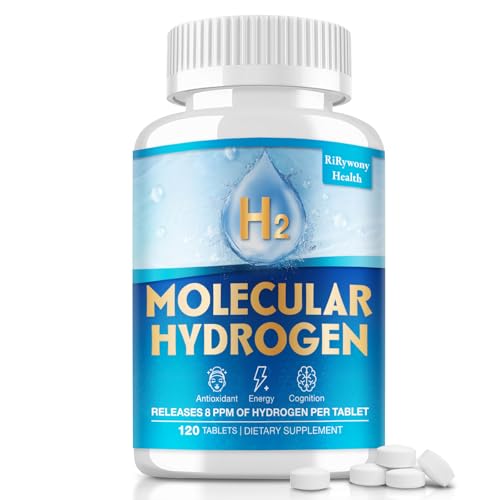
Effervescent hydrogen tablets — compressed tablets that dissolve in water to produce H2-saturated drinking water — are the most practical consumer delivery format, but product quality varies considerably. Because the field is early-stage and most human trials are small and short-duration, claims about hydrogen supplementation must be read carefully. This article explains the proposed mechanism, summarizes what preliminary research suggests for athletes, and identifies the product characteristics most worth scrutinizing before you buy.
Key Takeaways
- Molecular hydrogen is proposed to selectively neutralize the most damaging reactive oxygen species (hydroxyl radical, peroxynitrite) while preserving beneficial redox signaling — a mechanistically distinct approach from broad antioxidant supplementation.
- Human trial evidence for H2 and athletic recovery is preliminary, mostly conducted in East Asian institutions, and consists of small, short-duration studies; no health or performance claims have been evaluated or approved by the FDA.
- The most important product specification is dissolved H2 concentration in mg/L — look for a published number, ideally verified by third-party measurement, rather than vague marketing language.
- Athletes in tested sports should verify all tablet ingredients against their governing body’s banned substance list and prioritize products with Informed Sport or NSF Certified for Sport certification.
- H2 tablets are a low-risk supplemental tool to investigate at the margins of a well-structured training and recovery program — not a replacement for sleep, nutrition, and load management.
How Molecular Hydrogen Is Proposed to Support Exercise Recovery
The central hypothesis behind H2 supplementation is selective antioxidant activity. Unlike broad-spectrum antioxidant supplements such as high-dose vitamin C or E, molecular hydrogen is theorized to preferentially react with the hydroxyl radical (•OH) and peroxynitrite (ONOO⁻) — two of the most reactive and damaging oxidizing species produced during intense exercise — while leaving hydrogen peroxide and superoxide relatively intact. Those milder species function as redox signaling molecules that help trigger mitochondrial biogenesis, inflammation resolution, and training adaptation, so indiscriminate antioxidant supplementation can blunt the very responses that make training effective.
Dissolved H2 is also extremely small and non-polar, allowing it to diffuse rapidly across cell membranes and into mitochondria and the nucleus — compartments that many larger antioxidant molecules cannot easily penetrate. Researchers have proposed that this cellular accessibility, combined with selectivity for the most damaging radicals, could reduce oxidative damage to lipids, proteins, and DNA without interfering with adaptive signaling. These mechanisms are scientifically plausible but remain under active investigation; the human evidence base is preliminary and should not be interpreted as established fact.

What Early Research Suggests for Sports Performance and Recovery
The published human trials on H2 and exercise are small — typically 8 to 30 participants, conducted over days to weeks — and have explored outcomes including muscle fatigue, perceived soreness, blood lactate response, and markers of oxidative stress and inflammation. Several studies have reported reduced markers of oxidative damage and attenuated perceived muscle soreness in H2-water groups compared to placebo, particularly after eccentric exercise or high-intensity interval protocols. A smaller number of trials have examined performance outputs such as peak power or aerobic capacity, with mixed results.
The most frequently cited trial here is a ten-participant double-blind crossover pilot in male soccer players, which found that hydrogen-rich water blunted the rise in blood lactate after 30 minutes of cycling and delayed the early-phase decline in peak torque, with no difference between arms in oxidative-injury markers or creatine kinase[1]. What can be said accurately is that the body of literature is concentrated in East Asian institutions, uses varying doses and delivery methods, and has not yet been replicated in large, multi-site, placebo-controlled trials in Western populations. Regulatory bodies including the FDA have not evaluated or approved any hydrogen water product for disease treatment or athletic performance claims. Any product making such claims exceeds what the evidence supports.
Understanding H2 Concentration: The Number That Actually Matters
The most important technical specification for a hydrogen tablet is the dissolved H2 concentration it produces in a given volume of water, expressed in parts per million (ppm) or milligrams per liter (mg/L) — these are equivalent units. Most published exercise studies have used concentrations in the range of 0.5 to 1.6 mg/L. A tablet that produces well below 0.5 mg/L in 500 mL of water is unlikely to match the doses used in research, regardless of marketing language.
Look for brands that publish third-party dissolved hydrogen measurements — ideally using reagent drop tests or a Clark-type dissolved hydrogen meter — rather than relying solely on manufacturer claims. H2 gas escapes from solution rapidly once a container is opened, so concentration at the moment of drinking depends on tablet potency, water temperature (colder water retains more gas), container seal quality, and how quickly you consume the drink after dissolving. A tablet that tests at 1.2 mg/L in a sealed bottle may deliver considerably less if you leave the glass sitting for 20 minutes.
Key Ingredients and What to Avoid
Most effervescent hydrogen tablets use a reaction between magnesium metal or magnesium hydride and water to generate H2 gas, with citric acid or malic acid as a reaction catalyst. This is a well-established chemistry and is generally regarded as safe at the doses used in supplements. Some formulations add electrolytes (sodium, potassium, magnesium) to support hydration alongside the H2 delivery, which can be a practical benefit for athletes who are also managing fluid and electrolyte balance during training.
Ingredients to approach with caution include artificial sweeteners, colorants, or proprietary blends with undisclosed doses of stimulants. These additions have nothing to do with H2 delivery and may introduce unnecessary variables for athletes subject to sport-specific substance testing. If you compete in a tested sport, verify that every ingredient — not just the H2-generating components — is present on the banned substance list you are required to follow. Third-party Informed Sport or NSF Certified for Sport certification is the most reliable signal that a product has been batch-tested for contamination.
Practical Evaluation Checklist Before You Buy
Published H2 concentration: The brand should state the milligrams of dissolved H2 produced per tablet in a defined water volume (e.g., 1.0 mg/L in 500 mL). Vague phrases like ‘high-concentration’ without a number are a red flag. Third-party testing: Independent dissolved hydrogen measurements or contamination certifications provide the only objective quality assurance. Ingredient transparency: Full label disclosure with no proprietary blends hiding relevant doses. Packaging: Individually sealed pouches or airtight canisters with desiccant slow the degradation of tablets during storage. Tablets left loose in an unsealed container begin off-gassing before you even use them.
Price per serving is worth calculating but should be evaluated against measured H2 output, not tablet count. A cheaper tablet producing 0.2 mg/L is not a better value than a pricier tablet producing 1.2 mg/L if your goal is to match research dosing. Finally, examine the claims the brand makes. Responsible companies frame their products as supplements under investigation, not performance drugs or recovery cures. Exaggerated language (‘clinically proven to eliminate muscle soreness,’ ‘Olympic-grade recovery’) signals a marketing-first operation that may not have invested in product quality to the same degree.

Realistic Expectations and How Athletes Are Using H2 Tablets
Athletes who incorporate H2 tablets into their routine most commonly do so in one of two windows: immediately before training (15 to 30 minutes prior, on the theory that elevated H2 availability during the oxidative stress of exercise may buffer acute radical damage) or immediately after training to support the recovery window. Some use both. The research does not yet firmly establish which timing produces superior outcomes, and individual response appears to vary.
It is worth noting that hydrogen water is not a substitute for the foundational pillars of athletic recovery: sleep, adequate caloric and protein intake, periodized training load, and stress management. The preliminary signal in the literature is modest and context-dependent. Athletes in heavy training blocks exploring every marginal recovery input may find H2 tablets a reasonable addition to investigate; athletes whose fundamentals are inconsistent will get far more benefit from optimizing those first. H2 tablets are a low-risk, early-evidence tool — not a breakthrough.
🛒 Where to Buy Molecular Hydrogen
- Drink HRW Rejuvenation Molecular Hydrogen TabletsLab-tested / studied
tablets, 1 tablet per 500ml water — Research-grade effervescent tablet; developed with involvement from the Molecular Hydrogen Foundation; among the highest documented H2 output per tablet; frequently cited in community as the benchmark - Dr. Mercola Molecular Hydrogen Tablets
tablets, 2 tablets daily in water — Mass-market accessible entry point; wide distribution; uses magnesium as hydrogen carrier; good brand recognition for general wellness shoppers - Water & Wellness H2 Elite Molecular Hydrogen Tablets
tablets, 1 tablet per 16 oz water — Travel-friendly compact packaging; practical for daily carry; good entry-level tablet option for those new to H2 - Susosu Water Hydrogen-Infused Sparkling Water Pouches
liquid, 1 pouch (8 oz) — Ready-to-drink sealed aluminum pouches preserve dissolved H2; Japanese-origin brand; no dissolution required; convenient format for on-the-go use
As an Amazon Associate we earn from qualifying purchases. Molecular hydrogen quality comes down to dissolved H2 concentration, not price. Choose a product that states a specific ppm (mg/L) figure backed by third-party testing, and prefer airtight aluminum or sealed glass packaging — a vague high-concentration claim is unverifiable, and H2 escapes quickly from plastic and open containers.
A Note on the Evidence
The evidence supporting hydrogen water tablets for athletic performance and recovery is early-stage, derives largely from small trials conducted outside the US, and has not been reviewed or approved by the FDA for any health claim; individual results will vary and the research should not be interpreted as establishing proven benefits. Anyone with a medical condition, kidney disease, or who is pregnant or nursing should consult a licensed healthcare provider before adding any new supplement to their routine.
Frequently Asked Questions
Do hydrogen water tablets actually dissolve enough H2 to matter?
Quality tablets using magnesium-based chemistry can produce dissolved H2 concentrations of 0.8 to 1.6 mg/L or higher in 500 mL of cold water — concentrations within the range used in published research. However, H2 escapes solution quickly once a container is opened, so concentration at the point of drinking depends on tablet potency, water temperature, seal quality, and consumption speed. Always choose products with published, third-party-verified concentration data.
Is it safe to take hydrogen water tablets every day?
Molecular hydrogen consumed as H2-enriched water or via effervescent tablet is broadly regarded as inert and safe; it is non-toxic, produces no known metabolites of concern, and exits the body via respiration and diffusion. The magnesium used in most tablet chemistries contributes to daily magnesium intake, which should be accounted for if you are also taking other magnesium-containing supplements. As with any supplement, consult a qualified healthcare provider if you have underlying health conditions.
When should athletes take H2 tablets — before or after training?
Both pre-training (15 to 30 minutes before) and post-training windows have been used in published studies, with no definitive evidence establishing one as superior. The rationale for pre-training is to elevate dissolved H2 during the acute oxidative stress of exercise; the rationale for post-training is to support the early recovery window. Many athletes experiment with both and assess subjective recovery quality over several weeks.
Can hydrogen tablets replace other antioxidant supplements like vitamin C or E?
They serve a different proposed function. High-dose vitamin C and E broadly suppress reactive oxygen species, which research suggests may blunt training adaptations over time. Molecular hydrogen’s proposed selective mechanism is theorized to avoid this trade-off by sparing beneficial redox signals. Whether this theoretical advantage translates into meaningful real-world differences in athlete adaptation has not been established in long-duration controlled trials.
What should I look for on a hydrogen tablet label?
Prioritize: a stated dissolved H2 concentration in mg/L for a defined water volume, full ingredient disclosure without proprietary blends, third-party testing certification (Informed Sport or NSF Certified for Sport for tested athletes), and airtight individual packaging. Avoid products making disease-treatment claims or using vague superlatives without measurable data to support them.
Are hydrogen water tablets legal for competitive athletes?
Molecular hydrogen itself is not a prohibited substance under the World Anti-Doping Agency (WADA) code or common sport federation rules. However, tablet formulations may contain other ingredients — stimulants, diuretics, masking agents — that are prohibited. Athletes subject to testing must verify every ingredient against their specific governing body’s current banned list and choose products with batch-level contamination certification.
References
- Aoki K et al. Pilot study: Effects of drinking hydrogen-rich water on muscle fatigue caused by acute exercise in elite athletes. Med Gas Res (2012). PMID 22520831
These statements have not been evaluated by the Food and Drug Administration. This information is not intended to diagnose, treat, cure, or prevent any disease. Content is for informational purposes only and is not medical advice; consult a qualified healthcare provider before starting any supplement. As an Amazon Associate we earn from qualifying purchases.
