Hydrogen water — plain water infused with dissolved molecular hydrogen (H2) gas — has attracted growing interest as a potential wellness supplement, particularly in Japan and East Asia where the majority of clinical research has been conducted. Its proposed mechanism centers on H2 acting as a selective antioxidant: one that may neutralize only the most damaging reactive oxygen species, such as the hydroxyl radical and peroxynitrite, without broadly suppressing the beneficial redox signals the body uses for normal cellular communication.
If you take prescription or over-the-counter medications, it is reasonable to ask whether adding hydrogen water to your routine could affect how those drugs work. The honest answer is that direct, well-controlled human studies on hydrogen water and specific drug interactions do not yet exist in the published literature. What we can draw on are general principles of pharmacology, the known chemistry of molecular hydrogen in water, and a small but growing body of preliminary H2 research. The information below is intended to help you have a more informed conversation with your prescriber — it is not medical advice, and it is not a substitute for one.
Key Takeaways
- No direct human studies on hydrogen water–drug interactions exist in the published literature; current considerations are based on general pharmacological principles and H2 chemistry.
- Hydrogen water is not meaningfully alkaline at typical H2 doses, and its impact on gastrointestinal pH — a key driver of drug absorption — is expected to be minimal for most products [1].
- The most plausible theoretical concern is pharmacodynamic: H2’s proposed antioxidant activity could hypothetically overlap with therapies that rely on oxidative mechanisms, such as certain chemotherapy agents.
- People on medications with narrow therapeutic windows — anticoagulants, antiepileptics, immunosuppressants, thyroid hormones — should discuss all new supplements including hydrogen water with their prescriber before starting.
- Anyone undergoing cancer treatment should consult their oncologist explicitly before using any antioxidant supplement, including hydrogen water.
What Hydrogen Water Actually Is — and Isn't
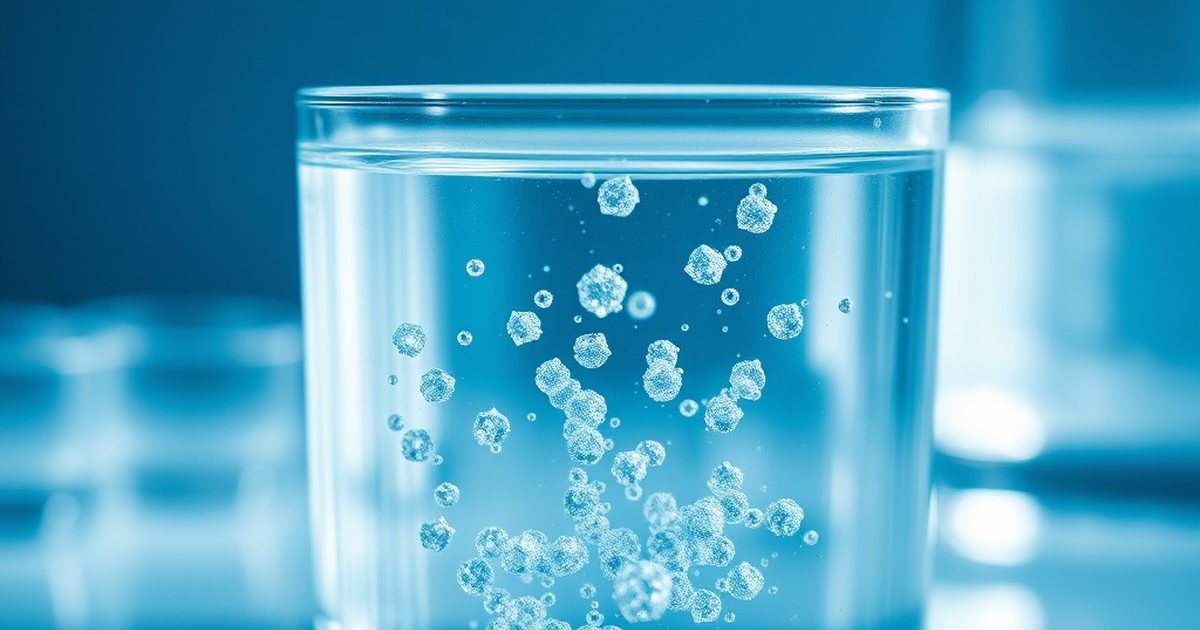
Hydrogen water is ordinary water (H2O) that has had additional molecular hydrogen (H2) gas dissolved into it under pressure, typically producing concentrations in the range of 0.5–1.6 parts per million. It can also be generated at the point of consumption via effervescent tablets that release H2 on contact with water. Molecular hydrogen is diatomic, electrically neutral, and extremely small — the smallest known molecule — which theoretically allows it to diffuse readily across cell membranes.
It is important to distinguish hydrogen water from hydrogen peroxide (H2O2), oxygenated water, or alkaline ionized water, all of which are chemically and biologically distinct. The dissolved H2 content is the active variable under investigation. At studied doses, hydrogen water is broadly regarded as inert and safe; H2 is a naturally occurring gas produced in small amounts by gut bacteria during normal fermentation. The FDA has not classified it as a drug, and no disease-treatment claims are permitted.
How Drugs Can Interact with Other Substances — General Principles
Drug interactions occur through several broad mechanisms: pharmacokinetic interactions (one substance altering how a drug is absorbed, distributed, metabolized, or excreted) and pharmacodynamic interactions (one substance amplifying or blunting the effect of a drug at its site of action). Early foundational literature on drug interactions identified that even seemingly benign co-ingested substances — including foods and beverages — can meaningfully shift drug behavior in the body [2]. Later clinical summaries reinforced that the timing of ingestion, gastric environment, and the chemical properties of the substance involved all play roles [3].
For a substance like hydrogen water to cause a pharmacokinetic interaction, it would most plausibly need to alter gastric or intestinal pH, bind to the drug directly, or influence the enzymes and transporters that process it. For a pharmacodynamic interaction, it would need to act on overlapping biological targets — enhancing or opposing the drug’s effect.
The pH Question: Could Hydrogen Water Alter Drug Absorption?
One legitimate area of theoretical consideration is gastrointestinal pH. Many medications are highly sensitive to the pH environment of the stomach and small intestine, because the ionization state of a drug molecule at a given pH determines how readily it crosses the gut wall into the bloodstream. A comprehensive review of models for oral drug absorption has documented the significant role that pH at different GI segments plays in determining drug solubility and permeability [1].
Hydrogen water itself is not meaningfully alkaline — dissolved H2 gas does not substantially raise the pH of water in the way that sodium bicarbonate or antacids do. Electrolytic hydrogen water generators sometimes produce water with a modestly elevated pH as a byproduct of the ionization process, but this is a separate variable from the H2 content. If you are consuming a dedicated H2-producing tablet or a well-characterized H2-enriched water product, the pH impact on your gastric environment is expected to be negligible. That said, taking any liquid with medications alters gastric volume and dilution, which has minor, generally well-tolerated effects on absorption for most drugs [1]. If you take a medication with very narrow absorption windows or that is sensitive to co-ingested fluids, consult your pharmacist about optimal timing.
Antioxidant Pharmacodynamics: Where Theoretical Caution Is Warranted
The most clinically relevant theoretical interaction between hydrogen water and medications is pharmacodynamic rather than pharmacokinetic: its proposed antioxidant activity. Certain medical treatments deliberately exploit oxidative stress as part of their mechanism. Radiotherapy and some classes of chemotherapy agents — including platinum compounds and anthracyclines — work in part by generating reactive oxygen species that damage cancer cells. If molecular hydrogen were to meaningfully blunt this oxidative burst, it could theoretically reduce treatment efficacy.
It is worth noting that the selectivity argument made by H2 proponents — that H2 targets only the most cytotoxic radicals rather than broadly suppressing all ROS — is precisely what some researchers propose would make it safer alongside conventional treatments than non-selective antioxidants such as high-dose vitamin C or vitamin E. However, this distinction remains under active investigation in early-stage research, and no large, randomized clinical trials have established whether H2 is safe or unsafe as an adjunct to oncology treatment. Anyone undergoing chemotherapy, radiation, or other oxidative therapies should discuss any antioxidant supplement, including hydrogen water, explicitly with their oncologist before starting.
Medications That Warrant Extra Conversation With Your Doctor
While the evidence base is too preliminary to generate a definitive interaction list, certain medication categories invite a closer look based on mechanistic reasoning. Anticoagulants and antiplatelet agents (such as warfarin, clopidogrel, and aspirin) are sensitive to any substance that might influence oxidative signaling pathways involved in platelet aggregation; while no direct evidence of interaction with H2 exists, this is a class where caution is routine whenever adding any supplement. Similarly, individuals on immunosuppressants — particularly after organ transplantation — should approach all adjunct supplements conservatively given the narrow therapeutic windows involved.
Medications that are metabolized primarily by the cytochrome P450 enzyme system (CYP450) represent another broad category where interactions with supplements are common. There is currently no published evidence that H2 water affects CYP450 enzymes, but this has not been formally studied in controlled conditions. For individuals on drugs with narrow therapeutic indices — antiepileptics, certain cardiac medications, thyroid hormones — routine precaution with any new supplement is advisable regardless of hydrogen water’s theoretical safety profile.

Finally, antihypertensive medications and antidiabetic agents deserve mention because preliminary H2 research has explored metabolic and vascular endpoints. If small trials eventually demonstrate measurable blood pressure or glucose effects, there would be a plausible pharmacodynamic interaction with medications already targeting those parameters. At present, this is speculative, but it is a relevant conversation to have with a prescribing physician if you use such medications.
Practical Guidance for Starting Hydrogen Water Alongside Medications
Based on the current state of the literature, hydrogen water does not have a demonstrated profile of serious drug interactions, and for most people taking common medications it is unlikely to cause meaningful pharmacological interference at typical doses. However, ‘unlikely’ and ‘demonstrated safe’ are not the same statement, and the absence of published interaction data is partly a reflection of how early-stage the research is rather than proof of interaction-free use.
Practically, a few habits reduce whatever theoretical risk exists. Take your medications on their established schedule, with the fluid your pharmacist recommends (usually plain water) rather than substituting hydrogen water at the moment of ingestion, particularly for drugs known to be pH-sensitive or time-sensitive. Introduce hydrogen water as a separate part of your day. Keep your prescriber and pharmacist informed about all supplements you use — this is standard advice for any non-prescription product, not a specific warning about hydrogen water. If you notice any changes in how your medications feel or in symptoms they are meant to manage after starting hydrogen water, report it promptly.
🛒 Where to Buy Molecular Hydrogen
- Drink HRW Rejuvenation Molecular Hydrogen TabletsLab-tested / studied
tablets, 1 tablet per 500ml water — Research-grade effervescent tablet; developed with involvement from the Molecular Hydrogen Foundation; among the highest documented H2 output per tablet; frequently cited in community as the benchmark - Dr. Mercola Molecular Hydrogen Tablets
tablets, 2 tablets daily in water — Mass-market accessible entry point; wide distribution; uses magnesium as hydrogen carrier; good brand recognition for general wellness shoppers - Water & Wellness H2 Elite Molecular Hydrogen Tablets
tablets, 1 tablet per 16 oz water — Travel-friendly compact packaging; practical for daily carry; good entry-level tablet option for those new to H2 - Susosu Water Hydrogen-Infused Sparkling Water Pouches
liquid, 1 pouch (8 oz) — Ready-to-drink sealed aluminum pouches preserve dissolved H2; Japanese-origin brand; no dissolution required; convenient format for on-the-go use
As an Amazon Associate we earn from qualifying purchases. Molecular hydrogen quality comes down to dissolved H2 concentration, not price. Choose a product that states a specific ppm (mg/L) figure backed by third-party testing, and prefer airtight aluminum or sealed glass packaging — a vague high-concentration claim is unverifiable, and H2 escapes quickly from plastic and open containers.
A Note on the Evidence
The evidence base for hydrogen water is early-stage — most trials are small, short in duration, and conducted outside the United States — and no controlled human studies on hydrogen water–drug interactions exist in the published literature. Individuals on prescription medications, particularly those with narrow therapeutic windows or those undergoing cancer treatment, should consult their physician or pharmacist before starting hydrogen water. This article is informational only and does not constitute medical advice.
Frequently Asked Questions
Will hydrogen water change the way my prescription drug is absorbed?
For most medications and most hydrogen water products, a significant change in absorption is not expected. Drug absorption is meaningfully influenced by gastrointestinal pH at different segments of the gut [1], but dissolved H2 gas does not substantially raise pH the way antacids or proton pump inhibitors do. As a general precaution, take medications with plain water on their recommended schedule rather than substituting hydrogen water at the moment of ingestion.

Is hydrogen water safe to use with blood thinners like warfarin?
There is no published evidence of a direct interaction between hydrogen water and warfarin or other anticoagulants. However, warfarin is a drug with a narrow therapeutic index that is sensitive to a wide range of dietary and supplemental factors. General drug interaction principles established in pharmacological literature emphasize that co-ingested substances should always be disclosed to the prescribing physician for medications in this class [3]. Disclose hydrogen water use to your anticoagulation manager.
Can I use hydrogen water during chemotherapy?
This question requires a direct, explicit conversation with your oncologist — not a supplement article. Some chemotherapy regimens rely on oxidative mechanisms, and while H2’s proposed selectivity for the most cytotoxic radicals is a point of ongoing scientific debate, the research is far too early to draw conclusions about safety or benefit in an oncology context. Do not start, stop, or modify any antioxidant supplement during cancer treatment without your care team’s input.
Does hydrogen water affect blood sugar medications?
Some early, small-scale H2 research has explored metabolic endpoints including insulin resistance and blood glucose markers. If hydrogen water produces any metabolic effect in a given individual, there is a theoretical pharmacodynamic overlap with antidiabetic medications such as metformin or insulin. This interaction has not been demonstrated in clinical studies, but anyone managing diabetes should monitor their levels when introducing any new supplement and inform their endocrinologist or primary care physician.
How much hydrogen water is typically studied in research, and does dose matter for interaction risk?
Most published H2 studies use 0.5–1.5 liters of water with dissolved H2 concentrations of roughly 0.5–1.6 ppm. At these doses, the absolute amount of molecular hydrogen consumed is small. Higher doses are not established as safer or more effective, and the interaction risk — while not formally quantified — would logically scale with the biological activity of the dose. Staying within studied dose ranges is a reasonable default while the evidence base matures.
Is there any drug hydrogen water is known to definitively interact with?
No. As of the current literature, there are no published controlled human studies documenting a definitive pharmacokinetic or pharmacodynamic interaction between hydrogen water and any specific medication. The absence of documented interactions reflects both an early evidence base and limited research attention to this question, not a confirmed clean bill of safety for all drug combinations.
References
- Abuhelwa AY et al. Food, gastrointestinal pH, and models of oral drug absorption. European journal of pharmaceutics and biopharmaceutics : official journal of Arbeitsgemeinschaft fur Pharmazeutische Verfahrenstechnik e.V (2017). PMID 27914234
- Hussar DA et al. Drug interactions. American journal of pharmacy and the sciences supporting public health (1973). PMID 4600137
- Sloan RW et al. Drug interactions. American family physician (1983). PMID 6829378
These statements have not been evaluated by the Food and Drug Administration. This information is not intended to diagnose, treat, cure, or prevent any disease. Content is for informational purposes only and is not medical advice; consult a qualified healthcare provider before starting any supplement. As an Amazon Associate we earn from qualifying purchases.
